Film Festival kicks off its 67th edition this week with an eclectic lineup of festival favorites, Oscar hopefuls and homegrown films that showcase the range and dynamism of the Greek industry. But on the eve of this year’s event, artistic director Orestis Andreadakis admits that it’s far from business as usual at the long-running fest. Describing it as a “a powerful and unsparing portrait of a society trapped in its own labyrinth of fear and moral compromise,” Andreadakis says the film was a “natural choice” for the programming team.
The festival closes Nov. 15 with “Woman Unknown,” the Venice Golden Lion winner from May el-Toukhy, with Venice best actress winner Mathilde Arcel in attendance. Among the other guests on hand in Thessaloniki will be Spanish filmmaker Oliver Laxe (“Sirat”), who won the festival’s Golden Alexander in 2019 with his Un Certain Regard prizewinner “Fire Will Come.” Laxe has been tapped to curate a special programming sidebar, “Welcome to the Desert,” and will also deliver a talk for festival audiences. Meanwhile, Turkish filmmaker Emin Alper will be feted with a tribute to his acclaimed body of work — including this year’s Berlinale Silver Bear Grand Jury Prize-winning, “Salvation” — while German director Fatih Akin will be on hand to present his latest film, “Ghost Song,” which opened the San Sebastian Film Festival.
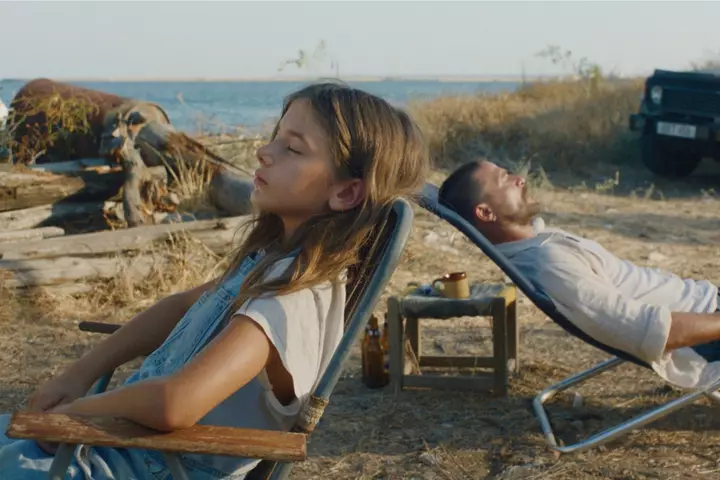
Greek composer and conductor Stavros Xarchakos and filmmaker Nikos Grammatikos will also receive honorary Golden Alexander Awards at this year’s event. A total of 258 films will screen across the festival’s various sections, with 10 films vying for the Golden Alexander in the main international competition. Among them are Walter Thompson-Hernández’s Sundance-premiering “If I Go Will They Miss Me” and Sarah Arnold’s French caper comedy “Too Many Beasts,” which bowed at Cannes’ Directors’ Fortnight.
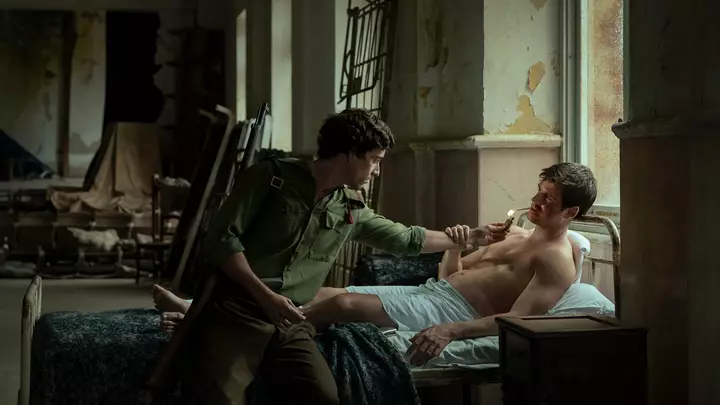
Also competing is Brazilian directors Matheus Farias and Enock Carvalho’s gay erotic thriller “The Riverbank,” which won prizes at Locarno and Rio. A trio of Greek films are also in the running for top honors, including Konstantina Kotzamani’s Un Certain Regard premiere “Titanic Ocean,” Efthimis Kosemund Sanidis’ Karlovy Vary competitor “A Whole Person Almost” and Jacqueline Lentzou’s “A Day in the Life of Jo: Chapter Phaedra,” which won the prize for best director in the Venice Film Festival’s Horizons strand. They’re among the 26 feature-length and 28 short films that will represent the host nation at its premier film event, showcasing the fact that, as Andreadakis puts it, “Greek cinema is in a great place right now.” “We are extremely happy, because this year a total of 26 Greek feature films will be screened at the festival, seven of them in our three international competition sections,” Andreadakis says.
They’re not alone, as the festival — coming at the tail end of the fall circuit — has become an increasingly popular gathering place for the international industry, particularly for filmmakers in the Eastern Mediterranean and Black Sea regions, while the Agora continues to expand its geographical footprint and foster collaborations with a range of partners from across Europe and beyond. It’s been 10 years since the respected writer and film critic was handed the reins of Greece’s oldest and most prestigious film festival, and as he looks back now, Andreadakis acknowledges that in the past decade the festival has “had to overcome a lot of challenges, the biggest being the COVID period, where we had to rethink the very idea of a film festival.” “We had to make difficult decisions, but it also showed us how much a festival is needed as a meeting point,” he says. Our goal remains simple: to keep the festival a place
Extract — continue reading at the source.