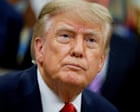
On September 12, 2026, United States President Donald Trump stood in Dublin alongside Irish Prime Minister Micheal Martin and said in a cool tone that the Houthis “called us, and they don’t want to fight us”, adding that the group was “allowing ships to pass” and that the situation would “work out very well”. His remarks came just as Houthi forces had completed their takeover of the coastal town of Dhubab and Perim (Mayyun) Island, which divides the Bab al-Mandeb strait into two shipping channels, after seizing the strategic port of Mocha. This gave them a direct presence at the entrance to one of the world’s most important waterways.
Trump was speaking against the backdrop of a Houthi announcement that they would blockade Saudi oil supplies to Asia and Saudi commercial shipping, signalling the collapse of the traditional “security-for-oil” formula. What is happening at Bab al-Mandeb is not an isolated event, but the latest in a long series of US retreats from security commitments that for decades underpinned the “security-for-oil” relationship between Washington and the Gulf states. This is not a passing political position, but a profound shift in the regional security landscape: the United States is choosing not to intervene militarily against an armed group designated as terrorist that controls one of the world’s most important straits and whose actions go beyond the logic of conventional deterrence.
In Dublin, Trump said the Houthis had contacted the US administration seeking to avoid confrontation with Washington. He said they were “allowing most ships to pass” and that the problem was limited to “one country”, which he did not name – an apparent reference to Saudi Arabia – promising to “take care of fixing that”. He also said the United States had “tight control” over the Strait of Hormuz and that about 25 ships were passing through it each day on average, despite maritime sources denying this.
On the ground, Trump’s remarks suggested that the Houthis remain wary of US military force and American deterrence, which has already put considerable pressure on their regional backer, Iran. They were therefore prepared to bargain, just as they accepted US conditions in 2025. At the same time, Trump’s directives – as relayed by US military and civilian officials – revealed a clear hierarchy of priorities: Iran as the principal threat, securing the Strait of Hormuz as the vital artery for oil and gas flows, and avoiding another military front in Yemen.
This reflects a narrow strategic logic. From Washington’s perspective, Bab al-Mandeb is less vital to American oil interests than to flows towards China and other Asian markets that compete with the US economy. And because Trump believes the Houthis “are not targeting American ships”, direct intervention would, in his view, place an unjustified additional burden on US forces already exhausted by the Iranian front.
Trump’s position also cannot be separated from domestic politics. The US-Iran war has eroded his political support after he promised to keep the United States out of Middle Eastern wars. According to The Los Angeles Times, Trump told Fox News that he “might not do it because of the elections”, referring to avoiding further military escalation before the congressional elections.
Extract — continue reading at the source.