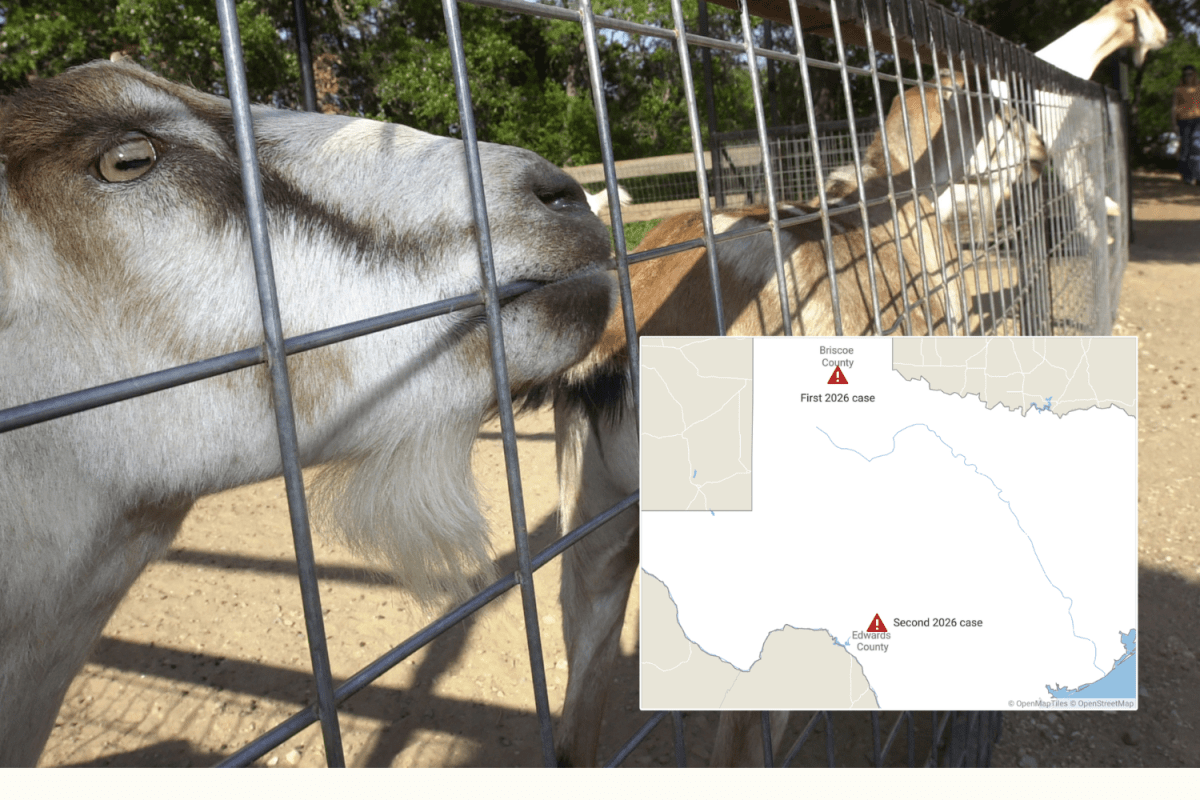
A goat in Southwest Texas has tested positive for anthrax, marking the second confirmed case in the state this year and third in the U.S., prompting animal health officials to quarantine the affected property. The Texas Animal Health Commission (TAHC) announced the state's first anthrax case of 2026 on January 6, when the disease was confirmed in a steer in Briscoe County in the Texas Panhandle. Officials described the Edwards County goat as the second confirmed anthrax case reported in Texas this year.
While anthrax is rare across much of the United States, the Edwards County detection occurred within a region of Southwest Texas long known as the "Anthrax Triangle," where spores of the bacteria can persist in soil for decades before environmental conditions trigger new outbreaks. The case adds to a year of heightened concern among ranchers and animal-health officials. Texas has also been closely monitoring the threat posed by New World screwworm, a flesh-eating parasite advancing through parts of Mexico that has triggered increased biosecurity measures aimed at protecting U.S. livestock.
The Texas Animal Health Commission told Newsweek that only one domestic animal is currently known to have been affected in the Edwards County case. The agency added that it routinely conducts foreign animal disease investigations across Texas and encourages livestock owners in areas with a history of anthrax to closely monitor their herds and take preventive measures before animals are exposed. Anthrax is a potentially fatal disease caused by the bacterium Bacillus anthracis, which occurs naturally in soil and most commonly affects grazing animals such as cattle, sheep, goats and deer.
The bacteria can survive as spores in the environment for long periods before infecting animals through contaminated soil, grass or water. Although anthrax is often associated with the 2001 bioterrorism attacks in the United States, naturally occurring outbreaks continue to occur in livestock and wildlife populations around the world. In Texas, cases are most frequently concentrated in a region of Southwest Texas where environmental conditions allow the spores to persist.
State health officials say anthrax cases in Texas are most frequently reported within an area bounded by Uvalde, Ozona and Eagle Pass, a region commonly referred to as the Anthrax Triangle. The area includes all or parts of Edwards, Val Verde, Sutton, Kinney, Crockett, Maverick and Uvalde counties. Anthrax outbreaks in the region have been documented for decades.
The disease occurs naturally in certain soils across Southwest Texas, where spores can remain dormant for years before environmental conditions allow them to re-emerge and infect grazing animals. Bud Dinges, Texas state veterinarian and TAHC executive director, said in a statement: "With the weather we’ve experienced in Texas this year, in areas where anthrax has historically been found, we encourage monitoring and vaccinating susceptible animals. This case is a great reminder that the disease has historically been found in Texas soil.
Extract — continue reading at the source.