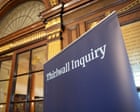
Just two months before Lady Justice Kathryn Thirlwall opened her inquiry into events at the Countess of Chester hospital and the crimes of Lucy Letby, a report by Chris Henley KC was published into the “atrocious” wrongful conviction of Andrew Malkinson for rape. Henley prefaced that report with a plea for the legal establishment to recognise that the criminal courts produce miscarriages of justice. Right up to top judges in the court of appeal, Henley wrote, the system has “a deep-seated … cultural reluctance” to accept it “will on occasion make mistakes” and that “entirely innocent defendants will sometimes be convicted”.
He said the system needed a culture that acknowledges mistakes can be made and ensures “in our various roles when making decisions we are all alive to this potential risk”. The Thirlwall inquiry was set up in 2023 by the then health secretary, Steve Barclay, on the basis that Letby was guilty of murdering seven babies, and attempting to murder seven more, at the Countess of Chester hospital’s neonatal unit where she was a nurse. Thirlwall’s terms of reference were to spotlight the hospital’s management, and whether their actions and culture “contributed to the failure to protect babies from Lucy Letby”.
Many distinguished experts had already looked at the evidence and expressed very serious concerns that the system had made another of its mistakes and convicted an entirely innocent person. As the Guardian reported, 24 experts wrote to Wes Streeting, who took over as health secretary after Labour’s general election win in 2024, urging him to pause the inquiry or widen its terms of reference to examine the possibility of a miscarriage of justice. In her opening speech in September 2024, Thirlwall, a court of appeal judge, referred to the criticisms of Letby’s convictions dismissively, referring to “a huge outpouring of comment” since the court of appeal refused Letby leave to appeal in May 2024, and to “all of this noise” that had caused distress to the bereaved parents.
The convictions stand.” The core premise of the inquiry from the start was that the hospital’s managers had not acted on warnings about Letby from the consultants, and should have called in the police earlier. That was the central conclusion Thirlwall has reached in her 822-page report. She criticised “a prolonged delay by senior managers in calling the police” after the triplets, babies O and P at the trial, died in June 2016.
There was an assumption throughout that the police, the Cheshire constabulary, were uniquely equipped to find the forensic truth about how the babies died. Thirlwall again emphasised in her final statement that her inquiry was “not an investigation into the criminal convictions or the guilt of Letby”. But the report is based on it being a fact that Letby is guilty and she has delivered the devastating conclusion that three of the babies might not have died if managers had acted more quickly to protect them from the nurse.
There was almost no moment in any of the gruelling inquiry sessions in the long, glittering ballroom of Liverpool town hall that engaged with the question looming over the proceedings: whether Cheshire constabulary may have got the case catastrophically wrong. A large group of British and international experts, led by the renowned Canadian neonatologist Dr Shoo Lee, who has argued relentlessly that his own research was misrepresented by the prosecution, concluded that there were no murders, only vulnerable newborn and premature babies, and poor care on the unit. Thirlwall heard in exhaustive detail about the actions the medical director, Ian Harvey, his management colleagues and the consultants took when considering the deaths and collapses of the babies.
Extract — continue reading at the source.