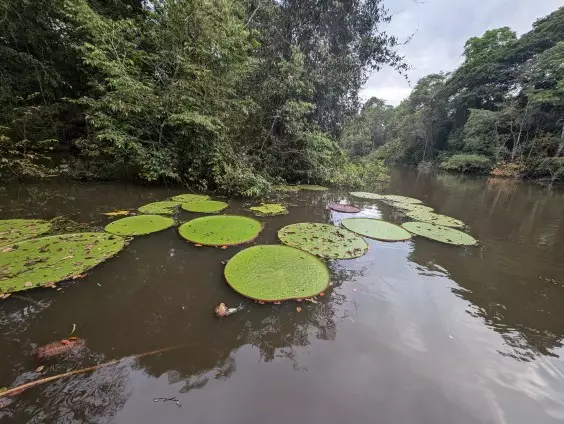
Say what you will about Instagram, but the social media platform has undeniably contributed to the furthering of scientific research. The latest case-in-point: A new species of giant waterlily has been discovered thanks to a selfie. The photo, taken by botanist Jeremiah Harris, featured a huge waterlily that Harris himself identified as Victoria amazonica.
However, the location in which it was taken—along the Inírida River in Guainía, Colombia—piqued the interest of waterlily expert Carlos Magdalena, from the Royal Botanic Gardens in the U.K. The Inírida River is beyond the natural range of the V. amazonica species, which suggested to Magdalena that this was something new. Read more: “Plants Can Hear the Sound of Falling Rain” Satellite imagery confirmed the presence of these giant waterlilies in the Inírida (yes, they’re big enough to see from space), and a field trip to Colombia was carefully arranged.
Magdalena and his fellow researchers, together with experts from the local Indigenous reserves, spent almost five days searching for a flowering waterlily that matched the one in Harris’ selfie. A pressed and dried plant specimen—a fertile herbarium voucher—is needed to confirm a new species, but the lateness of the season and the high water levels meant the waterlilies they found weren’t cooperating. It was only on the last night, less than 10 hours before their scheduled return flight home, that the botanists located what they were looking for.
Legendary local boatman Gustavo Melo led the team downriver at 1 a.m. They arrived at a small lake in pitch darkness where they somehow spotted five of the new waterlilies, one of which was in flower. That meant the formal scientific identification of the new species, Victoria colombiana, could begin.
As a family of plants, these waterlilies can reach more than six-and-a-half feet in diameter, and they’re some of the oldest plants still living today. Some work is going to be needed to protect them, however. The researchers estimate that there are only 30 to 50 V. colombiana plants in the wild, putting them at a high risk of extinction.
The plan is to get them placed on the official Critically Endangered list managed by the International Union for Conservation of Nature (IUCN). Either way, the next time you take a selfie for Instagram, check the background—there might be a rare new species in there, just waiting to be discovered. Subscribe to our free newsletter.
Extract — continue reading at the source.