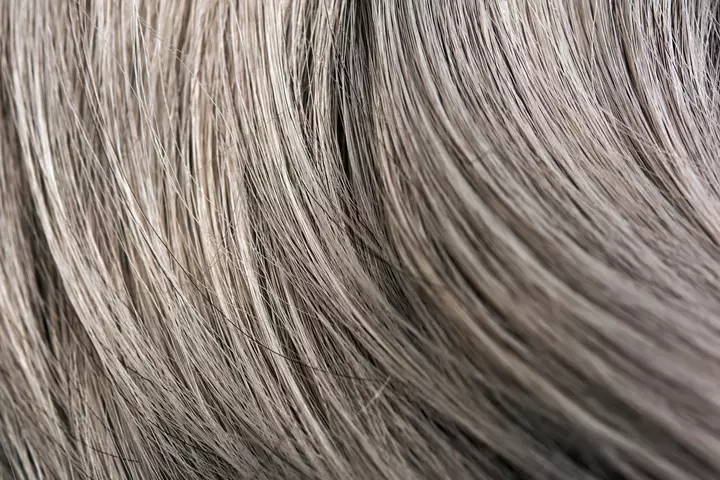
GRAY HAIR IS A NORMAL PART of life for plenty of people, but not everyone feels comfortable embracing their inner Andie MacDowell. While solutions to cover up grays have largely been limited to finding a colorist you love, a new study confirms there's a product that could stop new silver strands from forming. It's called The System by Arey, and a new clinical trial published in the current issue of Journal of Drugs in Dermatology suggests there could be something to it.
The System, which is a supplement and serum duo, aims to tackle the reasons people form grays that have nothing to do with genetics, like nutrition and oxidative stress. Meet the experts: Joshua Zeichner, MD, is director of cosmetic and clinical research at The Mount Sinai Hospital. Gary Goldenberg, MD, is assistant clinical professor of dermatology at Icahn School of Medicine at Mount Sinai Hospital.
Jay Small, trichologist, is celebrity hairstylist, and co-founder of Arey. Cindy Wassef, MD, is a dermatologist at Premier Health Associates in Randolph, New Jersey. Dermatologists are skeptical—and say hair dye may still be your strongest option.
But the new clinical trial results suggest there's something to consider here. Here's what the trial found, plus why this treatment duo could work. The study authors recruited 173 men and women between the ages of 18 and 65 who had not dyed their hair for at least a month.
Participants were randomized into four groups: Those who used The System, those who took the supplement and a placebo serum, those who used the serum and took a placebo supplement, and people who used a placebo supplement and serum. Participants were followed for 26 weeks, with regular visits and check-ins to make sure they were still following their prescribed treatment. The researchers also took photos of the participants' hair during the visits.
Researchers discovered that people who used The System had a "progressive decrease" in the amount of gray hairs they had at weeks 12 and 24. Specifically, they had 9 percent less grays at week 12 and 13 percent less grays at week 24. People in the placebo group, on the other hand, saw their grays increase by 10 percent during the 24-week study.
Extract — continue reading at the source.