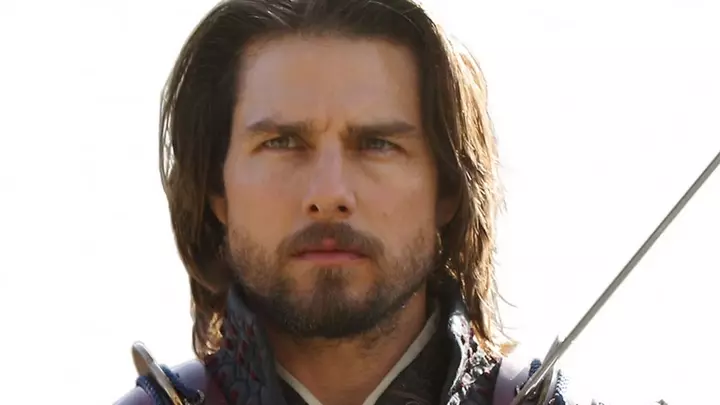
Tom Cruise has built a career out of playing larger-than-life characters, but some of his best performances are when he delves into the more vulnerable people beneath the movie-star bravado. Days of Thunder filters the story of a hotshot NASCAR driver through the humbling process of learning to trust someone, while Jerry Maguire finds a sports agent in the throes of learning that success means little without genuine human connection. Even Tropic Thunder, for all its outrageous comedy, gives Cruise room to disappear into a grotesque Hollywood executive whose insecurities are as ridiculous as his explosive temper.
And Alejandro González Iñárritu’s Digger gives Cruise one of his most fascinating character studies yet as an oil tycoon with a brazen plan to save the world. Still, I’d argue that one of his finest characters came more than two decades ago in a film that remains a personal favorite of mine. Released in 2003, Edward Zwick’s The Last Samurai is a sweeping historical epic that pairs Cruise’s considerable screen presence with a rich narrative, devastating emotional beats, incredible score, and Ken Watanabe.
Cruise stars as Nathan Algren, a disillusioned Union soldier hired to train Japan’s newly modernized imperial army in the wake of the American Indian Wars. After a disastrous first encounter with a group of rebellious samurai, Algren is captured and drawn into the world of their leader, Watanabe’s Katsumoto, who becomes the beating heart of the narrative. It's a tale of a broken man lost in grief and cultural upheaval who fights for redemption among the very warriors he was hired to wipe out.
One of the film’s greatest strengths is the juxtaposition of its two protagonists. When we first meet Algren, he’s a drunkard and a laughingstock, long alienated from the military establishment that once gave his life purpose. Traumatized by his experiences fighting Native Americans, particularly in the Battle of Washita River (often refered to as the Washita River Massacre), Algren seems at first far more willing to die than continue living with his demons.
But it’s that very suicidal affliction and lingering regret that makes his eventual transformation all the more affecting. Katsumoto, meanwhile, is no mere embodiment of an idealized past. Watanabe gives him a subtle sense of humor, coupled with a genuine willingness to understand the changing world around him.
Their relationship works because neither man has all the answers, and their growing respect for one another fuels a partnership that feels earned rather than inevitable. The historical backdrop also gives those personal struggles an even greater sense of tragedy. More a fantasy epic than historical retelling, The Last Samurai draws inspiration from the Satsuma Rebellion of 1877, when former samurai led by Saigō Takamori rose against Japan’s rapidly modernizing Meiji government.
Extract — continue reading at the source.