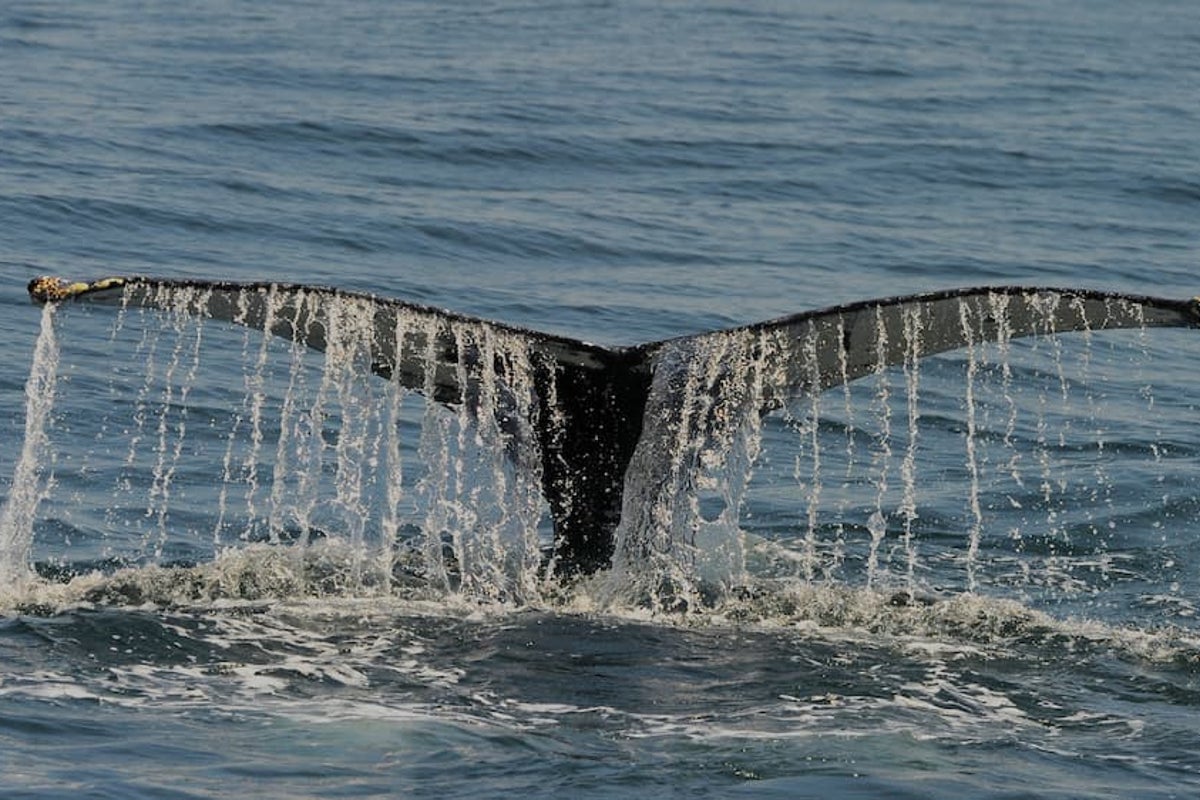
Australian tourism operators have helped crack the mystery of an enigmatic humpback whale behaviour that has left scientists baffled since it was first observed in 2009. Sighting of whales exhibiting unusually long “fluking” behaviour – where the mammals float upside down holding their tails above the water for extended periods – began surfacing in 2009. Tour guides reported these observations, which appeared to involve large numbers of humpback whales, to the Great Barrier Reef authorities, who then informed scientists.
Not even the whale scientists knew what it meant at the time. So that uncertainty sparked a major research effort, which combined citizen science through the tourism operators’ observations and scientific research,” said Crystal Lacey, a reef guides program manager. A collaborative effort ensued, involving community members, tourism operators, and scientists.
Tour operators counted whales and calves, while scientists mapped the seafloor, monitored water temperatures, tracked whales by satellite and surveyed the region from the air. Researchers soon discovered that what they observed was actually a breeding behaviour in one of the world’s most important whale calving areas. They found that there was a hidden humpback whale “maternity ward” in the warm shallow waters of the Whitsunday tropical islands off the central coast of Queensland.
Just in that one year, there were 780 adults and 153 calves sighted in the Whitsundays,” Ms Lacey said. The breakthrough has finally helped solve one of the biggest mysteries surrounding humpback whales on the Great Barrier Reef – where they give birth. It has led to the establishment of a Whale Protection Area in the Whitsundays, where the marine mammals are given higher levels of protection than in any other area of the Marine Park.
This strengthens existing laws for how people interact with whales in the area, with established minimum approach distances for vessels. Efforts by tour operators have helped establish the Whitsundays as the only place in the world where a Whale Heritage Area occurs inside a UNESCO World Heritage Area. Join thought-provoking conversations, follow other Independent readers and see their replies
Extract — continue reading at the source.