In conversations, few words catch my attention faster than ‘friction’ – and especially talk of making things frictionless. From the workplace to grocery shopping, our societies seem to be striving to remove friction from everything. The motivation appears to be that decreasing resistance makes life easier and smoother.
Having spent a career as a tribologist, studying friction, wear and lubrication scientifically, I have some opinions on this. I’ll confess that, in most of my career, I too have sought to reduce friction, developing new materials, designs or even instrumentation in order to lower friction in a jet engine or reduce emissions from your car. However, I’ve also found myself trying to figure out how to increase friction to remove plaque on teeth.
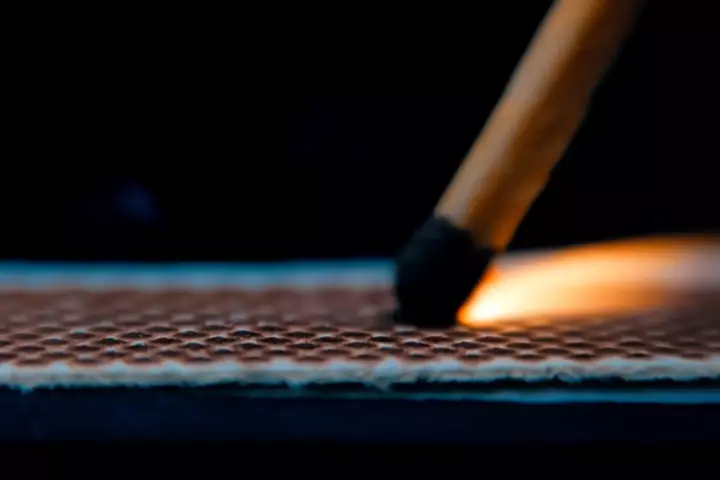
The reality is that friction, despite seeming so antagonistic, is necessary and even productive. The force that resists motion has, since humans first struck a spark from a stone, been the very thing that propels us forward. And this paradox offers a lens through which to reread humanity’s entire technological history.
In order to appreciate all that an understanding of friction has helped us to accomplish, it’s necessary to start at square one and state what friction actually is. We define friction as the force that resists motion, and that means friction is rather ubiquitous. If things are moving, whether they’re sliding around or rolling, there’s friction.
If there’s movement, friction is there to resist it. Unfortunately, because friction’s job is to resist, we’ve developed an aversion to it as a nuisance. But it’s a very important force, and we’ve thrived by expanding our understanding of it.
By the 1960s, after millennia of evolving with friction, we finally accepted that friction is such a critical part of our world that a scientific field of study needed to be devoted to it: tribology. Tribologists like me study this force in all its forms. Tribology is the science of interacting surfaces in relative motion, concerned with the wear of materials, friction and lubrication.
Extract — continue reading at the source.