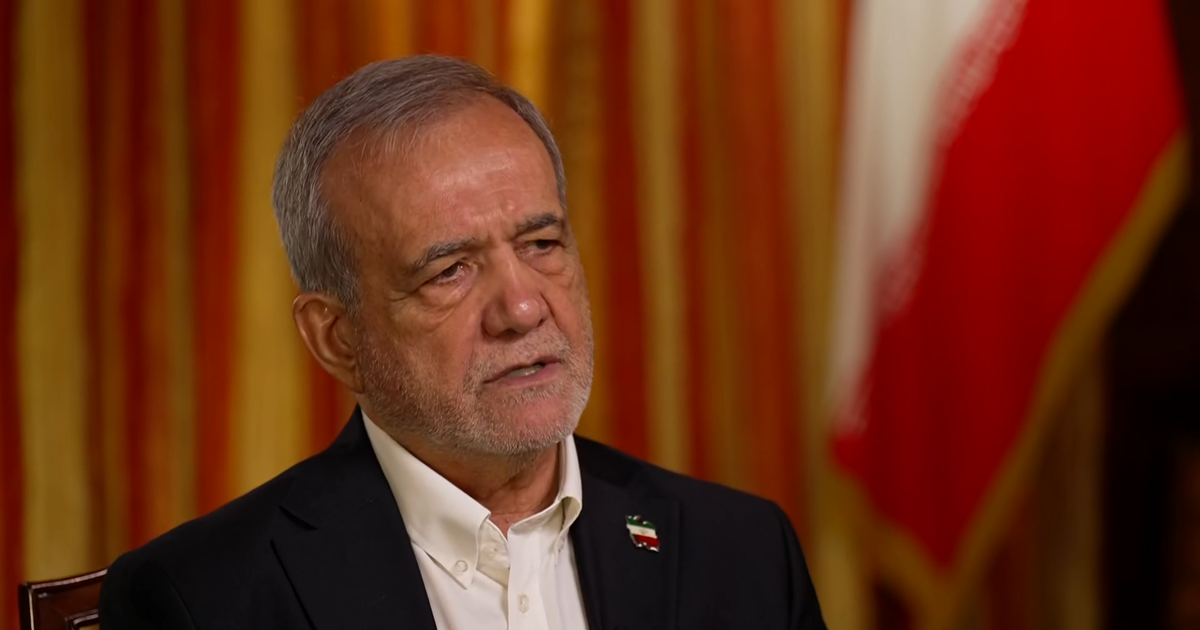
The following is the transcript of the interview with Iranian President Masoud Pezeshkian airing on "Face the Nation with Margaret Brennan" on Sept. 27, 2026. It was recorded on Sept. 25. President, thank you for making the time for us.
PRESIDENT MASOUD PEZESHKIAN: In the name of God, the most gracious and the most merciful, I greet you. MARGARET BRENNAN: Here in New York, Iran's foreign minister presented a proposal to the United States through mediators that would reopen the Strait of Hormuz after seven days if Tehran's conditions were met. At that point, talks about ending the war would begin, and possibly talks about the nuclear program.
When do you expect to get a response from the United States? PRESIDENT PEZESHKIAN: If this message reaches the President of the United States, or the interviewers and those involved in the discussions, naturally the process will begin from the very day they accept it. MARGARET BRENNAN: What would be the conditions to reopen the Strait of Hormuz?
PRESIDENT PEZESHKIAN: We had previously reached an agreement based on the MOU that was signed in Pakistan. I signed it, and the President of the United States signed it, and we were proceeding based on that agreement. We could have continued it, but unfortunately, because of the lack of coordination, the process was interrupted.
Now, in fact, there is a framework along the same path, with the same objectives that were established. Ultimately, the requests that were included in that memorandum and MOU have now been broken down into stages so that we can proceed according to those stages. If the United States agrees to proceed in that way, everything will return to the way it was before.
Because right now, it's the United States that has blocked our way, and naturally, Iran has also blocked the way from its side. These are things that both sides need to open up first; then we can sit down at the negotiating table and discuss other issues at hand. MARGARET BRENNAN: Well, you and President Trump signed this deal back in June, but it fell apart because of the disagreement on the shipping lanes, and then the military, the IRGC, began firing on ships, taking what they called an unauthorized route.
Extract — continue reading at the source.