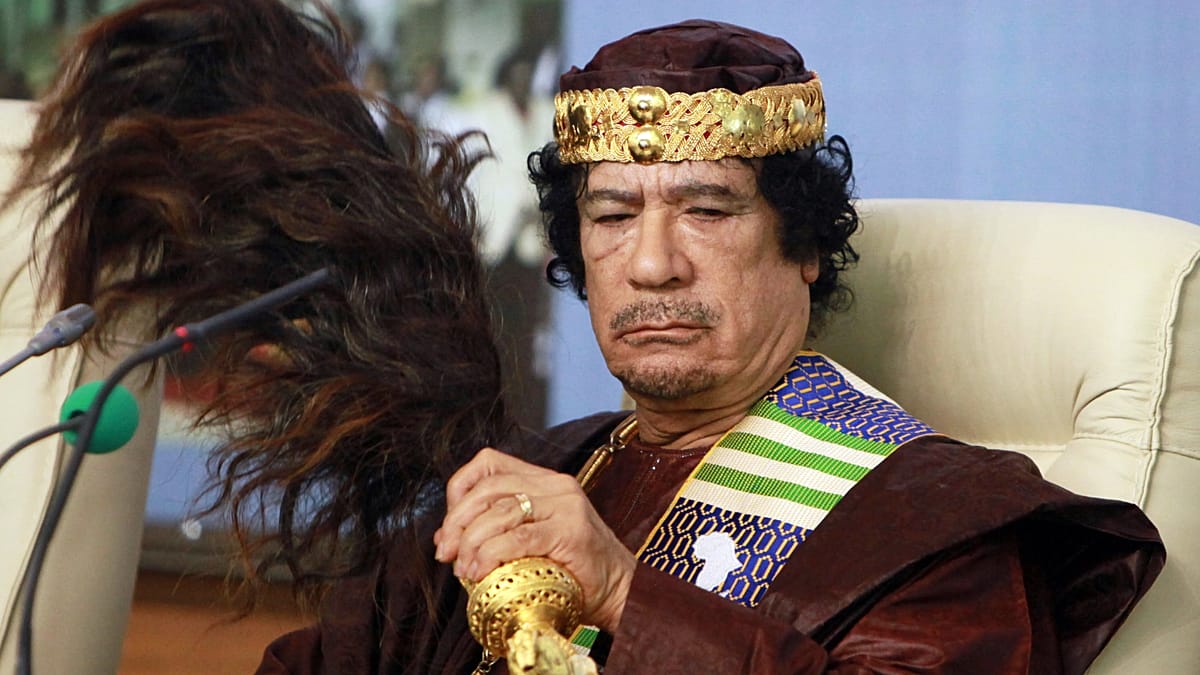
Tripoli government’s security forces have seized some 100,000 ecstasy tablets in the shape of Libya’s late leader Muammar Gaddafi, as a separate drug bust in the rival-controlled east discovered a shipment of captagon, the ousted Syrian dictator Bashar al-Assad regime's narcotic of choice. The tablets in Tripoli, intercepted on Saturday by the Deterrence Apparatus for Combating Terrorism and Organised Crime known as Rada, featured Gaddafi’s bust decked out in his characteristic garb, according to Libyan news agency LANA. Rada said investigators received information about a criminal network pushing the pills through an undisclosed European country.
The shipment came by sea through an unnamed port, hidden inside a Renault Master van. Suspects were apprehended and referred to the public prosecutor’s office, according to reports. Libyan authorities identified the tablets as ecstasy, commonly associated with MDMA, a popular clubbing stimulant known for causing a state of euphoria and emotional warmth.
Although Tripoli did not disclose the street value of the pills, the 100,000 tablets could be worth between 500,000 and 1.5 million in the broader Mediterranean region, according to available data and informal sources. In a separate operation in Benghazi — controlled by forces aligned with Marshal Khalifa Haftar and his LNA armed faction — the Criminal Investigation Agency stated this week it seized an undisclosed number of tablets it described as captagon, assessing that Syria was the likely manufacturing point of origin. Captagon is a cheap and highly addictive amphetamine-type stimulant that flooded Middle Eastern markets throughout the civil war in Syria, quickly becoming a major source of income for the al-Assad regime.
Analysts at the New Lines Institute estimated Syria's captagon trade generated up to $10 billion (€8.6bn) per year at its peak, with the networks around the al-Assad family earning an estimated $2.4 billion (€2bn) annually. The regime's total earnings from the trade, which became industrialised around 2018-2019, remain difficult to calculate with precision. Multiple governments, including the US and the UK, have sanctioned al-Assad’s brother Maher and a network of associates for their alleged role in overseeing the drug's production and export from regime-controlled facilities in Latakia and the Qalamoun Mountains in cooperation with Hezbollah.
A narcotics trading link between Latakia and Benghazi has been long established. In December 2018, Greek authorities intercepted a vessel carrying more than 3 million captagon pills from Latakia en route to the eastern Libyan port city, while separate reporting documented containers from Syria arriving in Benghazi carrying millions of tablets. Gaddafi-shaped tablets have also appeared in Libya before.
In August 2025, Benghazi authorities seized an undisclosed quantity of captagon-type tablets bearing Gaddafi’s image. Forensic experts identified them as MDMA-type narcotics, and investigators stated that the manufacturing source was believed to be Syria. MDMA and captagon are both amphetamine-based stimulants.
Extract — continue reading at the source.