A border crossing in Arizona reopened to Mexican cattle on Monday as part of an effort by the Trump administration to address record-high beef prices but economists doubt the change will bring noticeable relief to supermarket shoppers. Concerns about the spread of the New World screwworm have reduced enough to allow cattle movement from Mexico through a port of entry in Douglas, Arizona, located approximately 230 miles (370 kilometers) southeast of Phoenix, the U.S. Department of Agriculture says.
Officials intend to eventually reopen additional border crossings across New Mexico and Texas. Rising meat costs are a clear priority for President Donald Trump, who declared on Friday that the administration would permit up to 331,000 tons (300,000 metric tons) of duty-free ground beef imports into the U.S. over the next 90 days to be sold under market rates. The White House said in February that closing the border to Mexican livestock imports over a year ago was "essential" to stop the parasite, though the restriction compounded a shortage of cattle available for slaughter domestically.
"The administration obviously has a lot of incentive to try to be able to say that they’re doing something about high beef prices in particular," said Derrell Peel, an agribusiness professor at Oklahoma State University. "Beef has been singled out because it is an expensive product and because it’s just high profile." The Trump administration halted cattle imports in May 2025 as part of its intervention against the screwworm, a destructive parasite whose flesh-eating larvae can infect and kill cattle and other animals. That prohibition coincided with existing supply strains in the U.S., where the national herd has shrunk for five consecutive years to its smallest size in decades.
Because the USDA is taking a gradual approach to reopening the border, several months will pass before Mexican cattle imports return to typical volumes, Peel explained. Mexico has historically supplied 1.1 million head of cattle annually, accounting for roughly 3% of the total U.S. supply. "I don’t expect to see any measurable impact on cattle prices or beef prices soon," Peel said.
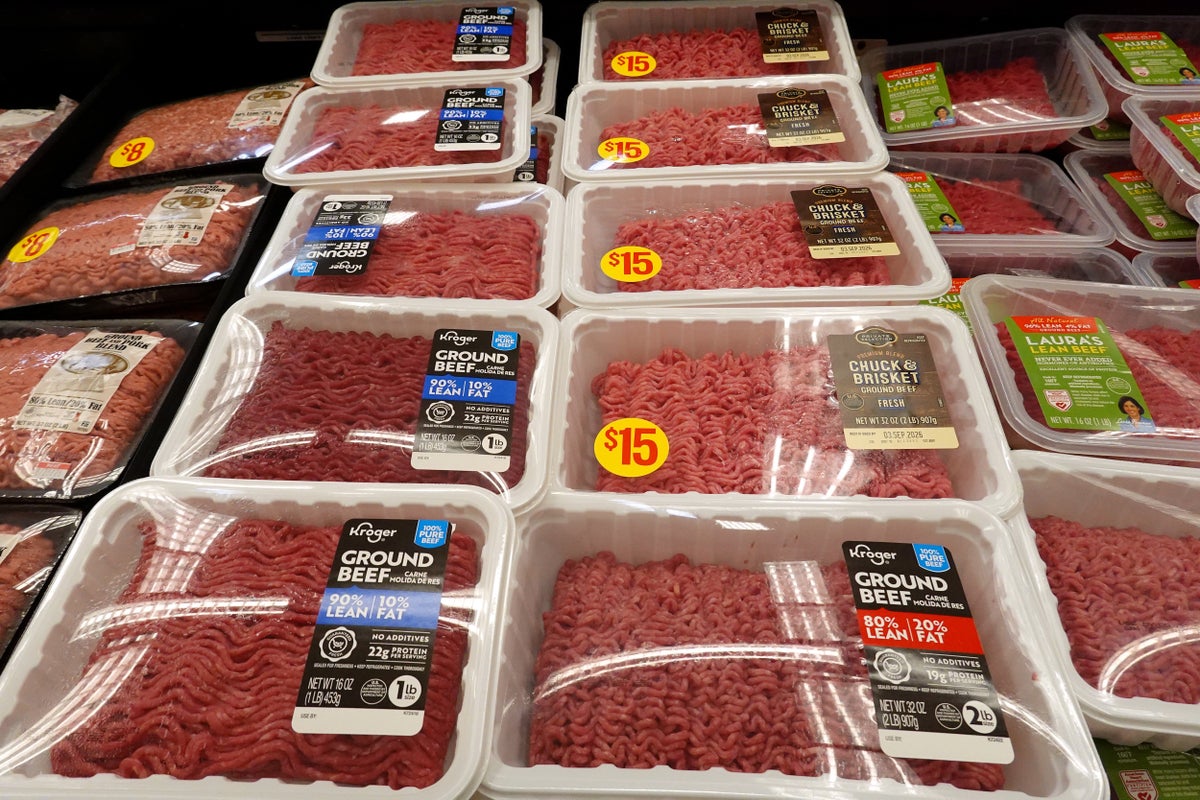
According to USDA data, the U.S. cattle herd contracted to 86.2 million head on Jan. 1, representing the lowest total in 75 years. Bureau of Labor Statistics show beef prices rising far faster than overall food inflation across the last five years. Between July 2021 and July 2026, the average retail price for a pound (453 grams) of ground beef surged nearly 57%, moving from $4.39 to $6.89, after peaking at $6.90 in May.
That reflects a 10% increase over the previous 12 months, compared to a 25% overall rise in total food costs during the same five-year timeframe. Similarly, the cost of uncooked steak jumped 35% over those five years, reaching a record $13.06 per pound in July, which was also 10% higher than the prior year. However, Glynn Tonsor, an agricultural economics professor at Kansas State University, noted that the impact of lower cattle numbers on beef prices was somewhat buffered by efficiency gains in the U.S. beef sector, which now yields more meat per animal than in previous years.
Extract — continue reading at the source.