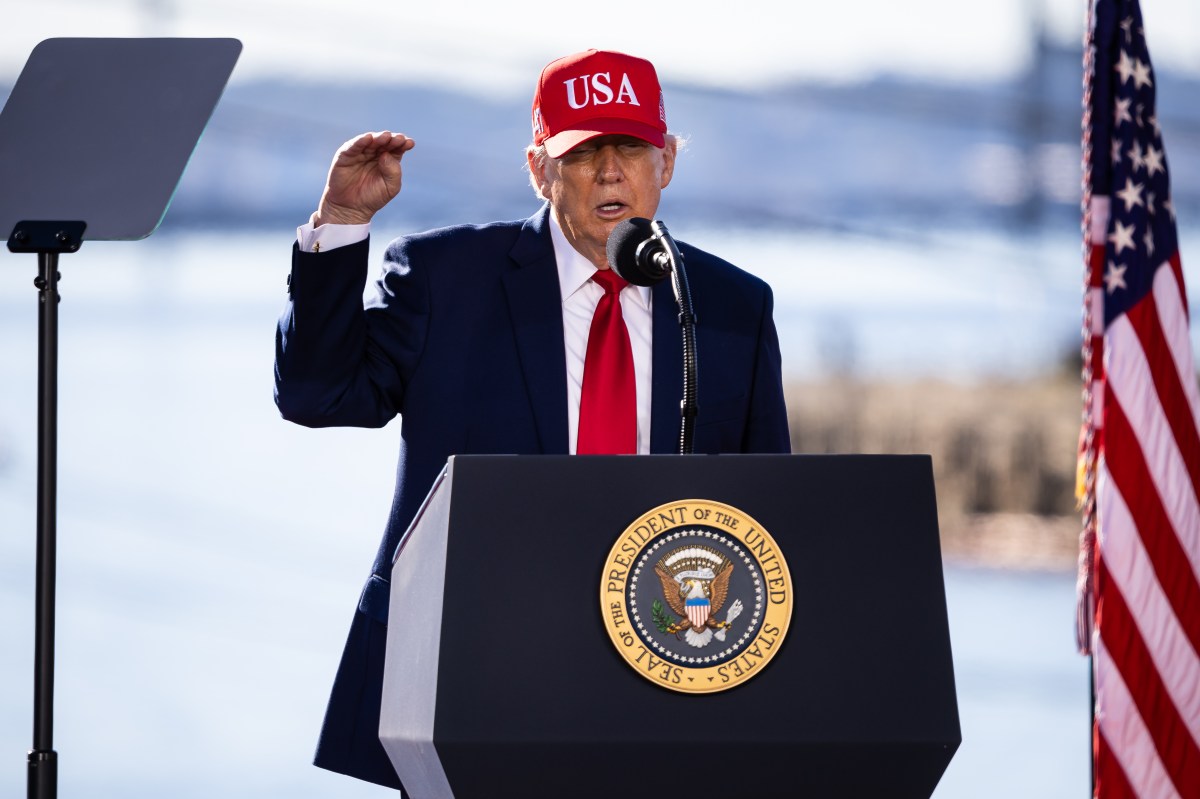
Days after President Donald Trump promised to stop using taxpayer funds for an ad campaign, promotional spots continue to air across national television networks bearing the disclosure line: “Paid for by the U.S. Government." Trump said Monday that he had decided to “pay for them myself” and use money raised for MAGA Inc. to fund the advertisements. The statement came after his administration faced criticism over taxpayer-funded television spots featuring Trump and promoting his administration’s policies.
But the White House told Newsweek on Tuesday that Trump was not referring to reimbursement for advertisements already paid for with government funds. The White House official said that Trump’s statement was not a promise to reimburse taxpayers, although the official did not clarify what the president meant by saying he would “pay for them myself.” Trump was also asked Tuesday directly whether he would repay taxpayers for the advertisements. The White House official also defended the use of government-funded advertisements, which they called public service announcements.
Bush, Barack Obama and Joe Biden, as well as wartime public-information efforts under Presidents Woodrow Wilson and Franklin D. The examples cited, however, involve campaigns that served specific public-information or public-health purposes, including explaining Medicare prescription drug benefits, promoting Obamacare enrollment and communicating public-health guidance during the COVID-19 pandemic. The Trump advertisements at the center of the current controversy have drawn criticism because they feature Trump prominently and promote his administration's accomplishments and political themes.
One spot features Trump discussing defeating communism, socialism and Marxism, while onscreen text highlights the administration's tax cuts, manufacturing policies and law-enforcement priorities. Another advertisement has used material closely resembling a Trump campaign advertisement from 2024. That distinction is at the heart of the dispute over whether the advertisements should properly be characterized as government public service announcements or as campaign-style political advertising.
The controversy stems from a $20 million contract awarded by the Department of Homeland Security (DHS) to the LMD Agency for a "National Media Campaign." The resulting series of high-production television spots highlights the administration's policies, economic rhetoric, and military actions, featuring Trump prominently throughout. Critics quickly condemned the campaign as an illegal use of government funds to run self-promotional propaganda ahead of the upcoming midterm elections. Legal scholars pointed to long-standing federal statutes, including restrictions on using taxpayer dollars for publicity or partisan campaign activities, arguing that the ads crossed clear ethical and legal boundaries.
Under mounting pressure, Trump announced early this week that his primary super PAC, MAGA, Inc., would fund future spots. "The Radical Left is upset with the fact that I am taking Ads, which I consider to be a positive promotion for our Great U.S.A., and paying for them with U.S.A. money," Trump wrote on Truth Social on Monday. "This is a rather standard thing to do but, rather than doing that, although nothing will make them happy, I have decided to do the Patriotic Ads, among others, and pay for them myself, and with money I raised for MAGA, Inc." He also defended the spots during an Oval Office press exchange, calling them, "promotion for the country." Despite the high-profile announcement, viewers across multiple media markets reported seeing the original taxpayer-funded ads during primetime broadcasts over the past 48 hours.
Extract — continue reading at the source.