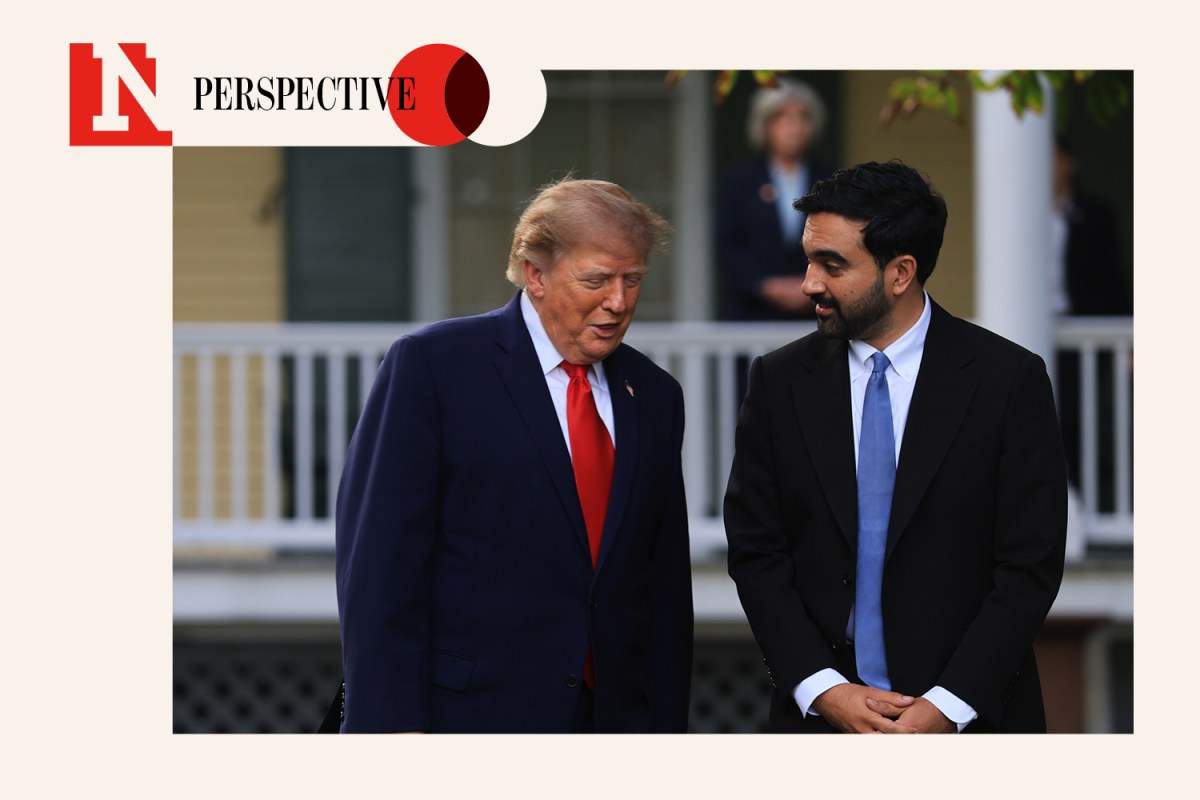
For two men who spent much of the past year describing each other as dangers to the republic, Donald Trump and Zohran Mamdani looked pretty comfortable discussing zoning. On Monday, the president visited the New York City mayor at Gracie Mansion, where an hourlong private meeting gave way to warm public remarks and talk of developing Sunnyside Yard in Queens. Mamdani said the city and White House would deepen discussions over a plan for 12,000 homes and 30,000 jobs.
Trump sounded intrigued: "Maybe they have a shot at doing it," he said. It was an oddly New York peace treaty: after months of ideological artillery, everybody met at the property line. Sure, this looks like the government functioning as it should.
But is that really possible given the chaotic times we’re living in? In an ideal world, a president and a mayor who profoundly disagree on major issues should still be able to cooperate when their constituents stand to benefit. Mamdani did, after all, repeatedly say that he would work with anyone willing to reduce New Yorkers’ cost of living.
And yet, one can’t help but think about the characters in play, how they have behaved until now, and lean toward another reading: Is the Trump-Mamdani friendship becoming a demonstration of how unserious some of America’s most serious-sounding political language has become? Before the detente, the vocabulary was existential. Trump called Mamdani a "100% Communist Lunatic" and had threatened him with arrest.
Mamdani accused Trump of pursuing a "fascist agenda" and called him a "despot." Asked after their first Oval Office meeting last November whether he still considered Trump a fascist, Mamdani said yes—with Trump cheerfully giving him permission to say so. Ten months later, Trump stood beside the same man at Gracie Mansion and told reporters he hoped Mamdani would become a great mayor. Mamdani, in turn, praised Trump's commitment to New York.…Okay?
Political enemies are allowed to cooperate but the ease of this transition raises a question about what voters are supposed to believe when politicians reach for the language of catastrophe. If Mamdani sincerely believes Trump represents fascism, cooperation with his administration may still be necessary but cordiality carries a different implication when it becomes a recurring relationship. If Trump sincerely believes Mamdani represents communism threatening America's largest city, the president's evident affection for him is equally difficult to square with the warning.
Extract — continue reading at the source.