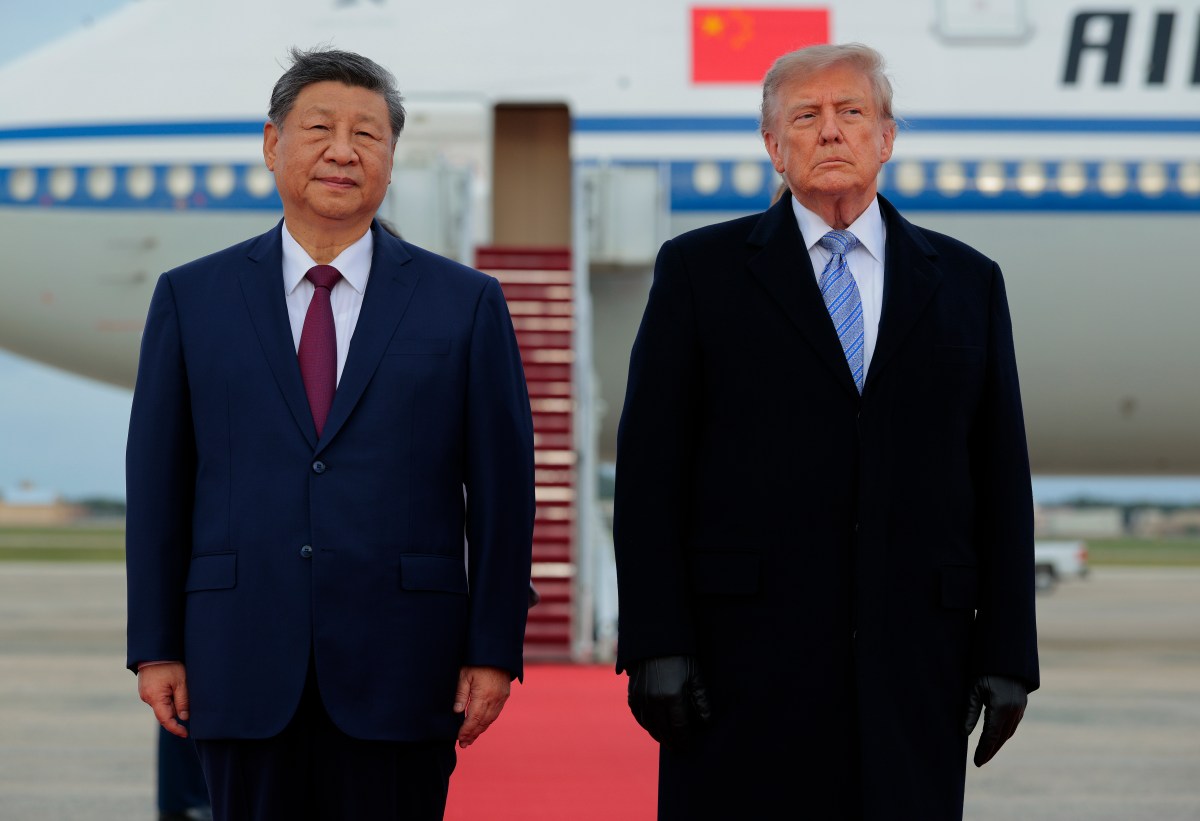
This Friday, Donald Trump and Xi Jinping are due to visit the National Archives, the building where the U.S. keeps the paperwork of its many promises. Xi may use the moment to read an old one made to China back to his host, just as a little reminder. The day before, Trump and Xi will hold a formal bilateral meeting beginning at midday Eastern Time.
There is much on the agenda. Trade is perhaps the biggest item, the urgency of making a deal eased by a newly announced two-month extension to the current truce. But there are two other pressing matters to address that are, on paper at least, separate.
That may change because of the needs and desires of both the U.S. and China at this present geopolitical juncture. Right now, each side has something to offer the other. This is a tale of two straits, thousands of miles apart, but perhaps now intertwined: Hormuz and Taiwan.
Xi is expected to press Trump to halt American arms sales to Taiwan under a 1982 joint communiqué in which Washington said it intended to reduce such sales gradually, according to reporting, citing anonymous sources that have been briefed. In return, China is offering Trump something he is in acute need of right now: pressure on Iran. Of course, this is a proposal, not an agreement, and there is no sign Trump has accepted it yet.
But it directly ties the Taiwan Strait to the Strait of Hormuz, where nearly seven months of war have left commercial shipping traffic roughly 90 percent below prewar levels. Asian allies fear Trump might soften support for Taiwan to lock in economic and strategic wins, gifting China a win in the Asia-Pacific. But Gulf states, also partners of the U.S., are keen to restore shipping through Hormuz.
The question is not whether a grand bargain gets struck this week, but what each side would exchange. Beijing’s proposal goes beyond the roughly $14 billion arms package for Taiwan, which has been on hold for months, and that Trump himself in May had candidly called "a very good negotiating chip." But China has reportedly also asked Washington to halt deliveries of weapons Taiwan has already ordered, and will press on Washington its own reading of the 1982 text. The wrinkle for China is that then President Ronald Reagan’s memorandum on the communiqué said the quantity and quality of arms for Taiwan must be "conditioned entirely on the threat posed by the PRC." So a trade along China’s terms would condition them on Beijing’s conduct in a different strait altogether, and would sit awkwardly with the Six Assurances, under which Washington has not agreed to consult the Chinese government on such sales.
Extract — continue reading at the source.