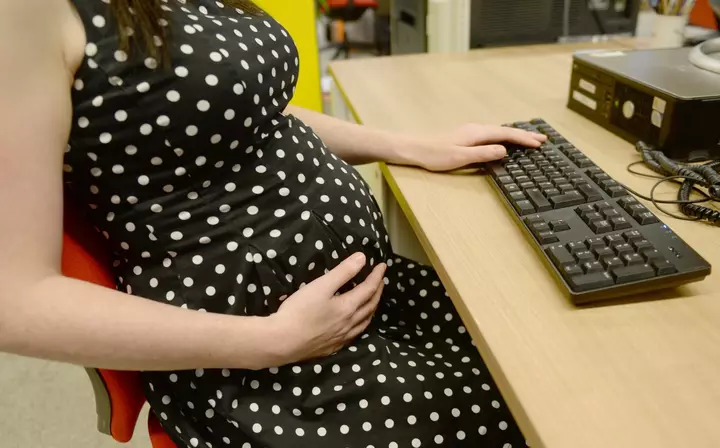
The Trump administration is reportedly preparing to pare back workplace protections for pregnant women, a move that chiefly exposes how little America has offered them in the first place. The proposed rollback may carry considerable political symbolism, sure, but it concerns a safety net so meager that the fight over its boundaries risks obscuring the larger failure. In a country where motherhood occupies an almost sacred place in political rhetoric, giving birth remains a largely private financial undertaking.
The state celebrates the family, but leaves much of the bill on the kitchen table. According to The New York Times, the administration is preparing to narrow regulations under the Pregnant Workers Fairness Act, a bipartisan law passed in 2022 to protect employees facing pregnancy-related limitations. The protections can be almost embarrassingly elementary: water breaks!
Relief from heavy lifting! Time to attend prenatal appointments! One might reasonably wonder why such ordinary considerations for a pregnant woman needed to be enshrined in federal law in the first place.
The contrast with other wealthy democracies is almost absurd. In Britain, eligible mothers can receive up to 39 weeks of statutory maternity pay. In Canada, qualifying mothers can receive 15 weeks of maternity benefits, followed by parental benefits.
The United States, meanwhile, remains the only country in the Organization for Economic Cooperation and Development without a national paid maternity leave program. American federal law instead offers eligible workers up to 12 weeks of unpaid, job-protected leave. Let's be honest, though: the right to recover from childbirth without losing one's job is considerably less reassuring when recovery means losing one's income.
The disparity extends within America itself: Bureau of Labor Statistics figures show that just 49 percent of private-industry workers had access to employer-provided paid family and medical leave in 2026. The figure includes medical leave, making it broader than maternity benefits alone. Seen against that backdrop, the administration's proposed rollback acquires a peculiar significance.
Extract — continue reading at the source.