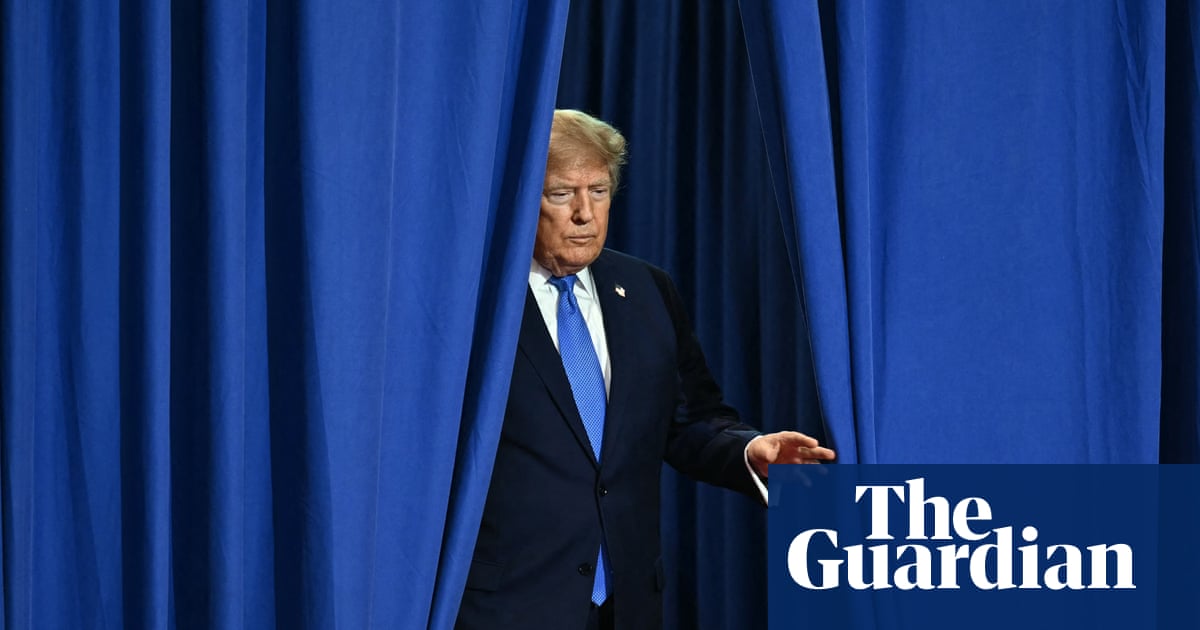
A series of moves by Donald Trump’s administration to sow doubt in the integrity of US elections have intensified concern among voting experts – and sparked hope among election deniers – that it could declare a national emergency. The White House and US federal agencies have released a string of documents this summer – including disputed analyses of alleged voting by noncitzens and historical intelligence memos – stoking expectations that the US president could move to exert greater control over November’s US midterm elections. Trump used a primetime television address in July to claim – again – that US elections were vulnerable to foreign manipulation, and repeat the lie that the 2020 presidential election, which he lost to Joe Biden, was stolen.
Trump’s speech prompted Steve Bannon, his former political strategist, to predict the US president will declare a state of emergency on national security grounds to “protect” elections. Just block the last week of August out. It’s coming.” While Trump and his allies could try to use a national emergency declaration to delegitimize results of November’s results, experts say such a declaration would not supersede the constitutional restrictions on executive power on election administration.
No president has ever attempted to invoke an emergency to assert control over voting. Asked earlier this month by Wayne Allyn Root, a rightwing broadcaster, if he would “declare a national security emergency for elections”, Trump notably did not shoot down the idea. I think our focus at the end of the day is to turn out enough voters where, no matter what he pulls, it won’t succeed.” Democratic members of US congress have been wargaming strategies to respond to executive provocations in recent months, considering scenarios such as AI-generated disinformation videos and Immigration and Customs Enforcement (ICE) agents being dispatched to polls.
Progressive organizations in the democracy space have also been preparing for something to happen before the election. The presence of Tulsi Gabbard, Trump’s former director of national intelligence, at an FBI raid in Fulton county, Georgia, raised questions earlier this year. Gabbard later testified before Congress that she had been leading an investigation into claims of foreign interference in US elections.
Gabbard’s team was involved in the seizure and examination of voting equipment in Puerto Rico, and spent months scrutinizing potential vulnerabilities in voting machines and the possibility of foreign interference. When Gabbard resigned on 30 June, Trump named his longstanding ally Bill Pulte as her acting replacement, a widely criticized move by members of both parties, who pointed to Pulte’s lack of intelligence experience. While Jay Clayton later took up the post permanently, Pulte is said to have pushed the election interference narrative in a less-visible role.
Every day we’re going to be dogging him on, like, where’s the next release on this.” On the night of Trump’s July address, Bannon texted CNN: “We need a National Security Emergency about the midterm elections immediately – this is a powerful predicate for that.” Ty Cobb, a former White House attorney, now a sharp Trump critic, warned of the same while speaking to PBS following the president’s July TV address. ICE agents at polls is “a virtual certainty”, said Cobb, who questioned whether National Guard officers would also be presented. The first tranche included declassified intelligence memos which described electronic voting machine vulnerabilities, foreign access to state voter registration data and foreign digital manipulation strategies.
Extract — continue reading at the source.