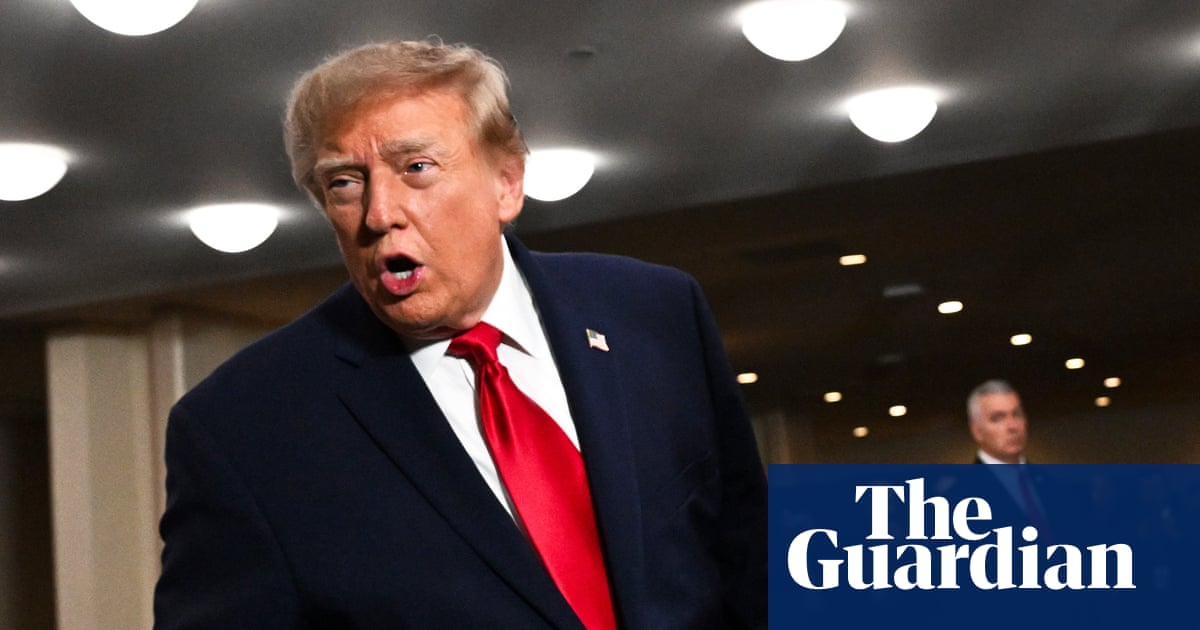
Donald Trump made over a thousand stock sales and purchases worth between $79m and $270m in July, according to a Guardian analysis of his latest financial disclosure released Tuesday. His two largest sales were of Amazon and Microsoft stock, selling between $5m and $25m each on 20 July. That same day, he also sold up to $5m worth of Oracle and Costco stock, $500,000 to $1m in Nvidia, and bought up to $5m worth of shares in Intuit and Salesforce, among dozens of other transactions.
Overall, he made more than 700 sales that totaled between $35m and $137m, and made more than 440 purchases that totaled between $43.5m and $134m. Financial disclosures, which presidents and vice-presidents are required to file by law, only include a date and a range of the transaction amount. The White House said Trump’s stock and bond portfolio was “independently managed by third-party financial institutions” and that there were no conflicts of interests in the latest disclosure.
All investment decisions are made entirely by independent managers.” The July disclosure comes as Trump and the Republican party continues to champion a ban on stock trading among members of Congress, which would exclude him from any restrictions. The president made more trades than all of Congress combined between the start of his second term and June, a Bloomberg analysis found. Trump’s last annual financial disclosures revealed that he made more than $2.2bn last year from his network of businesses and investments, including $1bn in crypto revenue.
Disclosures from his staff have also revealed large $45,000 cash gifts to three White House officials, including his close personal aide, Natalie Harp, which sparked calls from watchdog groups for further investigation. Trump also made up to $15.5m from his investments into oil and gas companies, the Senate’s joint economic committee found, because of gas prices driven up by the US war with Iran. The president, vice-president and members of Congress are legally allowed to trade stocks and are required to disclose their trades within 45 days of the transaction.
But the practice is widely unpopular with voters. A recent survey from the Economist and YouGov found that about 75% of respondents, which included majorities of Democrats and Republicans, believed that elected officials should not be allowed to buy and sell individual stocks in public office. The Trump-endorsed Stop Insider Trading Act passed by the House of Representatives in July, which would prohibit lawmakers and their families from purchasing publicly traded stocks.
The ban, however, would not affect Trump or JD Vance.
Extract — continue reading at the source.