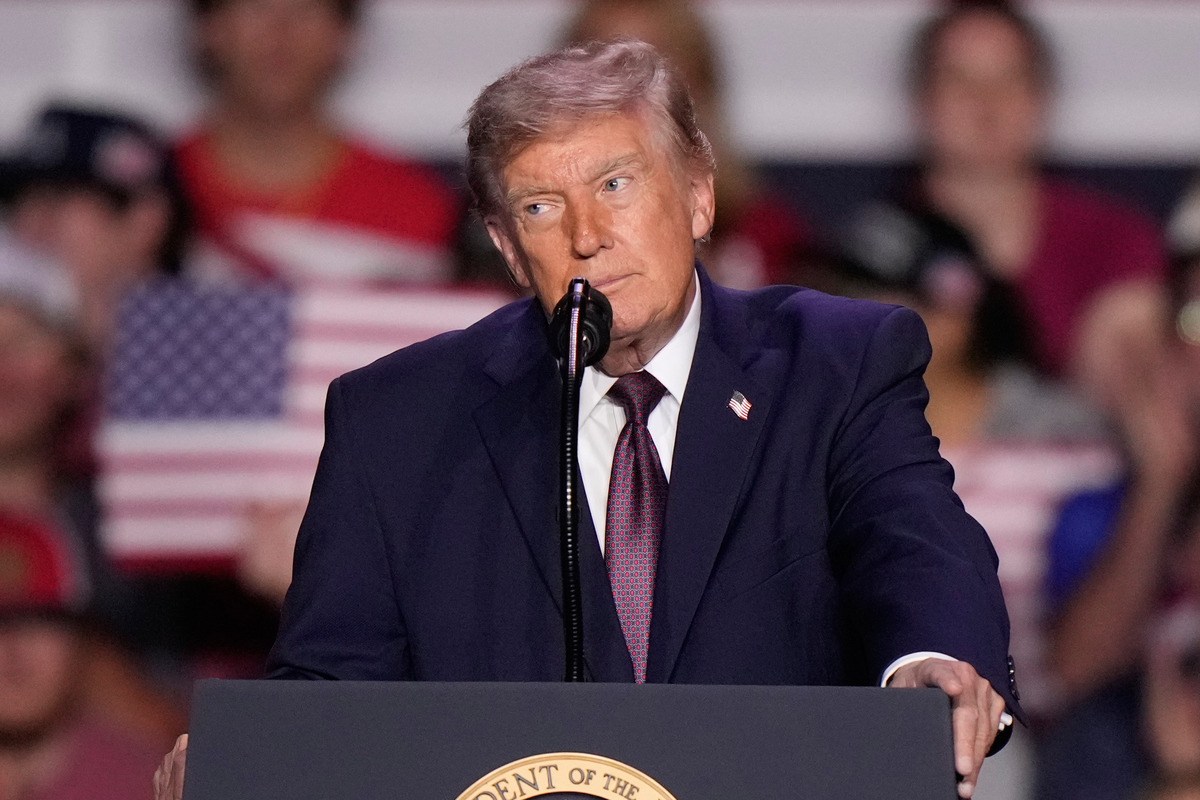
President Donald Trump has pledged to expand capital punishment in the U.S. despite unease among human rights campaigners and death penalty advocates alike following the botched attempted execution of convicted murderer Christa Pike in Tennessee this week. "We will pass the death penalty for large-scale drug dealers, human traffickers, and anyone who kills a police officer," Trump said in a clip shared by Fox News. Trump, who spoke at a campaign rally in Mobile, Alabama, on Friday, has moved to broaden out federal executions, but his fresh insistence comes just days after Pike was rushed away from Riverbend Maximum Security Institution in Nashville to hospital, still alive despite receiving two doses of the lethal drug pentobarbital.
Pike's lawyers said on Friday she was "critically ill," attached to a ventilator and still unconscious with "swollen, burned, and blistered" arms. Hospital staff were attempting to flush the "caustic" drug from Pike's system, her attorneys said. Pike, now 50, was convicted of first-degree murder for the 1995 killing of 19-year-old Colleen Slemmer, another classmate at Knoxville Job Corps, a facility for troubled teenagers.
Pike, who was 18 at the time, didn't deny killing Slemmer but her lawyers said Pike had suffered a traumatic childhood and extensive sexual abuse, arguing her sentence should be changed to life imprisonment. The case was widely picked up because a satanic symbol was left on Slemmer's body, and prosecutors said Pike and her then-boyfriend Tadaryl Shipp had brutally tortured and killed Slemmer because Pike considered her a rival in her relationship with Shipp. Shipp was handed a life sentence and was 17 at the time of Slemmer's murder.
Pike has spent most of her adult life in prison, and was later convicted of attempted first-degree murder of another inmate while incarcerated in 2001. She was set to be the first woman executed in Tennessee in over 200 years after multiple appeals and legal challenges failed. The Supreme Court had denied a request from Pike's lawyers for a reprieve on the eve of her planned execution, while the state's governor, Bill Lee, had said he wouldn't intervene to grant a request for clemency.
Court of Appeals for the Sixth Circuit granted a several-hour stay on the day of the execution attempt. Pike had argued she would likely experience "unnecessary and superadded pain and suffering, terror, and disgrace" from a death by lethal injection, in part because she had "small veins" and suffered from post-traumatic stress disorder. Pike's lawyers said at least seven needles were used in the failed execution attempt, adding in a court filing on Friday that the inmate had "herself offered guidance on where the IV team could attempt access." "She could be heard crying, whimpering, and breathing loudly throughout the procedure," her lawyers said.
Witnesses reported hearing Pike snoring before being carted away. "Apparently at no point did any member of the execution team realize that the IV lines were not correctly placed or that the veins had blown and that the pentobarbital was, in whole or in part, entering Ms. Pike’s body," her attorneys said.
Extract — continue reading at the source.