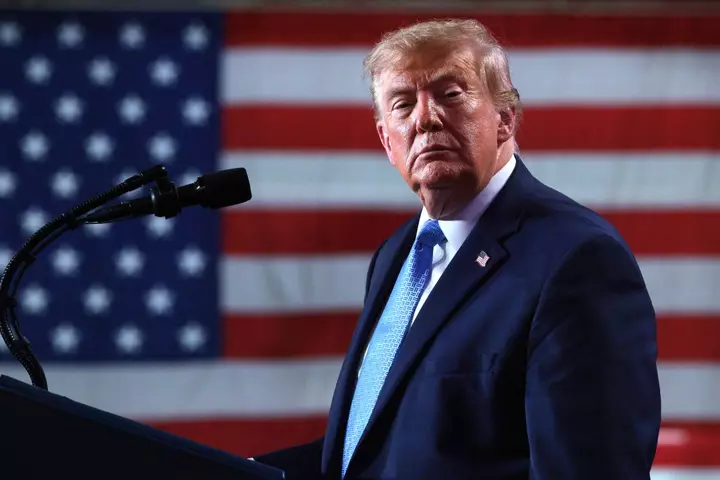
Washington loves to turn presidents into monuments and, in true Donald Trump style, the current commander in chief seems intent on reversing the process, turning the monuments of Washington into reflections of himself. His proposed triumphal arch outside Arlington National Cemetery may offer the most literal expression yet of that ambition. According to reports, the endlessly spoken about 250-foot structure would cast its shadow across tens of thousands of graves, including that of John F.
Even the dead would find themselves in Trump's shadow. Posterity, it seems, will have to wait its turn. The arch would rise from Memorial Circle, at the western end of Arlington Memorial Bridge, on the ceremonial route connecting the Lincoln Memorial with Arlington National Cemetery.
Conceived to celebrate America's 250th anniversary, it would tower over the Lincoln Memorial and even Paris' Arc de Triomphe. The French, who have spent two centuries perfecting the art of monumental self-importance, might reasonably wonder whether they have been outdone. There is something impatient about Trump's approach to posterity that is worth analyzing.
Washington's monuments generally emerge from the slow business of historical judgment. Take the Washington Monument, for example, which was completed decades after its subject's death. Then there is the Lincoln Memorial, which opened in 1922, nearly six decades after Lincoln's assassination.
The interval between history and art allows a president's achievements to be weighed against his failures, and his place in the national story to be negotiated by generations who never voted for him. Trump has little apparent interest in waiting for such deliberations. The arch is being planned during his presidency, to his preferred dimensions, with preliminary approval already granted by a federal commission chaired by a White House official.
Its official purpose is patriotic rather than personal and there is certainly a legitimate case for marking the nation's anniversary with a new monument. The idea of an arch at Memorial Circle predates Trump, after all, with supporters arguing that the capital deserves a grander architectural celebration of American independence. Yet the scale of the whole shindig introduces a curious question of authorship: a monument can commemorate the nation while bearing the unmistakable aesthetic signature of the man who commissioned it.
Extract — continue reading at the source.