As President Donald Trump attempts to land a decisive blow against Iran with an intensified economic campaign, another battle is brewing on the sidelines of the six-month war that could prove even more challenging for the United States. The feud between Israel and Turkey took a new turn last week with an Israeli strike against a Syrian airbase reportedly visited just hours earlier by a Turkish defense delegation. Israel accused Damascus of moving to violate security arrangements by inviting Ankara's military presence, while the Turkish government railed against the Israeli move as a violation of Syria's sovereignty and called for the Israeli premier's arrest on charges of genocide and other crimes.
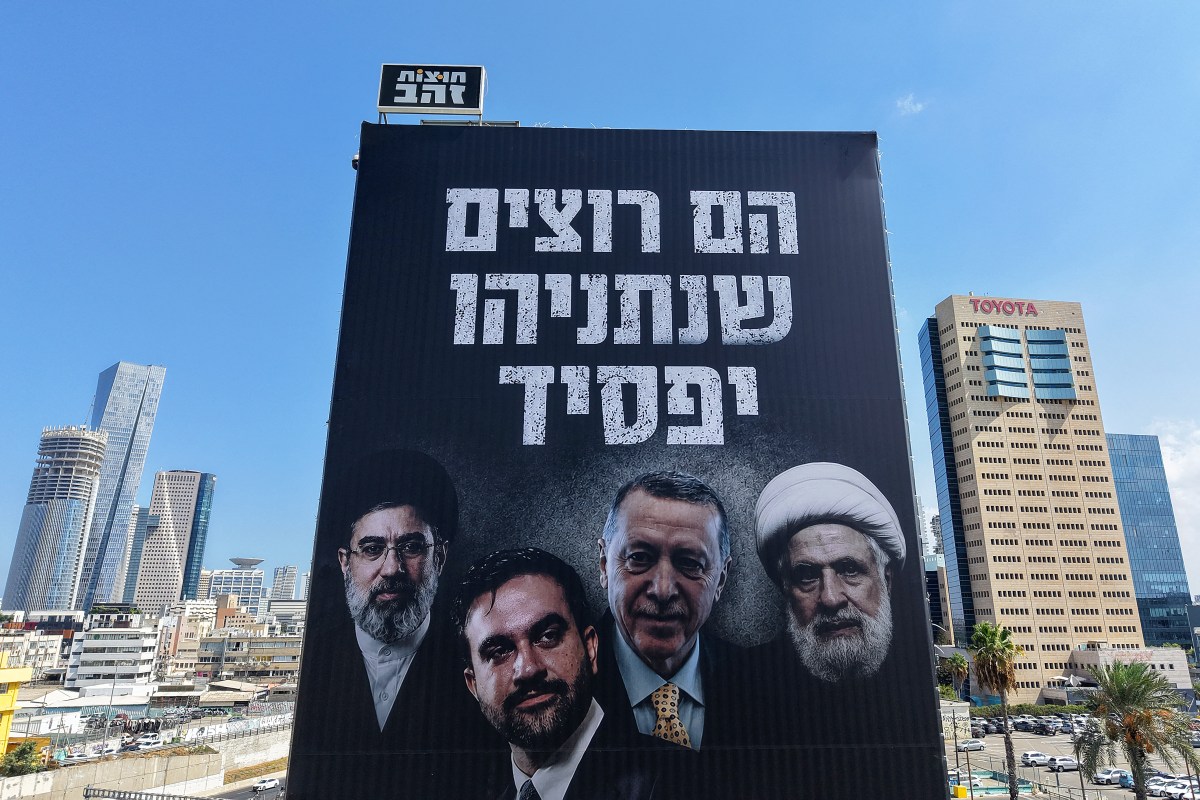
As the war of words escalated on Friday, Israeli Prime Minister Benjamin Netanyahu's office slammed Turkish President Recep Tayyip Erdogan as an "antisemitic dictator" behind a "pathetic attempt to intimidate the leaders and soldiers of Israel," to which Erdogan's communications office soon hit back at Netanyahu’s “petty political tactics” and efforts “to present Türkiye as a new threat." The tensions show little sign of subsiding. As a heated election approaches for the Israeli premier in October, Erdogan's face adorns a billboard near Tel Aviv beside the likenesses of Iranian Supreme Leader Ayatollah Mojtaba Khamenei, New York City Mayor Zohran Mamdani and Hezbollah Secretary-General Sheikh Naim Qassem, along with the message, "They want Netanyahu to lose. Don't let them win." Now, some analysts say the possibility of a direct clash cannot be dismissed.
Ismail Numan Telci, director of Ibn Haldun University's Center for Gulf Studies and Global Policy in Istanbul, argued that a direct military confrontation between the two U.S. allies is not "the expected outcome" at this stage, though "ruling it out entirely would be premature." "And I wouldn’t want to give false comfort on that point," Telci told Newsweek. "The Syrian theater is dense with actors, short on margin for error, and increasingly shaped by domestic political calendars, which adds an unpredictable variable to an already volatile environment. "A limited flare-up cannot be taken off the table completely, particularly if Israel decides to test Turkish resolve near an airbase again." Relations between the two nations were not always this bad.
Turkey was the first Muslim nation to recognize the newly established State of Israel in March 1949, weeks after the end of the first Arab-Israeli War. Ties often fluctuated throughout the Cold War era as Ankara aligned itself with the West by joining NATO in 1952 while remaining supportive of Palestinian self-determination. Even when Erdogan rose to power in 2002, he initially pursued positive engagement with Israel.
By 2009, however, following the first major war in Gaza, a tense exchange between Erdogan and then-Israeli President Shimon Peres in Davos and Netanyahu's return to office months later, relations began to sour decisively. Several attempts at reconciliation and normalization were made, but dueling accusations between Erdogan and Netanyahu went on to dominate the bilateral dynamic. Some of the harshest rhetoric has emerged since the onset of the current Middle East crisis brought on by Hamas' October 2023 attack against Israel and the ensuing war in Gaza.
A number of Israeli officials, such as Consul General in New York Ofir Akunis blame Erdogan for adopting a hostile outlook. In a recent interview with Newsweek, Akunis described Erdogan as "extreme" and "insane," referencing his support for activist flotillas attempting to break the blockade of Gaza and accusing him of aiding and abetting Israel's foes. Erdogan and Netanyahu opposed the country's longtime leadership under former President Bashar al-Assad, but the man who would oust him in December 2024, former Islamist militant chief-turned-pragmatic leader President Ahmad al-Sharaa, has aligned closely with Turkey while drawing direct intervention from Israel.
Extract — continue reading at the source.