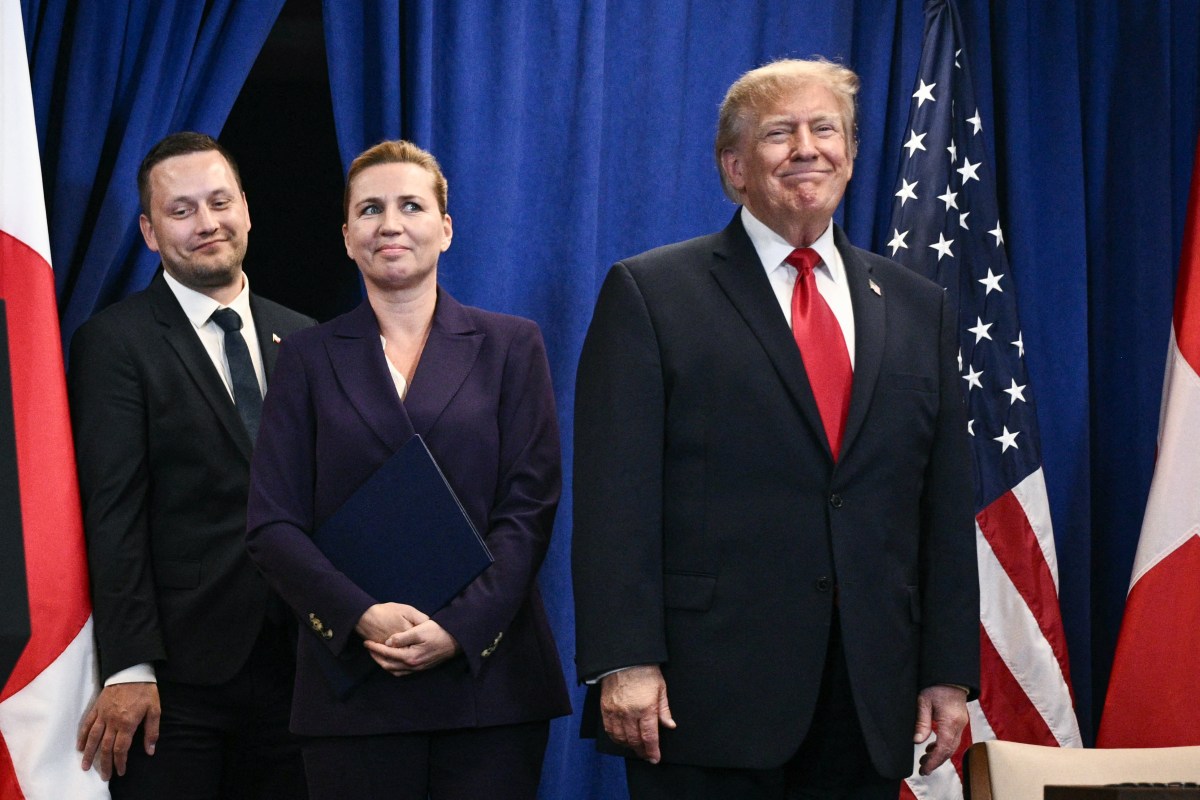
The new deal brokered between the U.S., Denmark and Greenland for governance of the latter’s security looks set to boost business opportunities for foreign firms working or hoping to operate in the semi-independent territory. The deal for "permanent control" over Greenland's security was announced by Donald Trump on Friday, with an official signing ceremony involving the three parties on the sidelines of the United Nations General Assembly in New York on Tuesday. The group had for months been working toward an agreement that addresses Washington’s security concerns while upholding the sovereignty and independence of Denmark and Greenland following months of annexation threats from the U.S. president.
All three have celebrated the accord on these grounds. And while primarily concerned with Arctic security, the deal has also been endorsed by those doing and planning business in the territory. Robert Price, CEO of the Texas-based firm Greenland Energy, said that this offered much-needed "clarity" for firms looking to invest in energy projects in Greenland.
In an interview with Newsweek on Tuesday, Price said that the deal—which awaits ratification in Denmark and Greenland—could lead to a proliferation in oil and critical mineral exploration opportunities in the territory, help the U.S. reduce its reliance on China for the latter, while enriching Greenland and bolstering its bid for full independence. "The diplomatic efforts of the U.S., Denmark and Greenland and everyone working on the same page—it increases certainty in long-term investments," he said. The deal signed Tuesday builds upon the 1951 security arrangement between the U.S. and Denmark, which has since governed the former's military presence in Greenland, and which was updated in 2004 to include the Greenlandic government.
Though it has been signed by Danish Prime Minister Mette Frederiksen and Greenlandic Prime Minister Jens-Frederik Nielsen, the deal must be ratified by lawmakers in their respective parliaments. Trump described the agreement in his U.N. speech as giving the United States "permanent control over security and all other needs" for Greenland. Denmark and Greenland have likewise hailed it as an acceptable middle ground between American security priorities and the need to respect both Denmark’s territorial integrity and the Greenlandic people's right to self-determination.
The most-visible change will be the buildup of American military infrastructure, in the territory, with new facilities set to open, expanded operations at the Pituffik Space Base and the establishment of a Golden Dome missile-defense system in Greenland. As well as an expanded U.S. military footprint, Price told Newsweek that the mere fact the three parties were able to come together on the issue would help to assuage long-running concerns about the security situation in Greenland and the threats of a U.S. takeover, boosting business confidence as a result. Reflecting this, Greenland Energy’s share price has more than doubled since the deal was first announced on Friday.
The company is engaged in a joint venture to drill the 8,100-kilometer-squared Jameson Land Basin—with an expected start date in winter 2027—which Price said a third-party engineering report had revealed could be home to $1 trillion worth of oil. "This is a long-term investment, working with the Greenlandic regulators to drill the first well," Price told Newsweek. "If we're successful, this could be a critical supply of oil for the U.S. and for Europe." Trump’s own special envoy to the territory, the Republican Louisiana Governor Jeff Landry, has likewise argued that Greenland could prove critical for the future of U.S. energy security.
Extract — continue reading at the source.