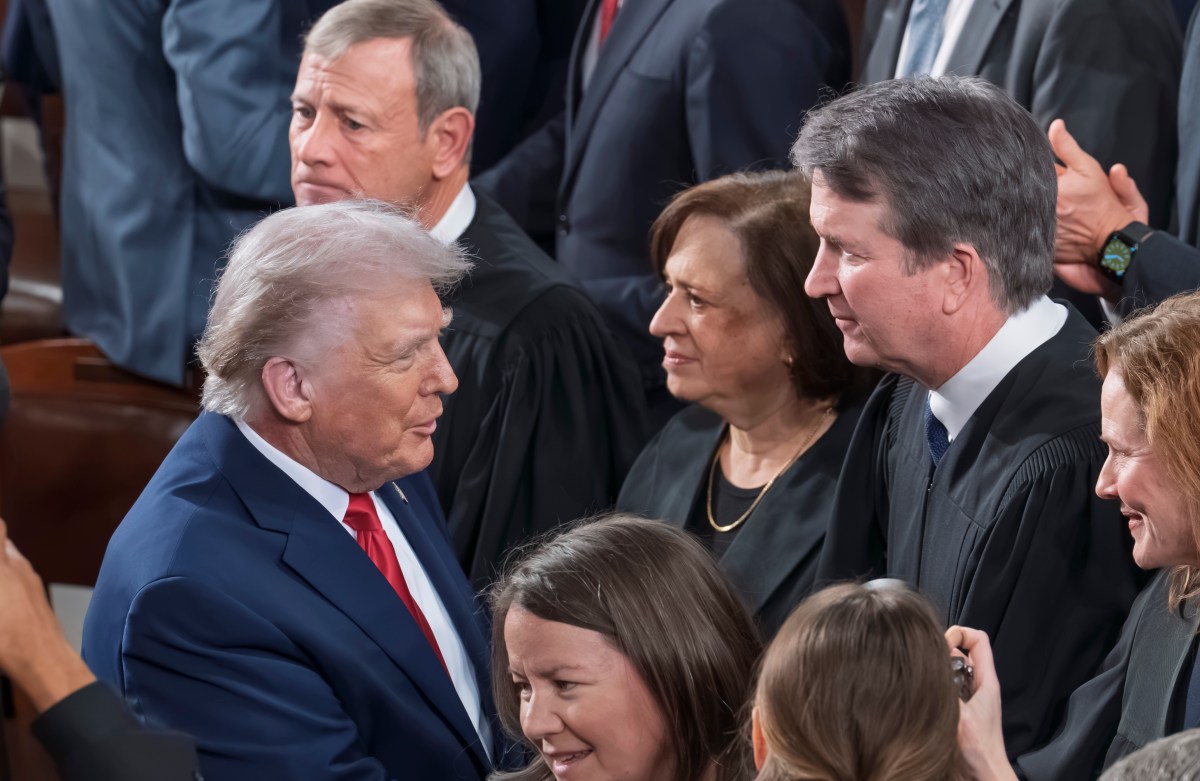
President Donald Trump's push to expand immigration detention is headed to the Supreme Court, setting up a high-stakes test for three justices he now says he regrets appointing. The Supreme Court announced Thursday that it will review the Trump administration's policy of denying bond hearings to certain immigrants arrested inside the United States while they challenge deportation proceedings, a case that could affect millions of noncitizens and significantly reshape federal immigration enforcement. The dispute centers on whether immigrants accused of entering the country illegally must remain in government custody throughout their removal cases or whether they are entitled to individualized bond hearings before an immigration judge.
Most federal appeals courts have concluded that prolonged detention without such hearings violates federal law, while the Fifth and Eighth Circuits have sided with the administration's interpretation that detention is mandatory. The case arrives before a court Trump has publicly criticized in recent months despite having appointed three of its nine members during his first term. In a wide-ranging interview with TIME published Thursday, Trump said he regretted naming Justices Neil Gorsuch, Brett Kavanaugh and Amy Coney Barrett to the bench because they had ruled against him "too often" in major cases.
They voted against me too often," Trump told the magazine. "I gave them the position of a lifetime, and they vote against me often." Trump's frustration follows several significant Supreme Court defeats during his second term, including rulings on tariffs, birthright citizenship and the independence of the Federal Reserve. While the president insisted to TIME he was seeking "good decisions" rather than loyalty, he contrasted his appointees with the court's three Democratic-appointed justices, whom he accused of voting together more consistently.
And while I don’t like it, there’s something I admire about it: there’s loyalty.” The newly accepted immigration case will provide another major test of the court's willingness to endorse Trump's expansive view of executive authority on immigration. A decision is expected during the court's current term, which begins Monday, October 5, and runs through mid-2027. This is a breaking news article.
Newsweek’s reporters and editors used Martyn, our AI assistant, to produce this story. Learn more about Martyn here. Contact Newsweek editors on this story: Jason Lemon and Sam Wilson.
Extract — continue reading at the source.