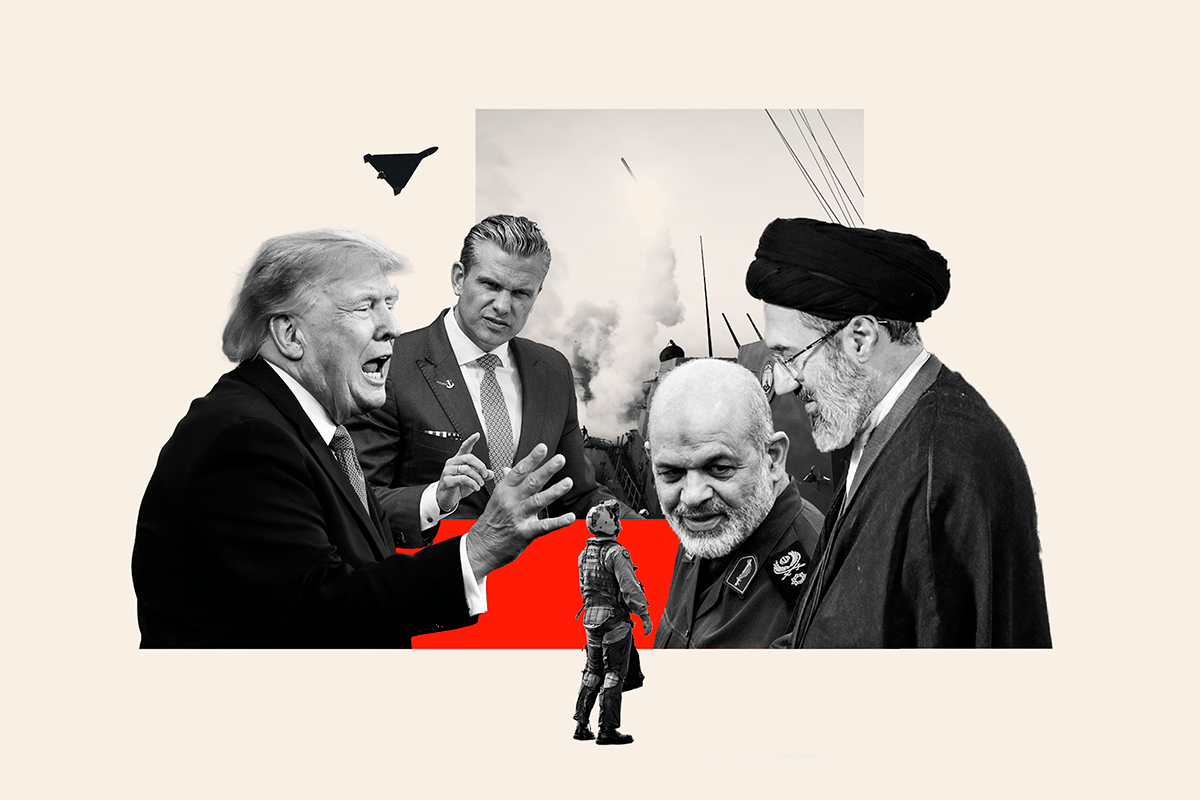
Six months ago today, the United States launched Operation Epic Fury, bringing the full weight of America’s military might to bear on Iran. Initially, the code name, which sounds like it was dreamed up by a group of 13-year-olds, was actually rather apt. The opening salvo killed Ayatollah Ali Khamenei and a swathe of Iran’s political and security elite, battered its air defenses, missile forces and navy, and left much of its military infrastructure in ruins.
For a time, Trump even appeared to believe he could bring down the Islamic Republic altogether, telling Iranians to "take over your government." Six months on, though, the operation seems neither especially epic, nor particularly furious. The Islamic Republic survived, the Revolutionary Guards tightened their grip on power, and Tehran turned the Strait of Hormuz into its greatest bargaining chip. Washington is now negotiating over Iranian demands and concessions that would have been almost unthinkable when the first bombs fell—and the International Atomic Energy Agency still can’t establish the size, composition, or whereabouts of Tehran’s enriched-uranium stockpile.
So, where does a war go when the world’s most powerful military can inflict extraordinary destruction, but can’t impose an ending? With the help of experts on Iran, sanctions, energy and military strategy, Newsweek explores five possible scenarios and their unique consequences. Iranian and Omani foreign ministers met in Tehran this week to discuss a temporary shipping corridor through Hormuz and joint mine-clearing, with talks expected to continue toward a permanent navigation arrangement despite President Donald Trump threatening last week to "bomb the s*** out of them" if Oman "gets in the way." "A narrow Hormuz agreement remains the most plausible route towards a wider negotiation," Andreas Krieg, a Middle East security expert at King’s College London, told Newsweek.
"Iran does not need formal control over the Strait to claim success. It needs recognition that it is an indispensable security actor that can’t be excluded from managing Hormuz. "Washington, meanwhile, needs to be able to say that it restored freedom of navigation and prevented Iran from imposing unilateral control.
There is a viable compromise somewhere between those positions." The Islamabad Memorandum, signed in June by Trump and Iranian President Masoud Pezeshkian, remains the most concrete template for any future talks, even though its 60-day framework has since expired. But its key terms remain difficult for both sides to swallow. Anthony Cowden, a former Navy captain, naval strategist and managing director of Stari Consulting, called it "essentially a surrender document," adding that Washington "will have trouble not looking like it has suffered a strategic loss in any ‘final’ agreement." "On one side are (chief negotiator) Mohammad Bagher Ghalibaf and President Masoud Pezeshkian, who still speak positively about the MOU as a framework worth returning to," Tehran-based analyst Peiman Salehi said.
"On the other side, the IRGC and security council chief Mohsen Rezaei seem to view it less as an end in itself and more as a temporary bridge toward achieving Iran’s broader objectives." In other words, the least painful scenario asks Trump to accept a deal that all but his staunchest supporters will call a defeat, Iranian hard-liners to surrender leverage they believe they won, and both sides to bridge a yawning chasm with no trust after their last bargain collapsed. On Monday, the U.S. launched a new kind of blockade beyond Hormuz when U.S. Treasury Secretary Scott Bessent unveiled Operation Economic Outcast, casting America’s sanctions net even wider to inflict yet more damage on Iran’s creaking economy.
Extract — continue reading at the source.