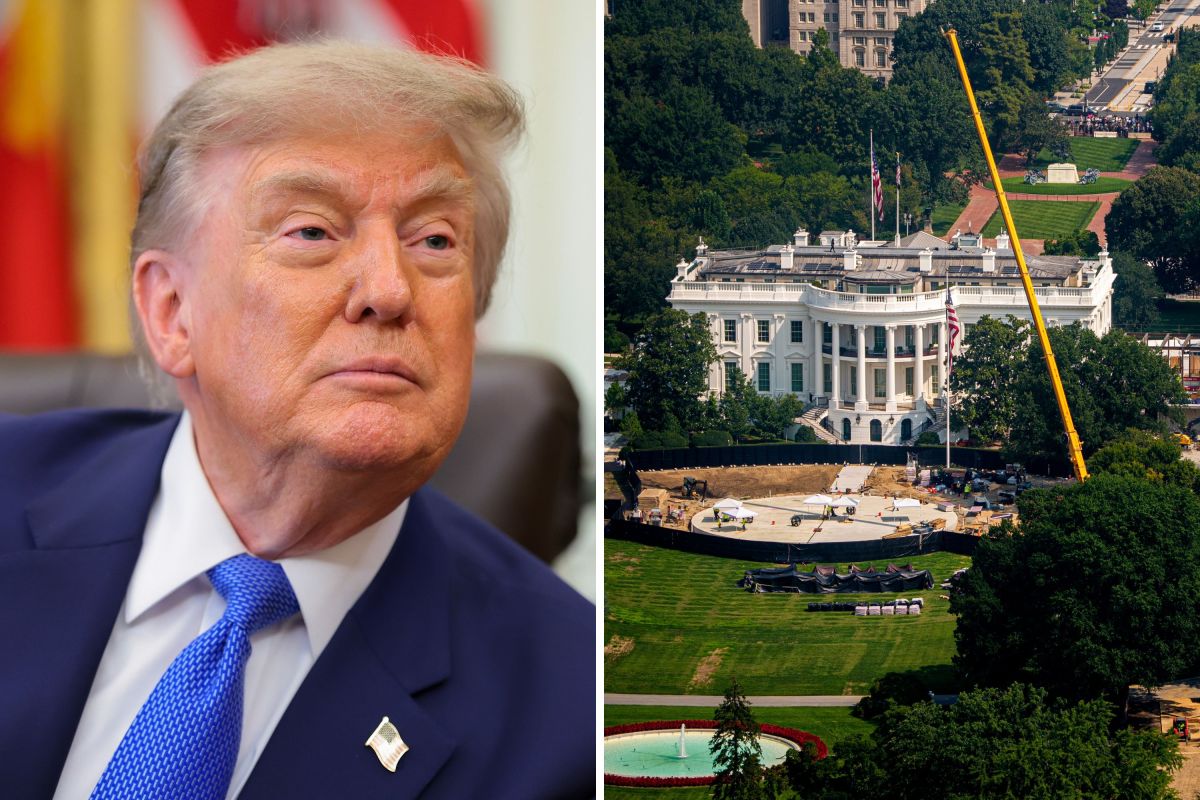
President Donald Trump is reshaping some of Washington, D.C.’s most prominent landmarks, with a series of renovation and construction projects spanning the White House, National Mall and Kennedy Center. The much-debated plans range from the White House ballroom and visitor screening center to changes at the Lincoln Memorial Reflecting Pool, alongside major new projects including the National Garden of American Heroes and a proposed triumphal arch. Some are already complete, while others remain in planning or construction and could still take years to finish.
The projects vary widely in cost and funding, with some backed by private donations and others drawing on hundreds of millions of dollars in federal money. Trump has repeatedly framed his renovation projects as part of a broader effort to remake Washington, arguing that the capital has suffered from years of neglect. In August 2025, he said the city had “the greatest bones” but was “dirty and not properly maintained,” adding: “We’re going to also fix up a place called Washington, D.C.
We’re going to make it so beautiful again.” His March 2025 executive order on the capital similarly called for “beautiful, clean, and safe public spaces” and said Washington’s monuments, buildings and museums should inspire appreciation for the country’s “strength, greatness, and heritage.” But the vast array of projects has not been without scrutiny. Several have sparked lawsuits regarding preservation concerns and disputes over Trump’s authority to alter historic federal sites. Here is a round up of where each major project currently stands: President Donald Trump’s most substantial White House construction project is a new ballroom and associated East Wing complex, replacing the historic East Wing that was demolished in October 2025.
The planned building spans roughly 90,000 square feet and is designed to hold close to 1,000 guests, while the wider project includes underground security facilities, bomb shelters and other military infrastructure. Trump has repeatedly put the ballroom’s cost at less than $400 million and initially said it would be financed entirely through his own money and private donors. However, a contractor estimate obtained by The Washington Post in June put the wider project at about $600 million, with more than half expected to come from taxpayer-funded work by the Secret Service, White House Military Office and Executive Residence.
We have no taxpayer putting up 10 cents,” Trump said in March. He has said construction is ahead of schedule and has targeted an opening around September 2028. But Trump's timeline is now uncertain because of a legal challenge from The National Trust for Historic Preservation, who argue Trump lacked authority to demolish and rebuild such a significant part of the White House complex without congressional approval.
Circuit Court of Appeals ruled 2-1 that above-ground ballroom construction could not continue without authorization from Congress. The administration has since asked the Supreme Court to intervene, arguing that the project is also a national-security facility containing shelters and anti-drone defenses. The project has also drawn complaints from architects and preservationists over the demolition of the East Wing and the absence of the usual public planning process.
Extract — continue reading at the source.