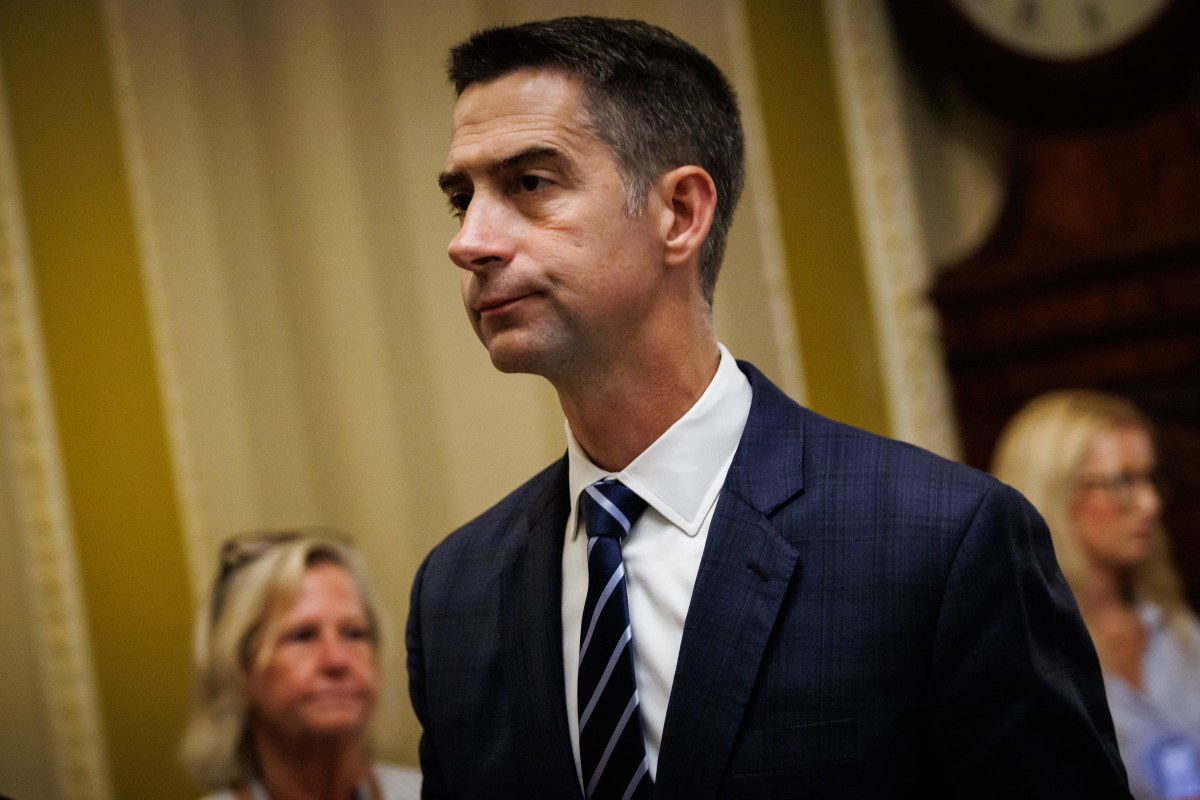
President Donald Trump shared Senator Tom Cotton's cellphone number in a Truth Social post on Saturday morning as part of a campaign to pressure lawmakers into backing legislation that would make daylight saving time (DST) permanent. The move came after Trump previously criticized the Arkansas Republican for helping stall the Sunshine Protection Act, a bipartisan bill that would end the twice-yearly clock changes and keep the nation on DST year-round. In his Truth Social post, Trump, who called Cotton "a friend," urged supporters to contact the senator directly.
"For some reason, Tom is stopping the Bill and, in the Senate, it’s very easy to do, it only takes one! It should pass overwhelmingly, in a Bipartisan fashion...To the Great People of Arkansas, please let your Senator know it would be a GREAT Bipartisan WIN for the United States Senate, and for America, itself. Call Tom on his cellphone,” the president wrote.
When Newsweek called the number provided by Trump, the call immediately went to voicemail with a message saying, "Sorry the mailbox is full." Newsweek reached out to Cotton by email Saturday for comment. He declined to comment to Newsweek in previous reporting on Trump's criticism. Meanwhile, Americans are set to turn their clocks back on Sunday, November 1, returning to standard time.
With the Senate in recess until after the midterm elections, the legislation faces significant procedural and political obstacles despite passing the House with bipartisan support in a 308-117 vote in July. The president has argued that ending the clock changes would benefit public health, reduce crime and traffic accidents, and boost economic activity. Likewise, regular Golfers, Tennis Players, Hunters and, perhaps most importantly, Farmers who want more Daylight to play or work.” Among the first to share public opposition to permanent DST were sleep medicine experts.
In July, the American Academy of Sleep Medicine praised the introduction of a competing bill that would also end twice yearly clock changes, but would instead establish permanent standard time nationwide. AASM spokesperson Karin Johnson previously told Newsweek permanent DST would leave clocks "out of sync with our biology year-round" by shifting light later into the day and reducing exposure to morning sunlight, which helps regulate sleep and alertness. Meanwhile, the dispute highlights a growing split among Republicans over a proposal that polls suggest is broadly popular with voters.
According to a YouGov survey conducted in February, 64 percent of Americans said they would like to eliminate changing clocks twice a year, while just 16 percent opposed ending the practice. While Trump has made permanent DST a priority and rebranded the proposal as the "No More Changing of Clocks Act," Cotton remains one of its most prominent opponents. The senator has repeatedly argued that permanent DST would create dangerously dark winter mornings.
Extract — continue reading at the source.