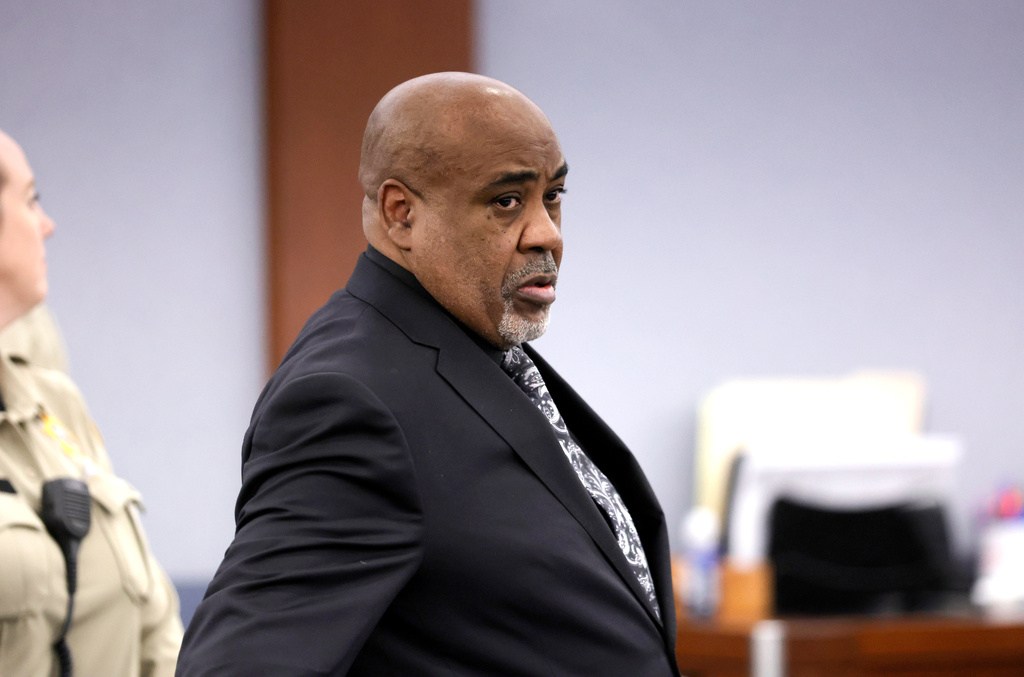
A Las Vegas jury has begun deliberating in the murder trial of Duane “Keffe D” Davis, closing out a prosecution built almost entirely on Davis’ own historical statements about the 1996 killing of Tupac Shakur. Prosecutors say Davis’ admissions — in interviews, documentaries, and his memoir — amount to a confession that serves as a substitute for missing physical evidence. The verdict will determine whether Davis, now 63, faces life in prison and whether Nevada courts accept a murder case constructed from decades‑old accounts, gang testimony, and circumstantial evidence.
Prosecutors argued his statements remained consistent in their core facts; the defense said they were fiction crafted for profit and notoriety. Prosecutors told jurors they did not need surveillance footage or receipts placing Davis in Las Vegas on the night Shakur was shot. Instead, they argued Davis placed himself there repeatedly — in a 2008 federal proffer, a 2009 Las Vegas police interview, a 2017 documentary appearance, and his 2019 memoir Compton Street Legend.
Chief Deputy District Attorney Binu Palal replayed Davis urging viewers to buy his book for the “real truth,” calling it a “textbook admission.” He highlighted passages where Davis described obtaining the Glock, sitting in the front passenger seat of the Cadillac, and giving the “green light” after the MGM Grand fight involving his nephew Orlando Anderson. Prosecutors emphasized that no witness testified Davis was lying. Former LAPD detective Daryn Dupree said he believed Davis because Davis implicated his own nephew — a detail jurors were told typically signals truthfulness.
Sanft spent much of his closing argument dismantling Davis’ narrative. He replayed testimony from witnesses who said they never saw Tupac Shakur hanging out the BMW window waving — a detail Davis repeatedly described. He argued that Davis could not have physically seen Shakur from his position in the Cadillac, given the vehicles’ alignment.
He also highlighted contradictions in Davis’ timeline, including Davis’ claim that he saw Shakur at the MGM the day before the fight — a detail contradicted by witness Malcolm Greenidge, who testified Shakur arrived in Las Vegas the day of the Tyson bout. One of the most significant revelations came from Davis’ 2008 federal proffer. Palal told jurors Davis was facing a potential life sentence in a narcotics case and was required to tell the truth to avoid prison.
He said Davis corrected investigators when they got details wrong — including non‑public information about the direction Shakur’s entourage fled after the shooting. Prosecutors argued this showed Davis wasn’t lying; he was “threading a needle,” trying to be truthful enough to satisfy federal agents while avoiding self‑incrimination. The defense argued that Davis was acting on behalf of law enforcement to protect his family and avoid federal exposure.
Extract — continue reading at the source.