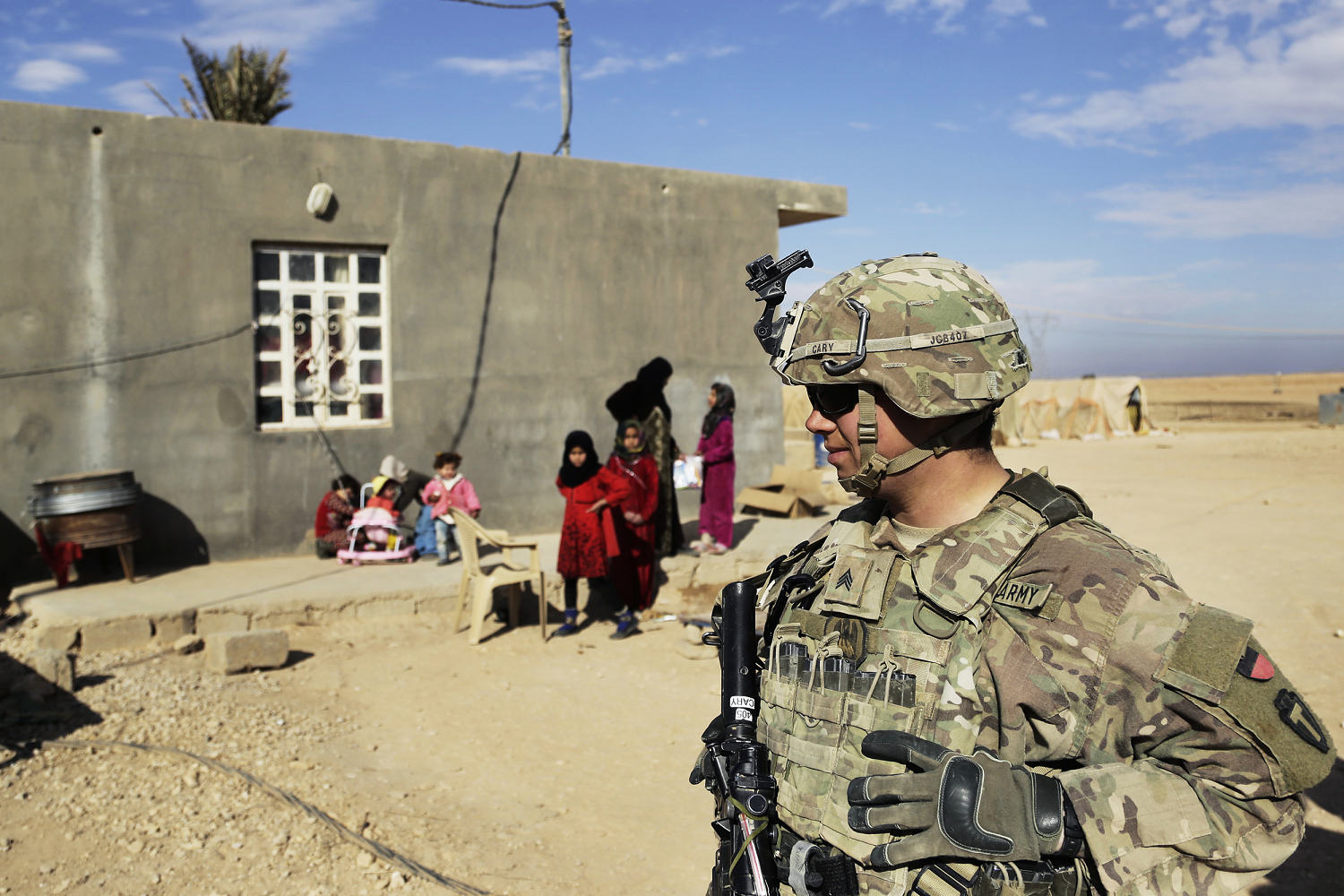
The last American troops assigned to fight ISIS in Iraq pulled out of the country Wednesday, ending the mission that dismantled the extremists’ self-declared caliphate but raising fears about what might fill the vacuum as the Iran war grinds on. Though the Iraqi government welcomed the end of Operation Inherent Resolve, Kurdish officials in the north of the country said they were concerned the Biden-era decision was being carried out even after Iranian missiles pummeled them following the war launched by the United States and Israel earlier this year. Iran-backed militias in Iraq have attacked U.S. personnel and diplomats, as well as regional allies such as Saudi Arabia.
And there are fears Tehran could seek to capitalize on the U.S. withdrawal, with its proxies already celebrating the move, coupled with concerns about a potential resurgence in attacks by the remnants of the Islamic State terrorist group itself. Chief Pentagon spokesman Sean Parnell said the “orderly departure” marked “the successful conclusion of the military mission that defeated ISIS in Iraq,” in a statement Wednesday. But ISIS has not been defeated entirely in Iraq.
The group comprises “hundreds of fighters” across seven provincial units, according to a United Nations monitoring report in August. This “limited presence” in desert areas generates $500,000 annually through extortion of farmers and shepherds, the report said. But it is “unable to conduct significant attacks” and is only capable of “unsophisticated operations” following the killing and arrest of leaders, it said.
The U.S. expects Iraqi and Kurdish forces to now “lead the continuing effort to secure Iraq and keep ISIS remnants suppressed,” Parnell’s statement said. The Pentagon will “continue to provide targeted training and intelligence support to our Iraqi partners.” Iraqi Prime Minister Ali al-Zaidi, who has been lavished with praise by President Donald Trump since entering office in July, described the withdrawal as the beginning of “a new phase.” At a handover ceremony in Baghdad, he said this would be “defined by Iraq’s sovereignty, the strength of its institutions, the readiness of its forces, the unity of its decision-making, and balanced partnerships with its friends.” However, Kurdish officials, who govern the north of Iraq, expressed alarm at the move. The Kurdish Peshmerga Affairs Ministry, which oversees defense, said Monday that the U.S. leaving without establishing any other air defense was “deeply concerning.” The withdrawal was agreed to under President Joe Biden’s administration in 2024, long before the Iran war drastically changed the region’s security landscape.
The Peshmerga Ministry said Monday that 1,000 ballistic missiles have been fired at its territory by Iran since late February. That combat operation came to an end in 2011, with almost all of the American personnel withdrawn. The U.S. returned to fight ISIS in 2014, with personnel numbers peaking at almost 9,000 as of 2017.
That operation wound down in 2024, and until this week only a small contingent of around 1,500 remained in the Kurdish-governed north. After this week, a smaller contingent of U.S. forces will stay in Iraq to protect American diplomats. Iran-backed militant groups have already celebrated the milestone as “a historic victory,” as put by Abu Mojtaba al-Yasiri, a commander in the powerful umbrella group the Islamic Resistance in Iraq, who described it as “a crushing defeat for the American project.” And though depleted, ISIS itself “is seeking to send a message that the group is still powerful and capable of launching bloody attacks,” according to Col.
Extract — continue reading at the source.