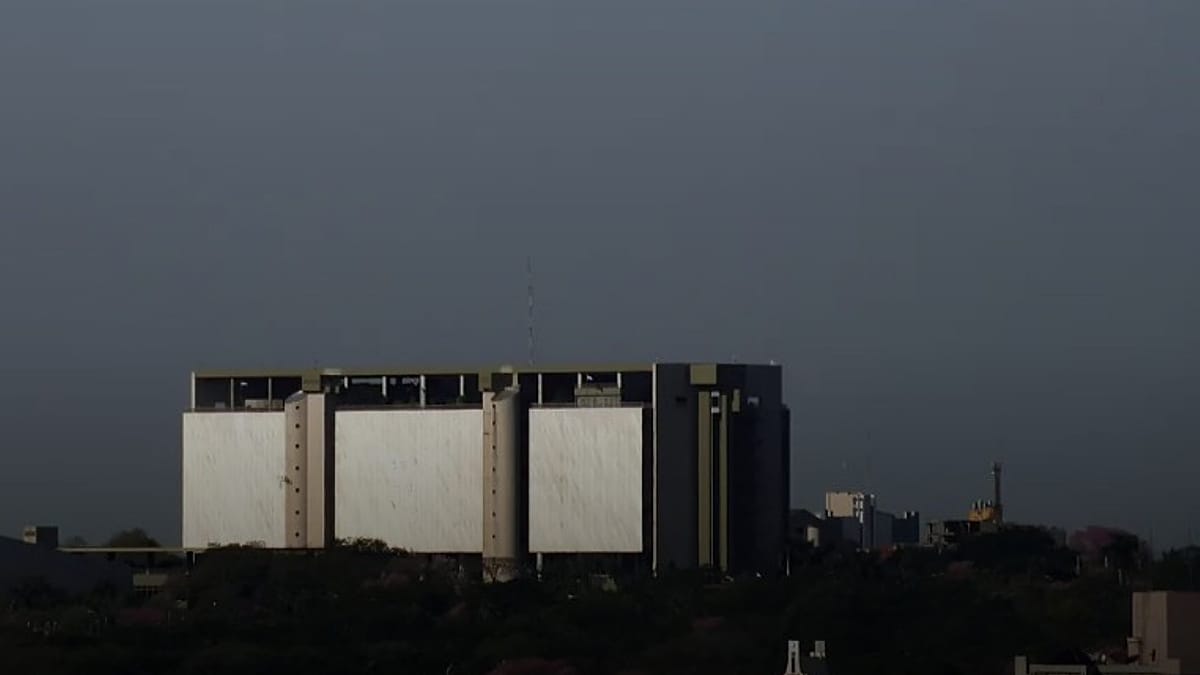
A sudden blank screen startled almost three million Ueno Bank customers in the early hours of Tuesday 3 November. At around 03:24, the app of the Paraguayan institution, a key player in the system that manages multimillion-dollar state funds and has grown at breakneck speed in its three years of existence, stopped displaying users' accounts and showed a single message: "We cannot display the balance". At the same time, the Central Bank of Paraguay issued a tough statement on its social networks: the institution was being taken over and its liquidation process was starting.
This "resolution procedure" against Ueno Bank was triggered by a major financial alarm, after a critical collapse in its solvency ratio had been detected, falling below 50%. The impact was immediate and set off an unprecedented political earthquake for the government of Santiago Peña. Since Tuesday, crowds of outraged users have converged on the headquarters in Asunción and the bank's 75 branches across the country, trying to save their money.
The scene outside the premises, closed and guarded by security staff, has turned into one of extreme tension and utter desperation. The anguish at the doors of the branches translated into everyday emergencies that had become impossible to handle. Some, in tears, begged to withdraw their funds to pay for medicine for a seriously ill child; a few kilometres away, a construction worker was equally distraught when he saw that, without access to his savings, he would not even be able to buy food for his children that day.
The bank held around 850 million dollars (about 758 million euros) in public funds, including resources from the Social Security Institute that underpin pensions and healthcare for workers. The spectre of an Argentine-style corralito immediately set off alarm bells among the population. "Who will answer for a lifetime of savings?
Will there be impunity?", read the placards held by protesters standing their ground outside the branches. The whole country held its breath as it awaited the press conference of the Central Bank of Paraguay (BCP). The official confirmation was categorical: "We proceeded to close the institution; neither the app, nor the cards, nor any service is active as of today", declared board member Liana Caballero.
The authorities' attempts to calm tempers by reminding people that the law provides for a guarantee fund that will reimburse each customer up to 75 minimum wages (around 228 million guaraníes or 37,700 dollars, about 33,620 euros) were in vain; mistrust and suspicion had already completely taken over the streets. The political opposition points to the BCP's leadership as complicit in the fraud through omission, but the coup de grâce is aimed squarely at the head of state. Santiago Peña is now in the eye of the storm: at the request of 35 legislators, the Chamber of Deputies will meet tomorrow in an extraordinary session to vote on whether to launch impeachment proceedings against him.
Extract — continue reading at the source.