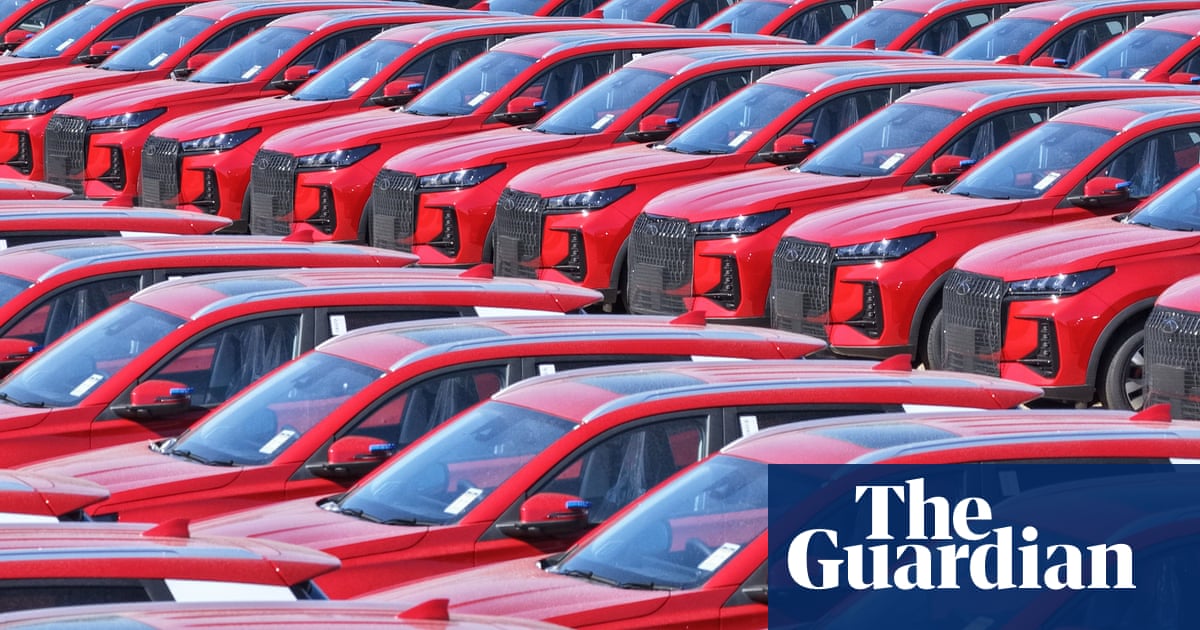
The business secretary has hit back at European demands for British tariffs on Chinese imports, saying the government will not change its trade rules because of pressure from Brussels. Jonathan Reynolds warned that the government would not bow to calls from other countries for the UK to hit Chinese vehicles with import taxes, despite political pressure to align with the EU in exchange for deeper future economic ties. The EU imposed tariffs on Chinese electric vehicles in 2024 and last Friday agreed a 350,000 a year quota on Chinese hybrid cars amid fears cheaper alternatives are causing deindustrialisation and job losses.
Reynolds conceded that levying sanctions on Chinese goods was an option in the future, but he dismissed concerns from Brussels that the UK could provide a back door to the European market. His comments highlight the divisions that remain between the UK and EU on trade and industrial policy, which could derail the prime minister’s attempts to move closer to Brussels. It’s an export-led sector, so that’s what I’ve got to take into account.” With Europe having imposed tariffs of up to 45% on Chinese electric cars, some believe that the UK has opened an alternative route into the EU for Chinese companies setting up in the UK to sell into the bloc.
Nissan, for instance, has agreed to look at building cars in northern England for the Chinese manufacturer Chery. Reynolds rebutted those accusations, however, saying: “The UK currently has no major Chinese manufacturer based in its automotive sector, so we’re not making vehicles here and sending them to the single market through some sort of back door.” His comments raise the stakes ahead of intense final weeks of negotiations before the long-awaited UK-EU summit, which Andy Burnham confirmed this week would be held in Brussels on 20 November. The prime minister told the Commons on Monday he wanted a “serious dialogue” over the UK’s place in Europe, as he framed the summit as a possible first step to EU membership.
The new Made in Europe trade rules aim to protect European companies from subsidised Chinese imports, but British manufacturers worry they will also be shut out of supply chains. The issue will not formally be on the agenda at the November summit, but British officials are hoping to use those talks to shape the European legislation. Diplomats on both sides of the Channel say the summit will now be an early test of whether Burnham’s desire for a “real reset” in UK-EU relations is likely to bear fruit.
One EU official said this week that the UK’s negotiating position would determine whether it was worth pursuing more fundamental changes such as British access to the single market, a new customs union or re-accession. Some in Brussels have been pushing for Britain to levy tariffs on Chinese electric vehicles in return for getting access to the European market under the new trade rules. Reynolds has previously dismissed such an option in part because of the risk that Beijing could hit the UK with reciprocal tariffs, damaging British companies such as Jaguar Land Rover.
He said it would be to Europe’s detriment if it did not admit the UK into the scheme. Speaking from a two-day trade delegation to Delhi and Mumbai, he acknowledged that the landmark free trade agreement he helped strike last year with India would become defunct if Britain does rejoin the EU. So there would be trade relationships with the UK that were based on Europe, the EU as a whole – that is how the European Union works in terms of its relationship.
Extract — continue reading at the source.