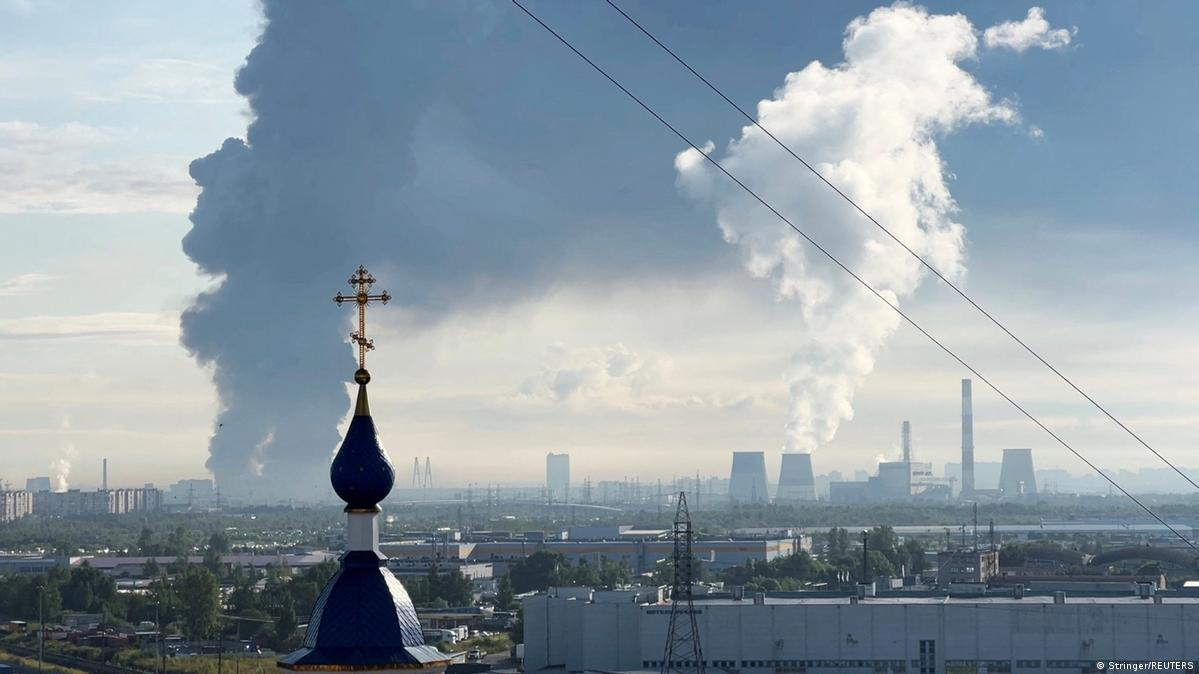
Ukraine’s use of long-range drones to strike targets deep inside Russia has raised questions that go far beyond the immediate military consequences. Oil refineries and industrial facilities were among the most obvious targets. But when Ukraine began striking warehouses belonging to Russia’s largest online marketplace, the rationale became less clear to many observers.
Kyiv has officially sought to justify the attacks by alleging that the platform is involved in supplying military and dual-use goods. For me, however, this is not a particularly strong explanation for the scale of the campaign. The platform is not a conventional defence contractor selling artillery shells, fighter-jet ammunition or other major weapons systems.
At most, it may provide military personnel with items such as uniforms, helmets, body armour or other equipment that can also be obtained through many other channels. That does not necessarily explain why such a large part of its logistics network has become a target. A different explanation has circulated unofficially.
The company is one of the largest businesses in Russia, has substantial financial obligations and is connected to hundreds of thousands of sellers and suppliers. If such a platform were to collapse, the consequences would not necessarily stop with the company itself. Sellers could lose access to their inventories and revenues, suppliers could face payment problems, and creditors could suffer losses.
In a financially strained economy, such a failure could create additional pressure throughout the financial system. This explanation is, in my view, more convincing. If the threat were genuinely of that magnitude, however, it would be difficult to imagine the Russian state simply allowing such a strategically important company to fail.
Yet the state may not need to rescue it from Ukraine if the company itself is creating a different kind of problem. More precisely, Ukrainian strikes have reportedly hit seven of the company’s ten major logistics hubs, while international media outlets have estimated that more than 20% of the company’s total warehouse capacity has been destroyed. The damage has naturally caused enormous problems for sellers whose goods were stored in the affected facilities.
Extract — continue reading at the source.