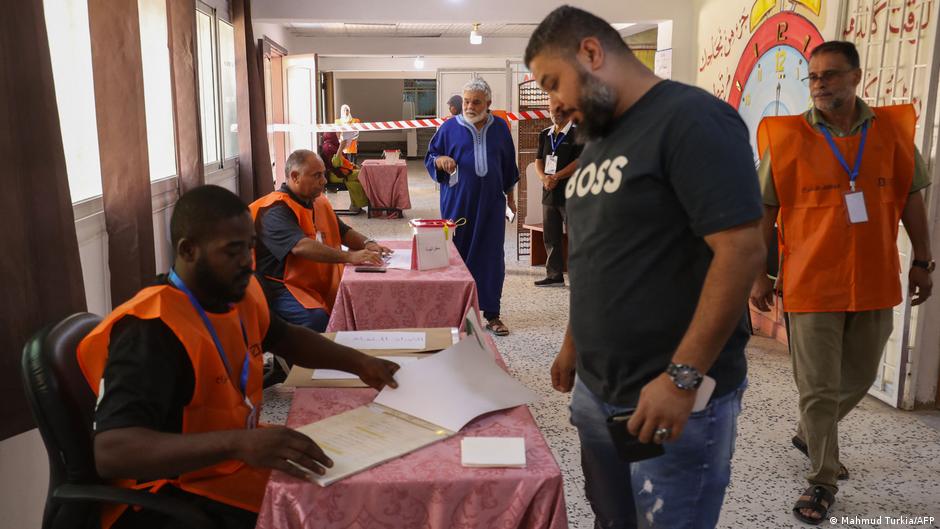
There have been other attempts made in the past but this time, those involved hope it will finally work out: Thanks to mediation by the United Nations, the two opposing governments in the west and east of Libya have agreed that they will hold parliamentary and presidential elections within the next two years. "The agreement marks an important step in advancing Libya towards national elections and ending the transitional period," the UN's Support Mission in Libya, or UNSMIL, said in a statement. Among other things, the country's electoral commission will be restructured and, according to the UN, various points about the legal framework for the elections that had previously led to disagreements have now been resolved.
But whether all this will actually result in free and fair elections in Libya remains to be seen. After former Libyan dictator Moammar Gadhafi was overthrown in 2011, Libya ended up divided in two. Since 2014, the country has been split between opposing governments located in the east and west of the country.
A UN-backed administration known as the Government of National Unity is based in Tripoli in the west, and its rival, known as the House of Representatives, is based in the east, in Tobruk. Former warlord-turned-politician Khalifa Haftar, is based in the east while Prime Minister Abdul-Hamid Dbeibah is in charge in the west. Each is supported by a number of local militias and foreign powers, and each has tried to wrest control from the other.
Up until now, attempts to hold an election that would unite the country have failed. For Andreas Dittmann, a geographic conflict expert and professor at the University of Giessen in Hesse, central Germany, the apparent unity is a positive. "Things could not continue the way they were," he told DW.
After years of civil war and political division, the desire of many Libyans to end the fighting permanently has only grown. Dittmann believes the attitudes of political actors have also changed in this regard. Previously foreign actors had supported just one Libyan government, but now that has also changed and the prevailing argument seems to be that Libya can only develop further if both sides are incorporated into one administration.
This is why the UN is trying to go beyond simply arranging a date for elections. It also wants to strengthen the electoral commission and work on electoral laws. The new and united government will be responsible for establishing the conditions for a secure and trusted electoral process.
Extract — continue reading at the source.