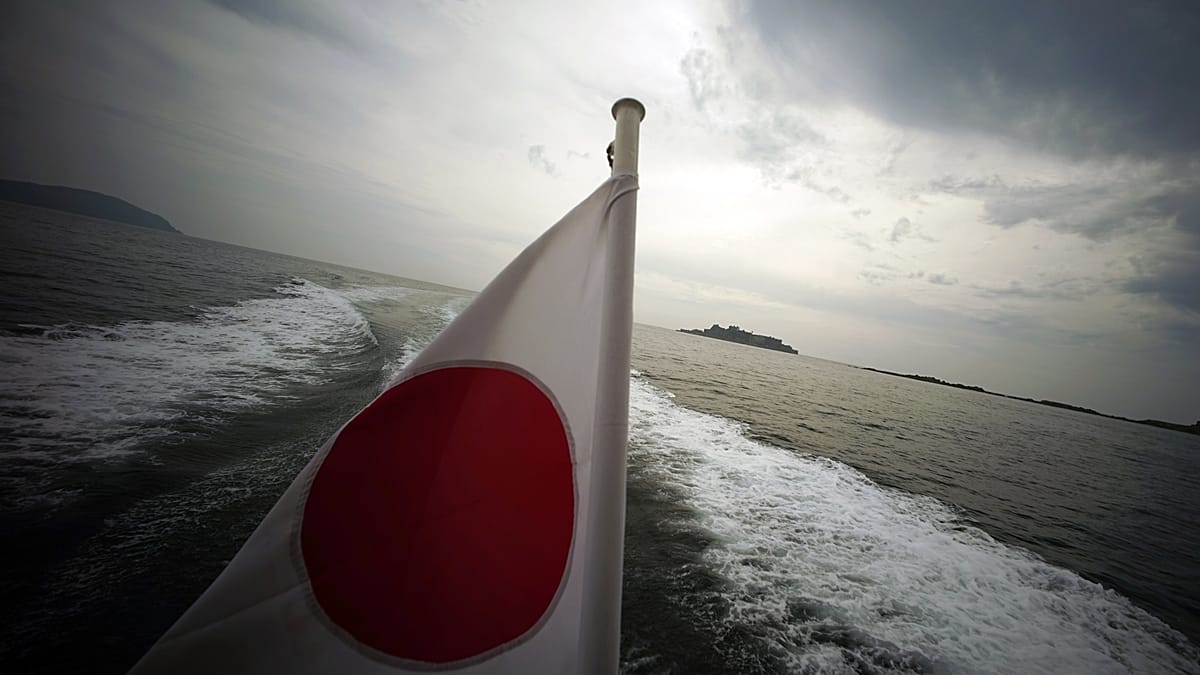
The United States has backed Japan's sovereignty over four islands controlled by Russia after Vladimir Putin became the first Russian president in 15 years to visit the disputed territory, prompting Tokyo to summon Moscow's ambassador and describe the trip as "absolutely unacceptable." "The United States remains unwavering in its support of its most important ally and in its recognition of Japanese sovereignty over the Northern Territories," the US ambassador to Tokyo George Glass said on X. "At a time when the US-Japan alliance is dedicated to cultivating prosperity across the Indo-Pacific, we strongly oppose any action that undermines its peace and stability," Glass added. Russian-Japanese relations have long been dogged by the four southernmost islands in a volcanic chain off the coast of Hokkaido seized by the Soviet Union following an invasion in August 1945, in the final days of World War II.
Moscow broke its formal neutrality with Japan just days before the invasion. The Japanese government maintains that the four islands and groups of islets that make up the Northern Territories — Etorofu, Kunashiri, Shikotan and Habomai — are part of its territory that the Soviets illegally occupied and Russia has continued to occupy since the breakup of the Soviet Union in 1991. The dispute has kept the two countries from signing a peace treaty that would formally end their hostilities.
They terminated the state of war in 1956. Moscow has reinforced its military presence on the islands as recently as December 2021, when it deployed Bastion coastal defence missile systems on an uninhabited volcanic island in the middle of the chain. The island hosted a Japanese army base prior to the Soviet occupation.
A Soviet base there was shut down amid funding shortages in the wake of the collapse of the Soviet Union. Moscow previously deployed Bal and Bastion missile systems on two of the four southernmost islands in 2016. In the following years, Moscow further beefed up its arsenal on the islands by sending top-of-the-line air defence missile systems, setting up an air base on Etorofu Island, and deploying fighter jets.
The sparsely inhabited islands are strategically significant to the Kremlin as they sit at the entrance to the Sea of Okhotsk and give Russia's Pacific Fleet access to the open Pacific without passing through Japanese-controlled waters. Putin's visit was the first by a Russian president since Dmitry Medvedev in 2010. Prime Minister Sanae Takaichi told reporters "the Northern Territories are an inherent part of Japan's territory, both historically and under international law." Putin's visit "offends the sentiments of the Japanese people and is absolutely unacceptable," she added.
Japan's Foreign Minister Toshimitsu Motegi said his country “strongly protests” Putin's visit to the largest of the islands, Etorofu. He summoned Russian Ambassador Nikolay Nozdrev to the ministry in Tokyo and lodged a strong protest over the visit, requesting that he "promptly report the message back to Moscow,” the minister told reporters afterwards. Russia's embassy in Japan said the ambassador reiterated Moscow's claim that the islands are part of Russia and that Putin's trip there was not "a matter for discussion with foreign states".
Extract — continue reading at the source.