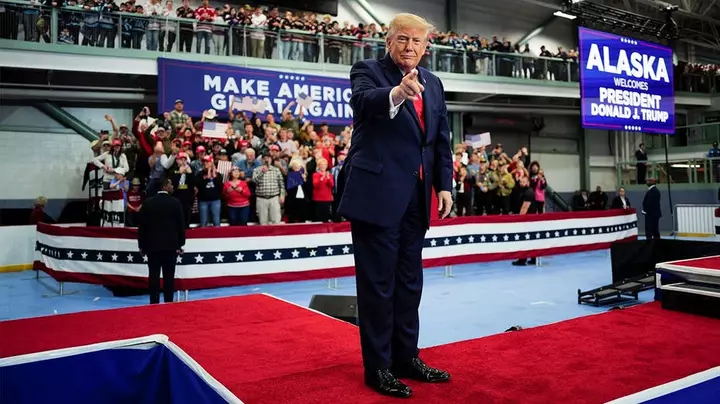
US, Chinese visions for AI regulation differ sharply at UN meeting President Donald Trump vowed to stand against global AI security efforts at the U.N. this week, amid growing calls for world leaders to take action. Delegates arrive to the 81st session of the United Nations General Assembly at U.N. Headquarters on Sept. 22 in New York City. | Michael M.
Santiago/Getty Images Top officials from the U.S. and China on Wednesday promoted starkly conflicting visions for international AI safety, with the Americans arguing against expanded regulation while Beijing signaled an openness to restrictions on the technology. The opposing world views — laid out during a United Nations General Assembly Security Council meeting — made clear that building an international consensus on the rapidly-evolving technology could be very challenging. White House Office of Science and Technology Policy Director Michael Kratsios strenuously opposed creating new global governance for controlling AI development.
While Kratsios told the council that the U.S. is “committed to diplomacy and dialogue,” he stressed that countries should “preserve national sovereignty” on governing AI rather than “abdicate responsibility to international bodies.” But China’s U.N. representative Fu Cong appealed for closer global collaboration on AI safeguards. Fu also seemed to take an indirect swipe at the U.S., warning that an “us-versus-them” dynamic would serve “certain major powers’ attempt to maintain their technological edge through monopoly in their quest for digital hegemony.” On Tuesday, President Donald Trump said that U.S. AI efforts were “leading now over China by a lot and everyone else, and we’re going to keep it that way.” Like Fu, several top executives in the American tech industry have called for global AI guardrails.
In his opening remarks at the meeting, OpenAI CEO Sam Altman pushed for “a mechanism for complementary national and international frontier AI standards” — in line with a proposal his company released Monday. Anthropic CEO Dario Amodei similarly reiterated his support for international collaboration “to make sure the industry and the world can proceed at a rate where we can be sure that safety keeps up with capability.” How the next wave of technology is upending the global economy and its power structures By signing up, you acknowledge and agree to our Privacy Policy and Terms of Service . You may unsubscribe at any time by following the directions at the bottom of the email or by contacting us here .
This site is protected by reCAPTCHA and the Google Privacy Policy and Terms of Service apply.
Extract — continue reading at the source.