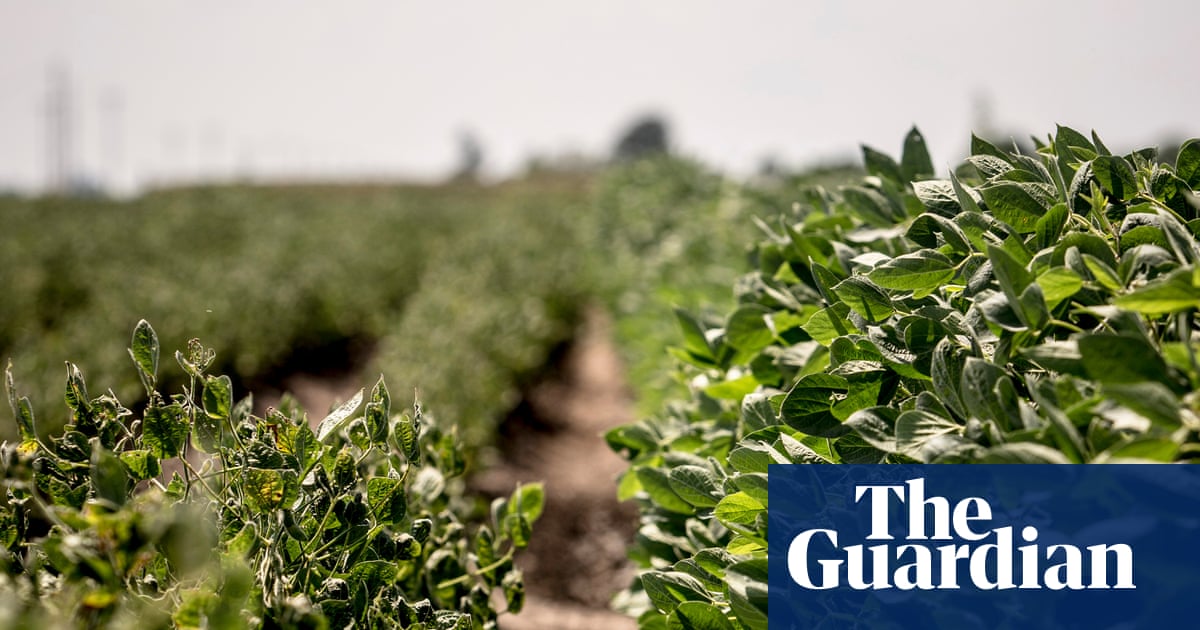
The allowed pesticide giant Bayer to pick from a menu of regulation options for the controversial and destructive weedkiller dicamba, newly released internal agency documents show. The documents provide an unusually clear look into the process of developing pesticide regulations, which is typically done out of public view. It shows in detail how the asked Bayer which regulations it wanted, received a response from Bayer, then put Bayer’s choices into a proposed federal rule.
Dicamba is drift prone and kills vegetation and crops for miles around fields where it is sprayed, and is linked to liver cancer and Non-Hodgkin lymphoma. Courts have twice ordered it off the market because of its drift problems, but the has re-approved it. The solicited Bayer’s input on the level of restrictions to limit dicamba volatility and runoff, ranging from more protective to less protective, records released in ongoing litigation over the substance show.
The concluded one presentation with a slide entitled “Registrant response needed” which posed the question “Which mitigation option to go forward with?” Bayer chose the least protective for one regulation, and the middle of three levels of protection for another regulation. It also got one other change it requested into the rule. Pesticide regulations are typically a negotiation between industry and the EPA, but the exchange that the documents reveal is “crossing a line”, said Nathan Donley, environmental health science director with the Center for Biological Diversity, which is litigating on the issue.
The documents come as the has faced criticism for stacking its leadership with industry veterans. The top four toxics office positions at the are held by former chemical industry leaders, including Kyle Kunkler, a former pesticide industry lobbyist who is now a deputy assistant administrator and oversees the pesticides program. Despite repeated assurances from the that it has put effective protections in place, dicamba drift has damaged millions of acres of farmland and caused damage to orchards, vegetable farms, home gardens, native plants, trees and wildlife refuges across the country since its first approval in 2016.
Experts have found dicamba drift damage to be the worst of any herbicide in the history of US agriculture. Still, the current approval provides even fewer protections from dicamba drift and damage than past approvals, the lawsuit alleges. In a statement to the Guardian, an spokesperson said: “Make no mistake: this is not a compliance failure; it is the regulatory system working exactly as intended.” “The agency notifies the [pesticide maker] and works with them to identify possible solutions” to risks, the spokesperson wrote.
To be explicitly clear: the registrant does not dictate terms.” During a May 2025 meeting with Bayer, the agency gave Bayer two mitigation choices that would allegedly address dicamba’s high volatility, which is what makes it drift prone. A more restrictive option would have prevented dicamba applications above 85F, and a less restrictive option would allow applications up to 95F, if the acreage treated was reduced. The also gave Bayer three options for addressing dicamba runoff, documents show.
Extract — continue reading at the source.


