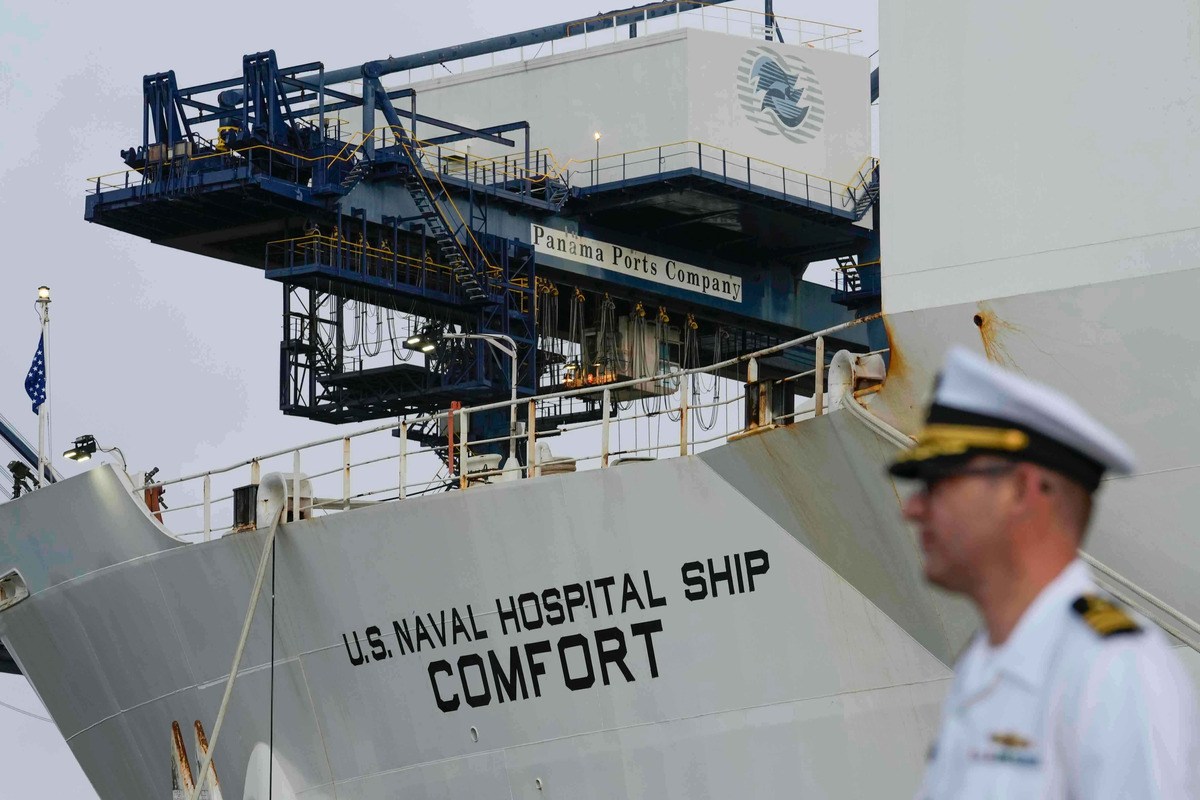
The U.S. military plans to send one of its two hospital ships to Peru early next year to help the country prepare for the impacts of El Niño, according to the U.S. ambassador to Lima. "The United States will stand with Peru in facing El Niño," Bernie Navarro said on Wednesday. The USNS Comfort is expected to arrive off Peru in February 2027.
The U.S. military uses its pair of hospital ships for urgent surgeries and in disaster relief or humanitarian efforts across the world. Tracking data shows the USNS Comfort is currently moored in Norfolk, Virginia. The Comfort was previously deployed by the U.S.
Southern Command (SOUTHCOM)—which is responsible for U.S. military activity in Latin America and the Caribbean—to Peru, Ecuador, Colombia and Honduras in late 2018. Newsweek has emailed the Pentagon, SOUTHCOM and the State Department for comment. The U.S. under President Donald Trump has focused its foreign policy attention on the Western Hemisphere, expanding military ties with many Latin American countries as it boosts efforts to combat drug trafficking into the United States.
U.S. personnel and aid have also been dispatched to Venezuela and Colombia in recent months in the aftermath of the earthquakes that devastated the countries in June and August this year. Trump previously said he would send the 1,000-bed USNS Mercy to Greenland, a semi-autonomous part of U.S. ally Denmark, as concerns swirled earlier this year over how far the White House would go to control the strategic Arctic territory it has long coveted. Greenland quickly said its residents have free healthcare and did not need medical assistance from the U.S.
El Niño is a specific stage in a climate phenomenon, setting it apart from extreme weather like hurricanes or tornadoes. It happens when the surface of the eastern Pacific Ocean warms up, and it can cause flooding in some parts of the world while parching others with drought. The extreme weather changes can reduce crop yields and damage agricultural infrastructure, meaning food can become more scarce, potentially forcing millions of people into hunger.
El Niño usually lasts between nine months and a year, but often longer, climate and oceanic experts say. It typically happens between every two and seven years, but it's hard to predict because it's not regular, according to the U.S. National Oceanic and Atmospheric Administration.
Extract — continue reading at the source.