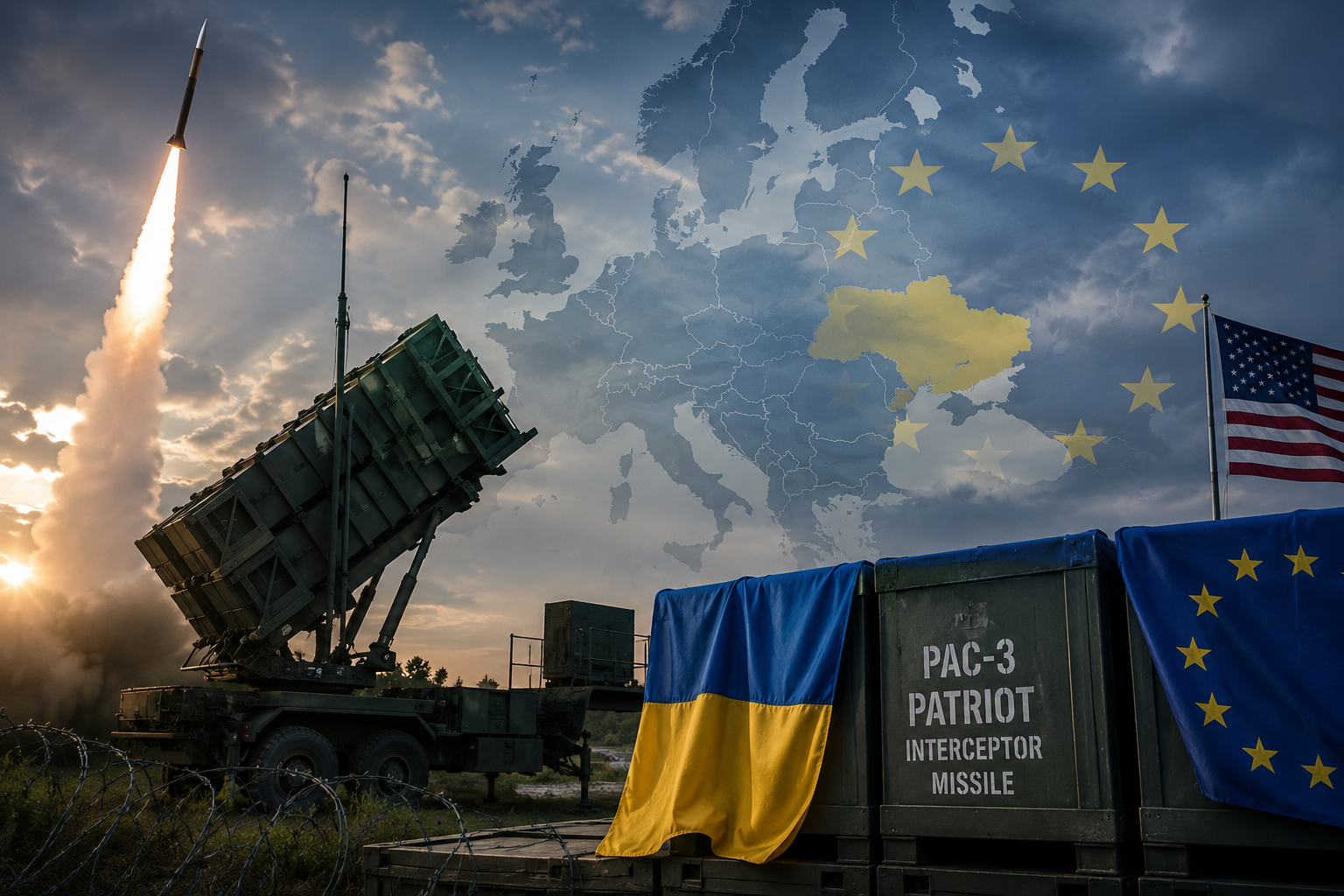
When Zelenskyy left the White House after his July 28 meeting with Trump, he said the U.S. president had agreed to provide Ukraine with licenses to produce Patriot interceptors. For Kyiv, this would have been a major breakthrough. Ukraine has been asking for more Patriot systems for years, but the supply of missiles has become one of the biggest constraints on its air defense.
Two days later, however, Trump appeared to shut the door. "We have not agreed to that," he said on July 31, referring to the transfer of Patriot production technology. The most immediate reason for Washington's hesitation may have less to do with Ukraine itself than with the state of America's own missile inventories.
The war with Iran has dramatically increased demand for Patriot and other high-end interceptors. Under normal circumstances, Washington could theoretically compensate for technology-transfer concerns by supplying Ukraine with more interceptors. But when the United States itself is worried about maintaining sufficient stocks for Europe, the Middle East and the Indo-Pacific, every missile sent abroad becomes part of a much larger strategic equation.
The United States has used up about two thirds of its reserves. According to CSIS analysts, the reserve of the latest interceptors in the United States has dropped to about 759 units. The PAC-3 is an extremely sophisticated hit-to-kill interceptor.
It is expensive, technologically demanding and produced in limited quantities. Defense News has reported that a replacement PAC-3 can take up to two years to build, while the cost is measured in millions of dollars per missile. The European Commission has already approved €6.1 billion in additional defense procurement for Ukraine, including air and missile defense, missiles, ammunition and radars.
Brussels is now considering a new Ukrainian request worth several billion euros specifically for air defense, including PAC-3 interceptors. The problem is that Patriot is American, while the EU's funding rules are designed to favor suppliers. As Foreign Policy notes, Europe will not be able to rapidly scale up production of interceptors: Western production lines are not expected to have a significant impact before 2030.
Extract — continue reading at the source.