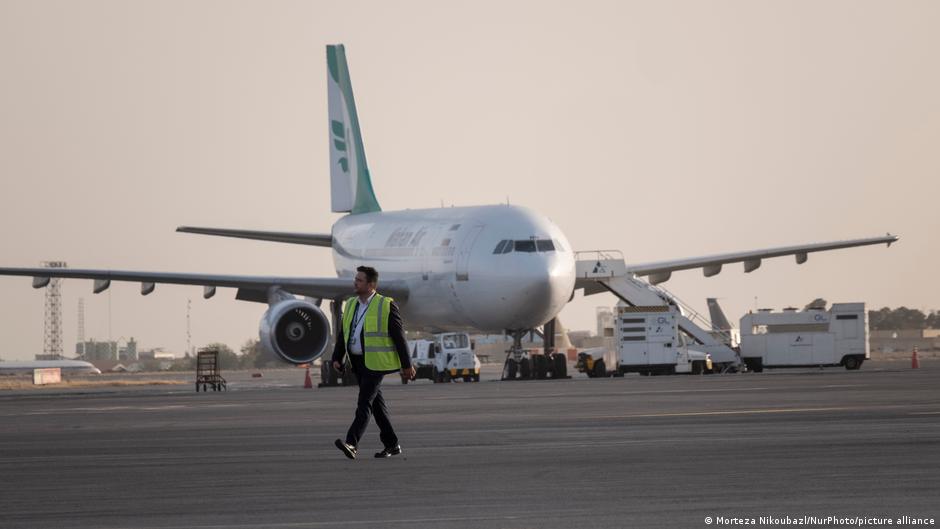
US sanctions are pushing Iran's weakened aviation sector toward deeper isolation, making international travel less predictable and raising new risks for trade and cargo. Earlier in September as part of "operation economic outcast," the US Treasury Department targeted Iran's aviation sector, including Iranian airlines and companies providing ground handling, ticketing or airport support, which face secondary sanctions and potentially lose access to the US financial system. The United States cannot directly order foreign airports to reject Iranian aircraft.
But the threat of secondary sanctions can make servicing them too risky for airports, fuel suppliers and aviation companies. For Tehran, the aviation sanctions are another layer of Washington's broader pressure campaign, alongside restrictions on banking, shipping, insurance and trade. Washington argues that Iranian airlines have served not only civilian passengers but also military and security networks.
For example, Mahan Air has been accused of supporting the Islamic Revolutionary Guard Corps (IRGC) and helping transport personnel and equipment. The issue has also been debated inside Iran. Former Foreign Minister Mohammad Javad Zarif said in a 2021 interview that Qassem Soleimani had used civilian aircraft to move forces and equipment to Syria.
For Washington, such links help justify targeting aviation networks. For ordinary travelers, however, the immediate result is canceled flights and fewer ways to leave or return to the country. Iranian flights to Baghdad and Muscat have been suspended or canceled, while Azerbaijan and Georgia also stopped accepting flights operated by Iranian carriers.
An Iranian travel agency told DW anonymously for safety reasons that routes to Oman, Iraq, Azerbaijan and Georgia have been seriously disrupted. On September 24, Turkmenistan refused permission for an Iranian aircraft flying from Tehran to Dushanbe to cross its airspace, forcing the plane to return to Iran. Turkey, Armenia and China have not announced blanket restrictions, the agency said, but passengers were increasingly reluctant to buy tickets because even a confirmed booking did not guarantee departure.
To view this video please enable JavaScript, and consider upgrading to a web browser that supports HTML5 video A passenger told DW that agencies would still sell him a ticket but could not guarantee the flight would actually operate. As part of the sanctions package, the US also suspended the "J-1" general license, which had allowed certain non-Iranian aircraft to make temporary stops in Iran under specific conditions, including that control of the aircraft remained with the foreign operator and that the stay did not exceed permitted limits. Many commercial aircraft contain US-made parts or technology, meaning operations involving Iran can fall under US sanctions rules.
Extract — continue reading at the source.