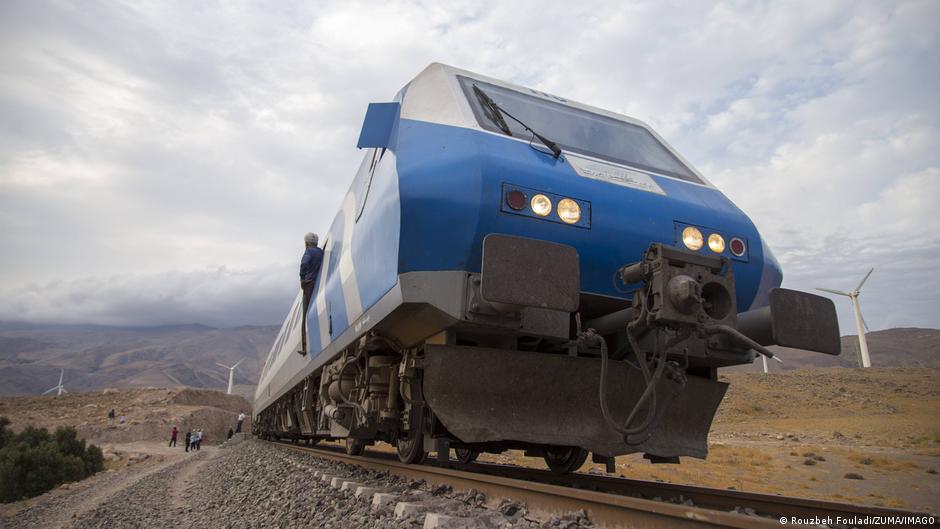
The United States has opened another front in its economic pressure campaign against Iran, this time targeting the railways Tehran increasingly relies on as maritime trade becomes more difficult. On October 1, the US Treasury sanctioned three Iranian railway companies alongside seven automakers and five foreign suppliers of automotive parts as part of its Operation Economic Outcast. Washington says Iran's rail and automotive industries provide revenue and logistical capacity to the state and are connected to networks involving the Islamic Revolutionary Guard Corps (IRGC).
The timing of the move is significant. Since the US maritime blockade sharply restricted Iran's southern trade routes, Tehran has tried to move more goods through its land borders and railway connections with China, Central Asia, Russia and Turkey. Rail transport has become more important just as Washington decided to target it.
Shahriar Naghizadeh, director general for foreign trade at Iran's railway authority, was quoted by the semi-officialMehr news agency as saying that the country has around 15,000 kilometers (9,300 miles) of main and secondary railway lines, more than 35,000 wagons and nearly 500 diesel locomotives. The network carried around 44 million tons of freight in the Iranian year ending in March 2026, up from about 40 million tons the previous year, according to Naghizadeh. And authorities are targeting 54 million tons this year.
To view this video please enable JavaScript, and consider upgrading to a web browser that supports HTML5 video Iran is linked to neighboring markets through 13 rail crossings, providing overland access to Turkey, Azerbaijan, Afghanistan, Pakistan, and onward routes to Central Asia and China via Turkmenistan. The new US sanctions raise questions about how foreign railway operators, freight forwarders, banks and insurers will continue dealing with Iranian rail companies. Bloomberg reported in May that freight trains traveling from the Chinese city of Xi'an to Tehran had increased from around one per week before the US blockade to roughly one every three or four days.
In September, a train left China carrying automotive parts, consumer goods and other cargo. It ran through Kazakhstan, Uzbekistan and Turkmenistan before entering Iran at Sarakhs with an expected transit time of 14 to 16 days. For Iran, such services offer a route to Chinese suppliers that avoids the area around the Strait of Hormuz.
But advertised transit times do not necessarily reflect what an importer experiences. A Chinese freight company told DW that actual delivery times can stretch far beyond advertised schedules because of border inspections, customs procedures and train availability. It estimated that rail transit along the main route from western China to Tehran would take 50-60 days under current conditions.
Extract — continue reading at the source.