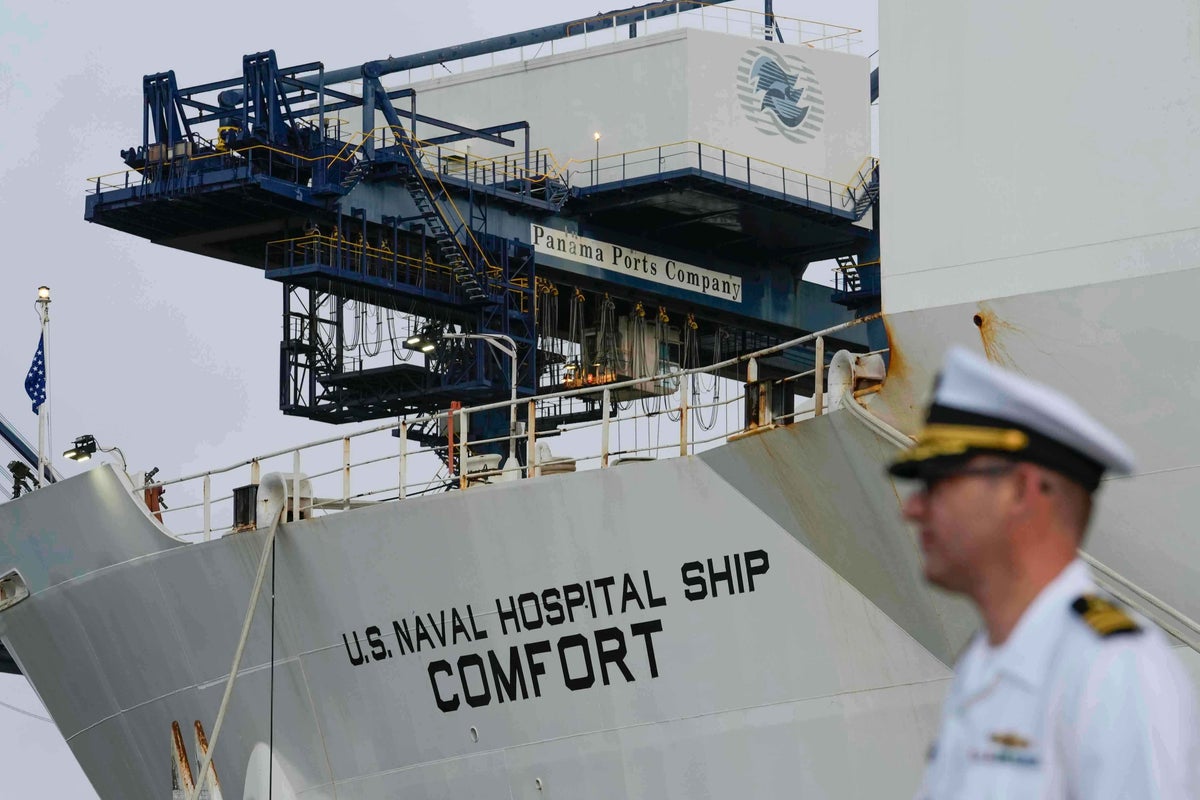
The United States plans to send a Navy hospital ship to Peru next year as governments across Latin America brace for a potentially severe El Niño that could bring drought, floods, wildfires and other extreme weather. Ambassador to Peru Bernie Navarro said the USNS Comfort is expected to arrive on Peru’s northern Pacific coast in February 2027, around the time El Niño is forecast to reach its peak. The deployment is part of expanded cooperation between Washington and Lima to help Peru prepare for the climate pattern.
Navarro announced the plan following talks in Miami with Peruvian Foreign Minister Carlos Espá. Espá outlined a broader strategy involving U.S. equipment, technical assistance and aerial operations to help Peru prepare for and respond to El Niño. Officials did not disclose the assistance's value.
The Comfort previously conducted missions in Peru in 2018 and 2019. El Niño is caused by periodic warming of waters in the equatorial Pacific and can dramatically disrupt weather worldwide. Forecasts indicate the developing event could rival or surpass the powerful 1997 El Niño, which contributed to destructive flooding, extreme heat and other disasters.
Peruvian President Keiko Fujimori, who took office July 28, has made preparations for the phenomenon a priority. Across Latin America, governments are racing to reinforce water and energy systems, prepare emergency crews and protect vulnerable communities before conditions worsen. Unlike earthquakes and hurricanes, El Niño develops over months, giving authorities valuable time to prepare.
But experts warn governments have repeatedly failed to turn early scientific warnings into action. It’s not simply a possibility,” he said. Previous major El Niño events have caused billions of dollars in damage across Latin America, bringing drought to some areas and torrential rain, flooding and landslides to others.
Agriculture, drinking water supplies and hydroelectric power generation can all be severely disrupted. The WMO says below-average rainfall is already affecting Central America, parts of the Caribbean and northern South America, with dry conditions expected to spread into parts of the Amazon basin. Countries are preparing for sharply different threats.
Extract — continue reading at the source.



