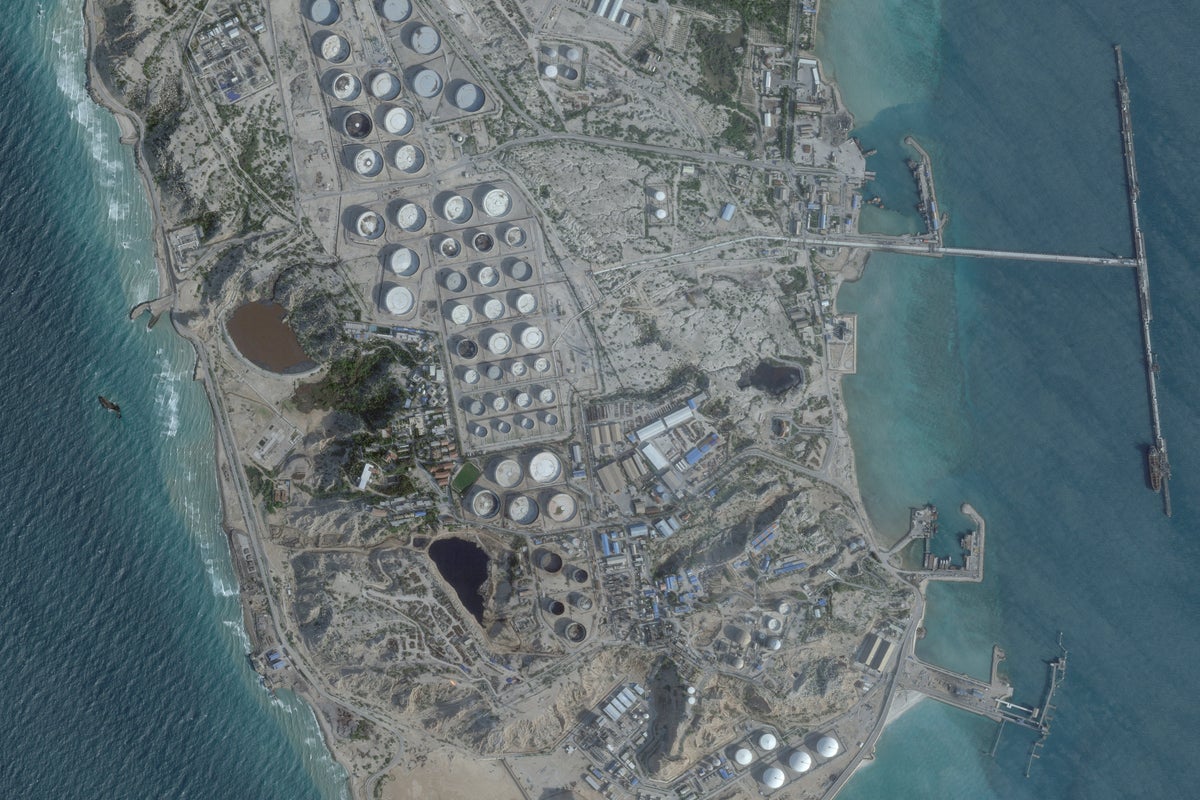
The U.S. military says it struck three Iranian oil tankers Saturday, including one off the coast of Kharg Island, near Iran's key oil export hub. The strikes were carried out after Iran's Islamic Revolutionary Guard Corps launched ballistic missiles at two U.S. Navy warships, Central Command said.
In a statement Saturday, the military said an aircraft carrier and a destroyer evaded “multiple unprovoked Iranian attacks”, and no U.S. personnel were hurt. It said two Iranian oil carriers were “permanently disabled” and the third, unladen one, was destroyed. The U.S. statement said the tankers were part of a shadow network helping to fund Iran’s IRGC.
Tasnim, the semi-official Iranian news agency, reported earlier that four U.S. missiles hit a tanker in the area of Kharg's anchorage. Tasnim quoted local sources as saying there were no casualties and the tanker's crew was being evacuated. The exchange of attacks follows an escalation in the past week that threatens to deepen a conflict that has dragged on since the U.S. launched strikes on Iran in February, disrupting global energy supplies and drawing opposition from a majority of Americans before congressional elections in November.
President Donald Trump said on August 31 in a one-line social media post accompanied by an AI-generated video that Kharg Island was being "blown to smithereens". Iranian authorities have vowed a strong response if Kharg is attacked. Iran is the third-largest producer in the Organization of the Petroleum Exporting Countries and exported 90 percent of its crude via Kharg Island before the war, but flows have been disrupted since a U.S. blockade of Iranian oil exports began in mid-April.
Trump said on June 11 that he wanted to take over Kharg Island, but then said a threatened U.S. military operation there was off the table for now, days before Tehran and Washington signed an interim agreement aimed at ending the war on June 17. A U.S. attack on Kharg would further pressure Iran's oil industry and its wider economy, which is already reeling from the U.S. naval blockade. The U.S. imposed its blockade on Iranian ports after Iran effectively shut the Strait of Hormuz, an important waterway that carried one-fifth of the world's oil supply before the war.
Brent crude futures closed at their highest level since July 24 on Friday, at $96.28 a barrel, as tensions in the Middle East drive global supply concerns.
Extract — continue reading at the source.