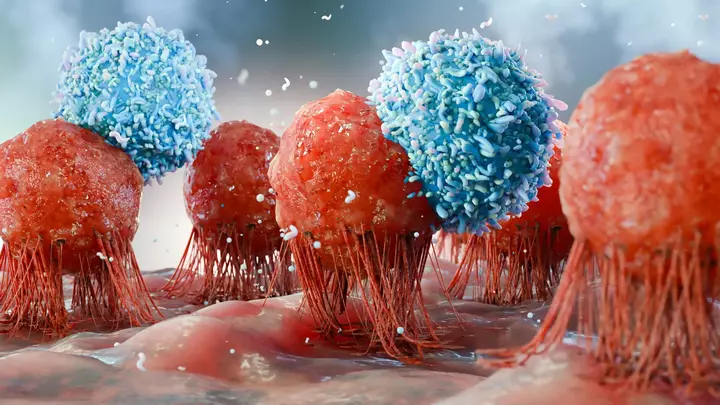
Scientists at the University of Southern California (USC) have discovered a way to produce a potentially renewable supply of cancer-fighting immune cells, opening a promising new direction for cancer treatment. By working with immature cells that can develop into powerful immune defenders, the researchers have created a system capable of generating large numbers of genetically engineered cells that recognize tumors and help activate the body's natural defenses. The breakthrough, described in a study published in Cell, could help overcome some of the biggest obstacles facing cancer immunotherapy, including the difficulty of manufacturing enough immune cells and keeping them active in the body.
In experiments involving mice, the engineered cells established themselves in bone marrow, produced new immune cells, and slowed the progression of both blood cancers and solid tumors. The USC Stem Cell-led team focused on a type of immature immune cell called granulocyte-monocyte progenitors (GMPs). These cells normally develop into macrophages and other immune cells that protect the body from infections and participate in immune responses.
The researchers found that GMPs could be grown extensively in the laboratory while retaining their ability to develop into functioning immune cells. They could also be genetically modified to recognize specific cancer markers and strengthen broader immune responses. "The study establishes a scalable and engineerable GMP platform for cellular immunotherapy and introduces concepts that we believe could have broad implications for both cancer immunotherapy and stem cell biology," said the paper's corresponding author Qi-Long Ying, MD, PhD, professor of stem cell biology and regenerative medicine at the Keck School of Medicine of USC.
Scientists Discover a Surprising Ability in Immune Cell Precursors Beyond its potential applications in cancer treatment, the discovery challenges a long-standing understanding of how blood and immune cells develop. Stem cells are known for their ability to self-renew, meaning they can repeatedly divide while maintaining their original properties. In the blood-forming system, this ability has traditionally been associated primarily with hematopoietic stem cells, which can produce all the major types of blood and immune cells.
Progenitor cells, by contrast, are further along in development and are already committed to producing a more limited range of cells. They are generally thought to have less capacity for long-term self-renewal. The USC researchers demonstrated that GMPs can retain this ability under carefully controlled laboratory conditions.
Rather than quickly maturing into other cell types, the progenitors continued multiplying while preserving their identity and their capacity to generate functional immune cells. "The prevailing view has been that long-term self-renewal in the blood system is primarily a property of the hematopoietic stem cells that can generate any type of blood or immune cell," said Ying. "We found that, under the right conditions, GMPs can also self-renew, dividing extensively while keeping their identity and ability to produce functional immune cells.
Extract — continue reading at the source.