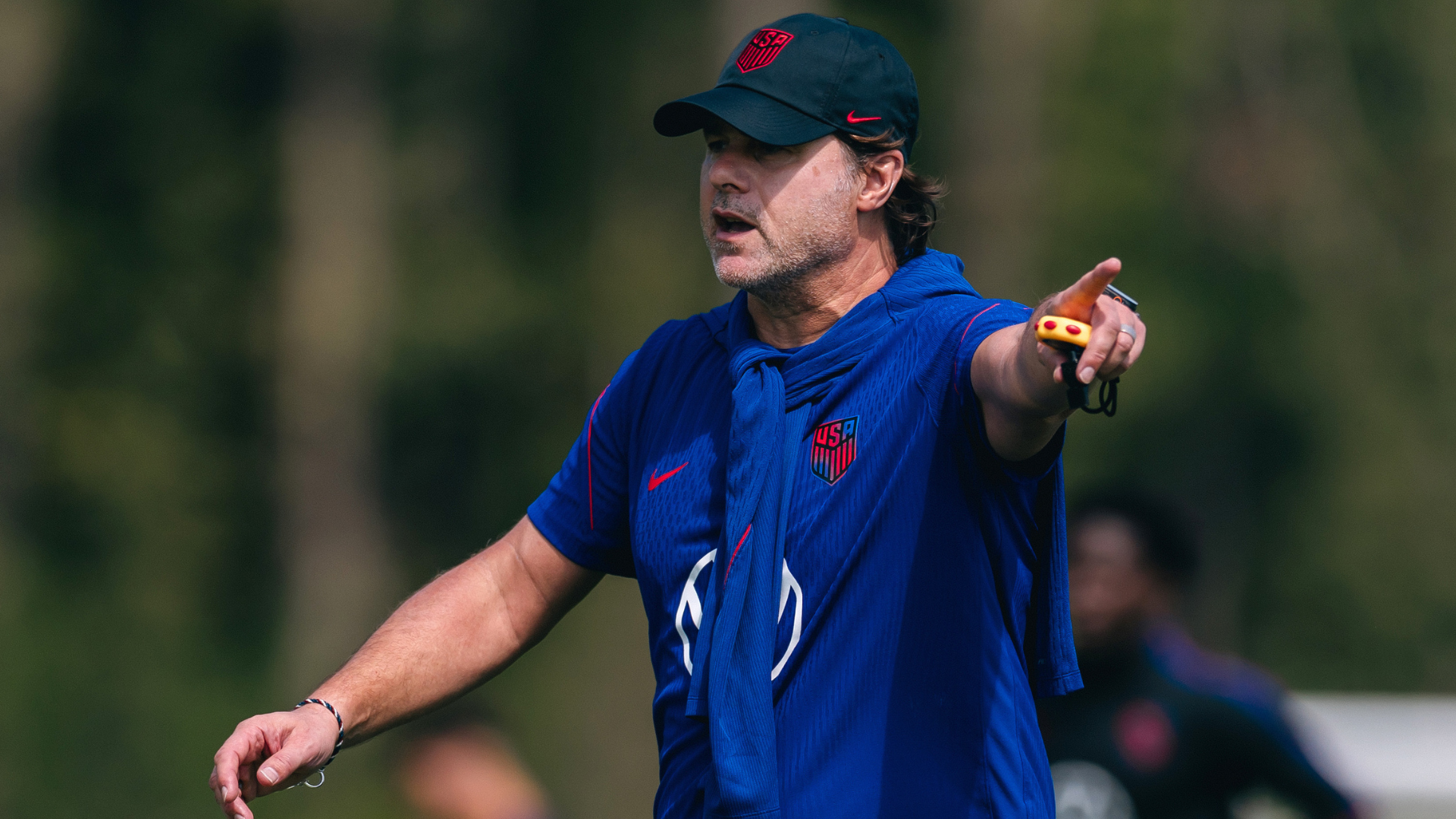
Soccer's national training center opened in the suburbs of Atlanta, U.S. men's national team head coach Mauricio Pochettino actually had time to marvel at the size of the new build despite spending eight days working there in late spring. "It was amazing with the possibly to be there [again]," he said Friday, "with less stress than [it] was with all the preparation for the World Cup." The USMNT are officially back in session after a World Cup on home soil, their anticlimactic round of 16 exit somehow only acting as a set-up for the national team's next act. Pochettino will use the first international break of the new cycle to introduce a young group of players to the demands of the senior national team, boasting both an individual and collective potential that makes them perhaps the most exciting generation of talent the U.S. men's program has ever produced.
Pochettino was unreserved in his generational shift, calling up 13 uncapped players and mixing them with 12 members of this year's World Cup team while including a few others for a new-look national team. Expect a number of those fresh faces to be on display as soon as Saturday's friendly against Peru, the first of four in a jam-packed international window. "We are going to mix a little bit, to play tomorrow maybe with some new players or young players with senior players," Pochettino said.
"It's important, that mix. Hope that works and the rest of the games, too, that is our idea. That is what we plan and then, of course, when we observe, judge the players, maybe some players need more time.
Maybe not to play the first game or the second, maybe the third. Maybe some players training with us, it's enough. They don't need to go to play." Striking the balance appears to be atop Pochettino's list of priorities, at least in the short-term.
This is far from the first changing of the guard the USMNT has experienced, the last one only taking place roughly eight years ago after a different generation of players failed to qualify for the 2018 World Cup. The veterans that today's rising talents are working alongside were the leaders of their own generational shift after the 2018 debacle, but as longtime midfielder Tyler Adams noted, this situation is not apples-to-apples. "I think there's less pressure on these young kids to come in and perform immediately and more time to actually develop them, whereas, when I came in, it was off the cusp of obviously not qualifying for a World Cup and it was like, 'You guys basically need to play right now and need to perform right now so we can qualify for the next World Cup," Adams said Wednesday.
"I look at this generation of players right now, and I think that they're in a great position, that they can go through the process properly and really just lean on guidance and go through and get their own experiences, have opportunities like the Olympics, as well, along that way and other competitions to really grow them for the next World Cup." "I think it's so important to provide the chance if they are ready," the coach said. "We are not talking that they need to perform. That's one of the things that we were talking [about] with them.
Extract — continue reading at the source.