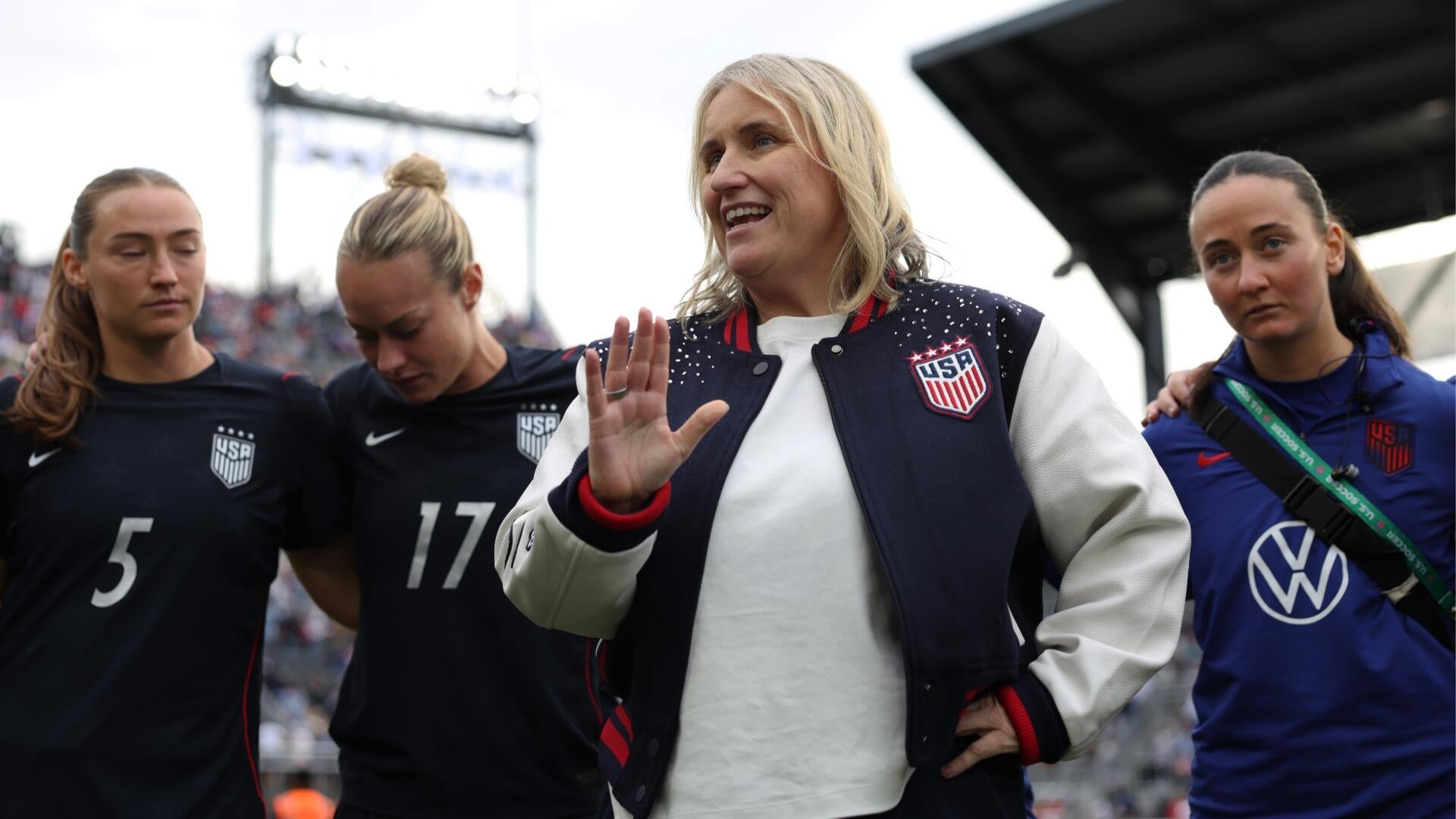
CHESTER, Pa. - As the United States and Spain square off for the second time on Tuesday at Subaru Park, Emma Hayes was able to reflect on a notable moment that the game brings, even if it shouldn't be notable. Two women will manage the FIFA number one and number two-ranked teams, Sonia Bermúdez and Hayes, overseeing Spain and the United States, respectively. Hayes has been a trailblazer since beginning her coaching journey in America with the Long Island Lady Riders before eventually going on to build an empire with Chelsea's Women's Super League team, and her journey has now come full circle with managing the USWNT on their road to the FIFA Women's World Cup in 2027 in Brazil.
So when she opens up about the state of the game, it's worth listening to, and Monday just outside of Philadelphia was no different. "I've made no secret of the fact that it's really difficult, I think, for females in this space to, one, get an interview, two, get a job, and three, stay in a job. I think the standards for us are so much higher than our male counterparts because rarely do you see women who have gone and done a job, finish, whether they've been fired or they've left, get another chance.
Doesn't happen for us females as it does for everybody else," Hayes said. "But I also think, you know, it's Sarina Wiegman and Sonia Bompastor who are outstanding coaches. I think it's great to see that.
I think we need to see more representation, and I'm a big pro that they made it mandatory for at least one technical member [to be female]," Hayes continued. I'd like to see more female head coaches in national teams, because, yeah, I think it's hard enough getting into this industry as it is." With Hayes advocating for these structural changes to the game, it highlights the broader soccer landscape. In the past, there have been some coaches who have been afforded the opportunity to coach the women's game who may not have been natural choices like Landon Donovan, Richie Burke, and Chris Armas, having no experience coaching women's teams prior to coming to the NWSL.
Even currently, 11 of the 16 NWSL teams are led by male coaches. Those three were able to use playing experience and connections, mostly, in order to get their roles, which are common in soccer, but they also aren't ones that women in the sport currently have, as people like Hayes are leading the charge for women to get more opportunities. The list goes on and on, and while Hayes is trying to create opportunities for more women to play soccer, it's also critical for there to be more opportunities to discover the next Hayes in this growing soccer landscape.
Continuing to beat the drum on this to raise awareness is important, but as Hayes suggested, the sport's governing bodies need to go further to ensure that it happens by investing more in women to lead teams across the world.
Extract — continue reading at the source.