U.S. stock futures moved lower on Tuesday as investors monitored another rise in oil prices and the risk that disruption to the Strait of Hormuz could persist, while fresh U.S. tariffs on Canada and upcoming Home Depot (NYSE:HD) earnings also remained in focus. Gold slipped back below $4,400 an ounce, while crude prices strengthened following another security incident involving a vessel transiting the Strait of Hormuz. Wall Street futures extended the cautious tone seen in Monday's session, when equities fell amid concerns about rising energy costs and the prospect of a prolonged Middle East conflict.
At 03:05 ET ( ), Dow futures were down 49 points, or 0.1%, while S&P 500 futures declined 29 points, or 0.4%. Nasdaq 100 futures dropped 209 points, equivalent to 0.7%. The major U.S. averages closed lower on Monday, with the S&P 500 suffering its weakest session of August so far.
"The overall equity mood soured," analysts at Vital Knowledge said. Losses were partially contained by strength among semiconductor stocks. Chip companies benefited from reports concerning revenue expectations at Claude developer Anthropic (NASDAQ:ANTP) and Nvidia's (NASDAQ:NVDA) financial commitment to an Ohio data centre, which was smaller than anticipated.
Vital Knowledge said both developments helped improve sentiment surrounding the artificial intelligence investment theme. Deutsche Bank strategists, meanwhile, pointed to growing concerns about the Iran war, which pushed crude prices back above $90 and revived fears that higher energy costs could generate another inflationary shock. U.S. government bond yields rose alongside those concerns.
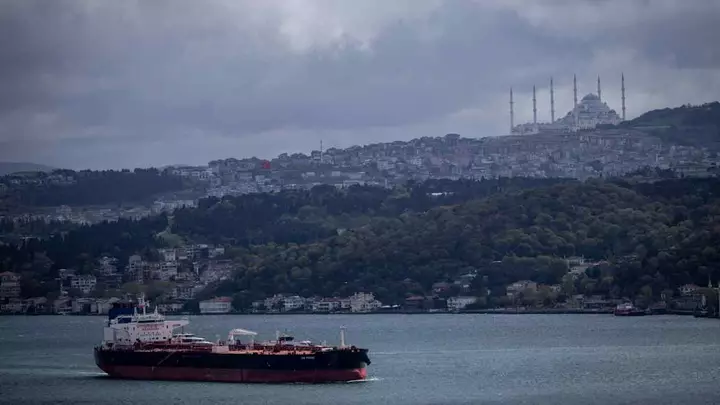
Oil prices continued higher on Tuesday, with Brent crude futures gaining 0.3% to $91.10 a barrel. West Texas Intermediate futures advanced 0.6% to $85.02. The United Kingdom Maritime Trade Operations agency reported that a vessel travelling outbound through the Strait of Hormuz had been struck by an unidentified projectile.
The incident caused damage to the ship's engine room and resulted in a crew casualty. The latest disruption comes after U.S. President Donald Trump said Washington would not seek an extension of the framework ceasefire agreement signed with Tehran in June, which expired on Monday.
Extract — continue reading at the source.