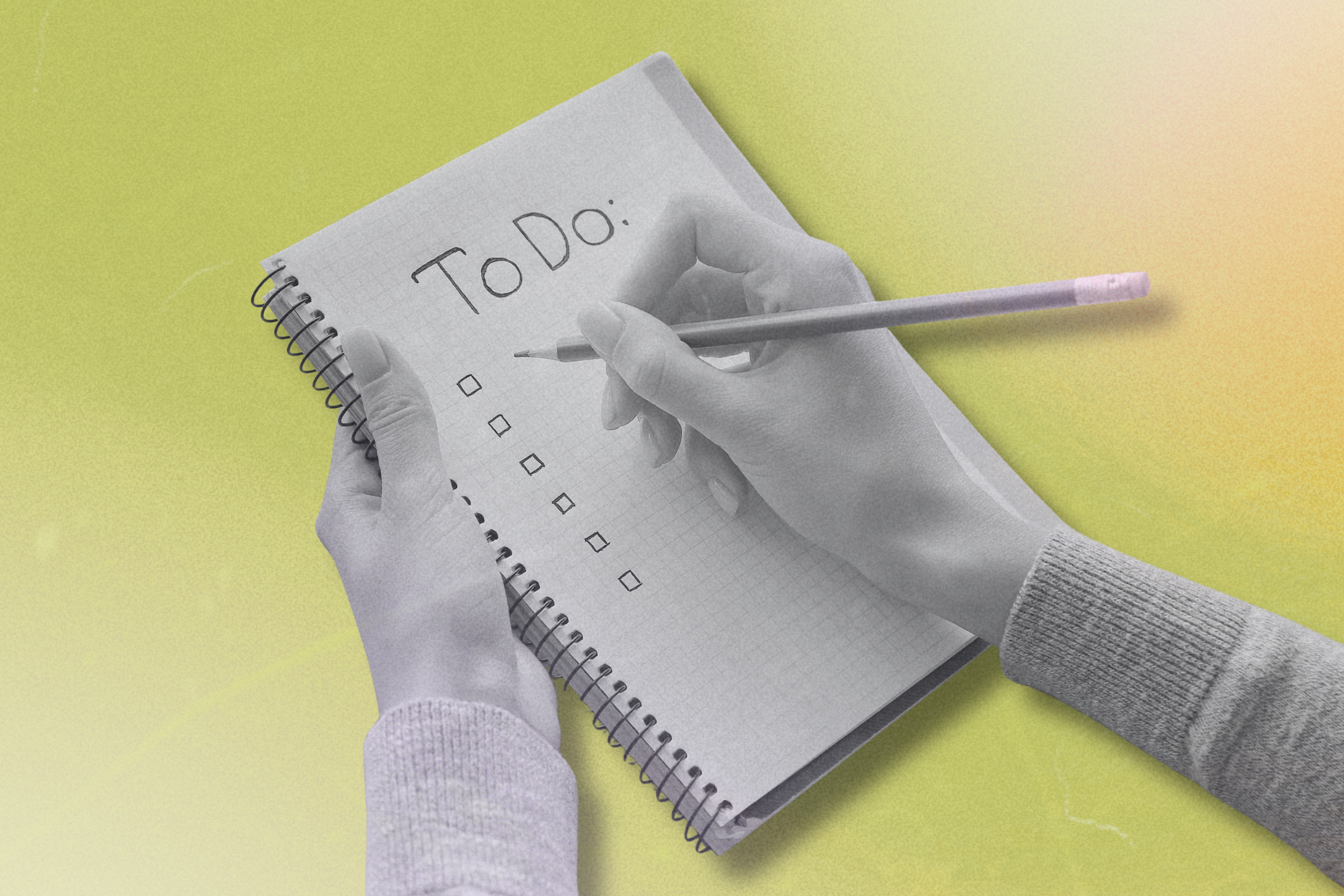
Just as your head hits the pillow, tomorrow’s to-do list crawls out from under the bed. You’re suddenly answering emails in your mind, crafting meeting agendas, and ruminating over the appointment you still need to schedule. Try this instead: Write down tomorrow’s to-do list tonight.
Taruj Ali, medical director of sleep medicine at Mary Washington Healthcare in Fredericksburg, Va. His patients often describe “a running mental inventory of unfinished tasks and what needs to happen tomorrow.” Spending a few minutes putting those thoughts on paper can give your brain permission to set them aside for the night. The timing matters, however: Don’t save the exercise for the moment you climb into bed.
Experts recommend spending five to 10 minutes on it in the evening when you wrap up your structured tasks, like finishing work, chores, or whatever occupies the bulk of your time. If a forgotten task pops into your head later, jot it on a notepad by your bed without turning it into a full-blown planning session. Here’s how to create a list that quiets your mind rather than revving it up.
There’s some evidence that the habit can improve sleep. In a small 2018 study, researchers randomly assigned 57 adults ages 18 to 30 to spend five minutes at bedtime either writing about tasks they needed to complete over the next few days or listing what they had accomplished during the previous few days. The to-do-list group fell asleep an average of nine minutes faster—and the more specific their lists were, the faster they drifted off.
That doesn’t mean a nightly list cures insomnia (or that reflecting on your accomplishments is a waste of time). The study included only healthy young adults who spent just one night in a sleep lab, and the researchers noted that they didn’t know whether the results would extend to people with insomnia. Still, it supports the idea that writing down unfinished tasks helps put them to rest.
This strategy is a form of cognitive offloading: using an external tool—in this case, a physical to-do list—to reduce how much information your brain has to keep track of. Stephanie High, a psychology doctoral candidate in Spokane, Wash., thinks of every unresolved task as a browser tab running in the background of your brain. Even when you’re not actively looking at one, it’s using a little battery and memory.
Extract — continue reading at the source.