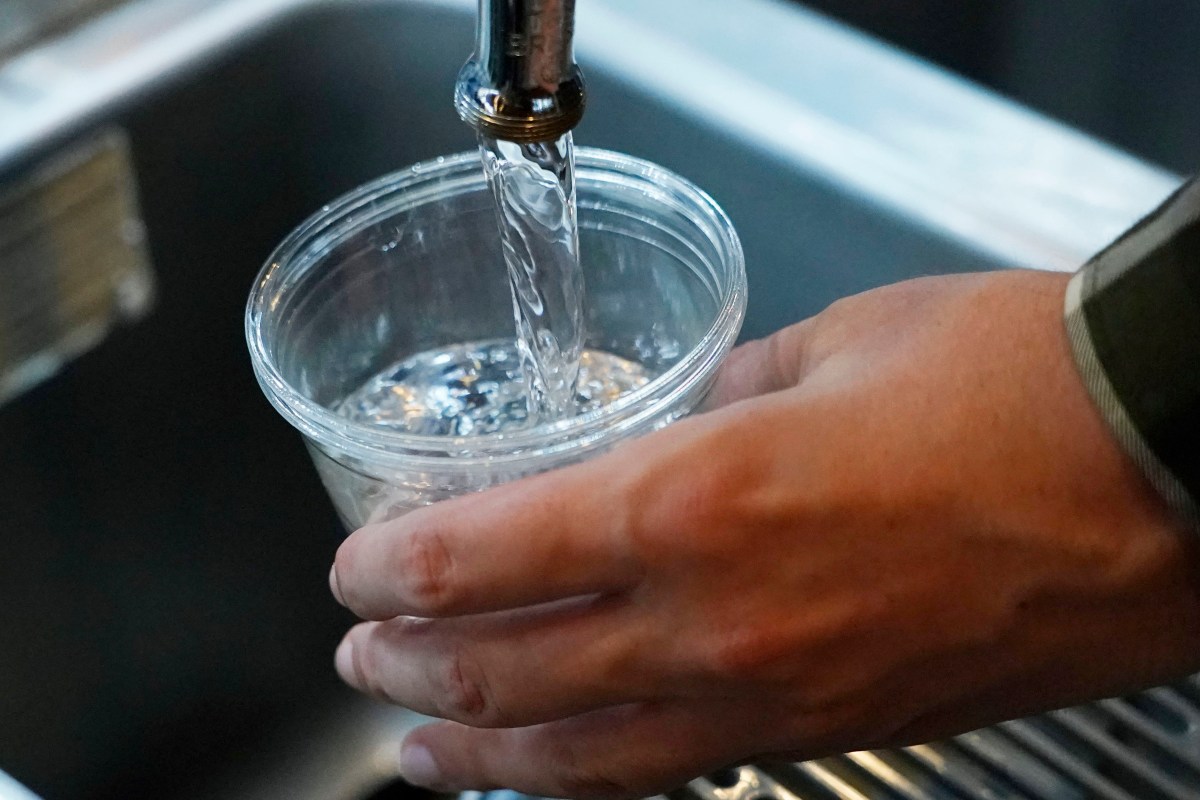
The risk of hackers using artificial intelligence to infiltrate water utilities and potentially alter water treatment processes is no longer theoretical, according to cybersecurity expert John Walsh, who says the technology helps adversaries identify vulnerabilities faster than defenders can patch them. Walsh, field chief technology officer for government and critical infrastructure at cybersecurity firm IGEL, told Newsweek that AI is accelerating cyber threats targeting operational technology systems that control water treatment plants, energy facilities and other critical infrastructure. While malicious actors have long targeted industrial control systems, he said geopolitical tensions, including the Iran war, coupled with rapidly advancing AI capabilities, have increased the urgency of the threat.
"We have a geopolitical situation that seems to be targeting infrastructure. We have AI that's entering into the picture, which is accelerating the velocity, how fast things are happening," Walsh said. "What's really happening is the urgency is being increased by the geopolitical situation and the use of AI." Water and wastewater systems have become a growing concern for cybersecurity experts because many facilities are run by local governments with limited resources and aging infrastructure.
Last week, the Cybersecurity and Infrastructure Security Agency (CISA), along with federal and international partners, released a warning that threat actors are conducting reconnaissance against Siemens S7 Series programmable logic controllers (PLCs), which are widely used to automate operations at water treatment plants, energy facilities, chemical plants and other critical infrastructure sites. Successful attacks of this nature could disrupt water access, undermine public confidence and potentially have ripple effects across food production, healthcare and other sectors, Walsh warned. "When you target Rockwell, Schneider, Siemens, you're targeting 70 percent of the controllers that don't just run water and wastewater," Walsh said.
"It runs our chemical facilities, our energy facilities, basically all our process and discrete automation." He noted that attacks against water infrastructure could have consequences beyond temporary service disruptions. "People lose confidence in water and wastewater, and we can only go without water for seven days," Walsh said. "From a terrorism standpoint, a very effective and maybe even more effective approach than power." Walsh added that water disruptions could affect farming and food production because modern agriculture relies heavily on automated systems and industrial control technologies.
Federal agencies have repeatedly warned about cyber threats to America's water infrastructure. Walsh pointed to a broader pattern of attacks on industrial control systems, particularly those linked to Iranian actors and other nation-state adversaries. "This is something as an industry, it's not new," he said.
"If you look at the history over the last several years, specifically with the Iranian attacks, I'd go as far as saying they've started in 2023 really to hone their craft." He cited attacks involving industrial technology platforms manufactured by companies including Rockwell and Siemens, as well as a recent incident involving a power facility in the United Kingdom. "What we're seeing is a pattern and it's systemic," Walsh said. "They're honing their craft and their methodologies and they're demonstrating capability." According to Walsh, many smaller utilities may be especially vulnerable because they often operate with limited staff and budgets.
Extract — continue reading at the source.