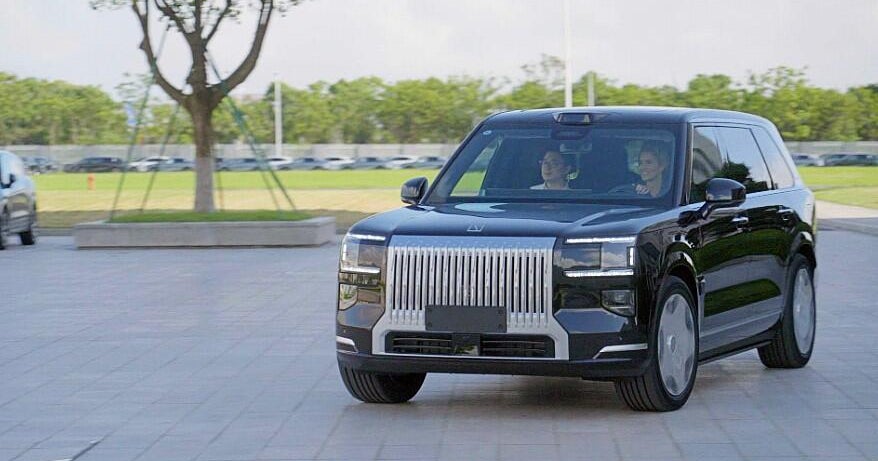
Beijing — On the outskirts of the Chinese port city of Ningbo, surrounded by lush green hills topped with giant wind turbines to harness the power of the gales off the East China Sea, is a factory where bosses believe they're making the cars of the future. It's where the Geely Auto Group, one of China's largest EV makers, produces its luxury brand Zeekr. The name is a merging of two concepts — Zee stands for Generation Z, and Kr is the chemical symbol for Krypton.
Yes, the same element at the heart of the rock that drains Superman's powers. Is it a metaphor for what's ahead, as China appears to be on course to dominate the global auto market? Inside the massive plant, which started operating in 2023, giant mechanical arms guided by artificial intelligence work in unison to assemble the vehicles.
The plant is 99% automated; machines building machines. The occasional human worker monitors the process. Zeekr Vice President of manufacturing Zhao Chunlin used to work for General Motors.
He told CBS News he admires and respects U.S. automakers, as he discussed the 100-year-plus legacies of GM and Ford. But Zhao, and China, are focused on the future, not the past, and he was confident that he's now working for a company in a country that many believe will dictate the future terms of the auto industry — and potentially obliterate the opposition. Zhao said he believed Chinese customers' demand for excellence had propelled his nation to the forefront of the EV industry.
"We are the best because we have the biggest market in the world, so customers' requirements are very high because there is so much choice. They want it better, better, better. They want everything!!" Asked if Chinese EVs are better than models made in the U.S., he didn't hesitate.
"Even Tesla made in China is better quality than Tesla made in America." Zeekrs will very soon be sold in North America, thanks to a trade deal that Canadian Prime Minister Mark Carney signed in January during a meeting in Beijing with Chinese President Xi Jinping. A total of 49,000 Chinese EVs will be sold in the first year under the deal, with Canadian tariffs on the imports dropping from 100%, to just 6%. At that level, Chinese imports will represent almost 25% of last year's total EV market in Canada.
Extract — continue reading at the source.