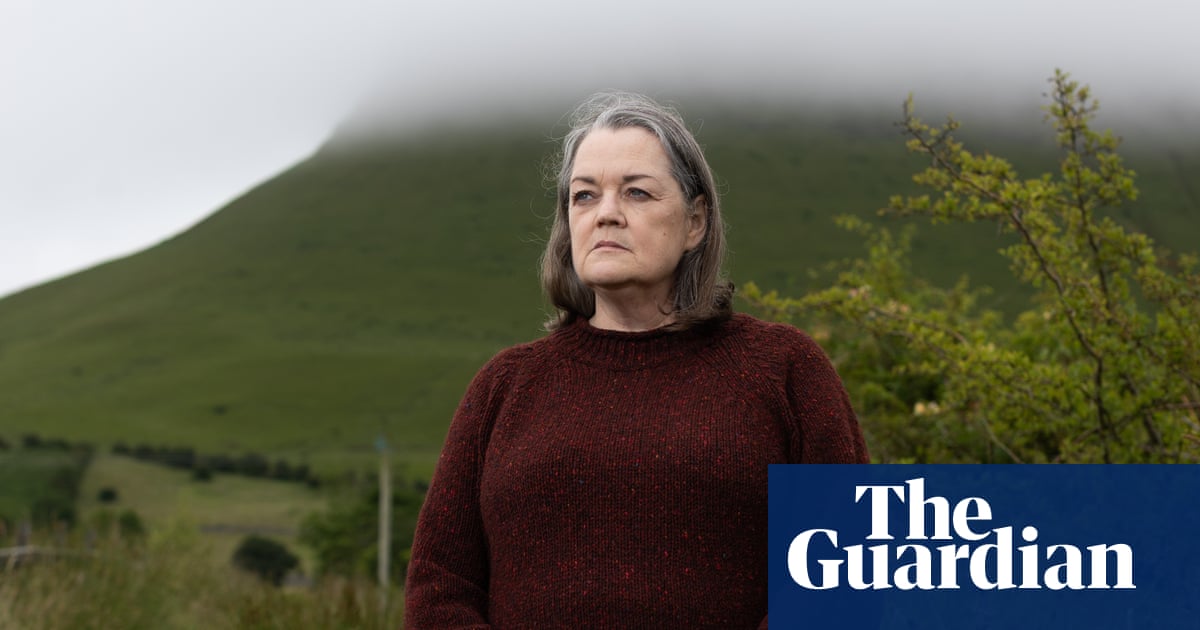
Louise Kennedy’s life has hardly wanted for dramatic events, but the recent past has been spectacularly busy, even by her standards. You wouldn’t know it to look at her, as we chat in the sitting room of the house in Sligo that she shares with her husband, son and daughter, but this is the home that she once thought would be repossessed. The couple bought it “for stupid money” in 2007, when they also opened a restaurant, initially so successful that the only way seemed to be up.
The following year, financial mayhem descended on Ireland, their customers ebbed away, and the Celtic Tiger years morphed into a country racked with job losses, bankruptcies, apparently endless debt. There are probably arguments for moving now, but I’m so proud that we managed to hold on to it, I’m not going anywhere. I’m going to be carried out of here in a box.” Kennedy had been a chef for 30 years, working all over the place from Dublin to London and, for two years, Beirut, before ending up in Sligo, on Ireland’s west coast, not far from the border with her native Northern Ireland.
Crucially, she had never given a thought to writing, not since a teacher had admired a poem she wrote when she was seven. Now, she is about to publish her second novel, Stations, which follows a collection of short stories, The End of the World Is a Cul-de-Sac, and her debut, Trespasses, which was shortlisted for the 2023 Women’s prize for fiction and won other prizes in Ireland and the UK in 2022 and 2023. Last year, Trespasses gained further acclaim when it was adapted for Channel 4 in a production starring Gillian Anderson as the mother of Cushla, the young Catholic teacher who falls in love with Michael, an older, married Protestant lawyer, in 1970s Belfast.
Trespasses fired readers’ imaginations because it gave an already complex love story a terrifying, high-stakes backdrop; Michael and Cushla’s relationship wasn’t simply clandestine because it was extramarital, but because they came from communities pitted against one another in an occupied country. And to recreate the detail, texture and jeopardy of Belfast at the time, Kennedy had to look no further than her own upbringing. She relates it so vividly and, at times, so humorously, that you have to remind yourself how intensely difficult it must have been.
Kennedy’s Catholic family ran pubs in Belfast. One day, her grandmother was on her way to bank the takings when a bomb exploded in a building she was walking past and a chunk of glass pierced her jugular vein. Throughout the ordeal, she wouldn’t let go of the handbag full of money, nor stop insisting she had to go and fetch her daughter from school.
She just had very fine lines where the scarring was. She was really lucky.” What about psychologically? She never talked about that.
Extract — continue reading at the source.