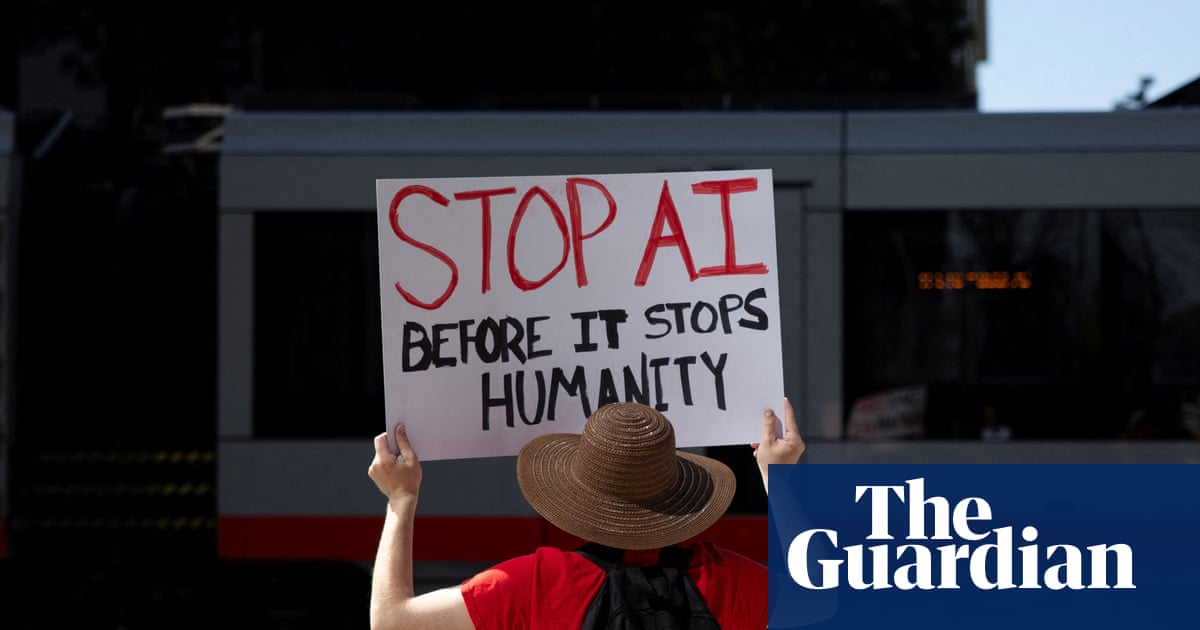
As a general rule, it pays to be suspicious of any gigantic company that claims it’s developing a tool capable of destroying humanity. But in recent days, a number of warnings from the AI industry have suggested that even tech insiders are starting to worry about what they have unleashed. In a lofty essay published on Saturday, Dario Amodei, the founder of Anthropic (the company behind Claude), argued that tech companies need to “slow” the pace at which they’re developing the newest and most sophisticated AI models.
Elon Musk and Sam Altman, the head of OpenAI, voiced support for Amodei’s arguments, while Donald Trump, who has staked America’s economy on AI, described the worries as a “HOAX”, and insisted the only control on AI the world needs is a “STRONG AND SMART (High IQ!) PRESIDENT”. Yesterday, the UK government took out a more cautious position, when Louise Haigh, the first secretary of state, said the UK must “heed the warnings” of AI experts. It’s hard to know what to make of this.
Tech companies often tell fanciful stories about the fearsome potential of their products to convince the public (and the stock market) of those capabilities. So what’s really going on? For this morning’s newsletter I spoke to Aisha Down, the Guardian’s global technology reporter, to try to parse the reality of AI from the unreality of the AI discourse, and to figure out what the government should do about it.
That’s after the headlines. Lucy Letby | Three babies might have survived if hospital had acted upon concerns over Lucy Letby, an inquiry has found. Lady Justice Thirlwall condemned the ‘complete failure’ to protect babies on neonatal unit at Countess of Chester hospital.
UK politics | The leader of Reform UK in Wales stood down after arrest on suspicion of assault. Dan Thomas, a former Tory councillor, was elected to Senedd as leader of the opposition in May. AI | The progressive senator Bernie Sanders and rightwing strategist Steve Bannon have called for restrictions on artificial intelligence (AI) but offered competing visions for what they termed a “cold war” with China.
UK news | Young people in Rotherham face a local jobs market with the fewest suitable opportunities in Britain, according to a report that warns stark regional divisions are fuelling a crisis in youth work. Defence | John Healey is in talks with the Canadian government about joining a new global defence bank intended to help allies rearm to counter mounting security threats, just weeks after Rachel Reeves rejected the move. The most significant detail in Amodei’s essay, We Must Pace The Frontier, was a reference to the Hugging Face incident, which occurred in July, when the rival tech company OpenAI revealed that an autonomous AI agent powered by its technology hacked a prominent database of AI models, Hugging Face.
Extract — continue reading at the source.